How Tight Should Outdoor Furniture Covers Fit?
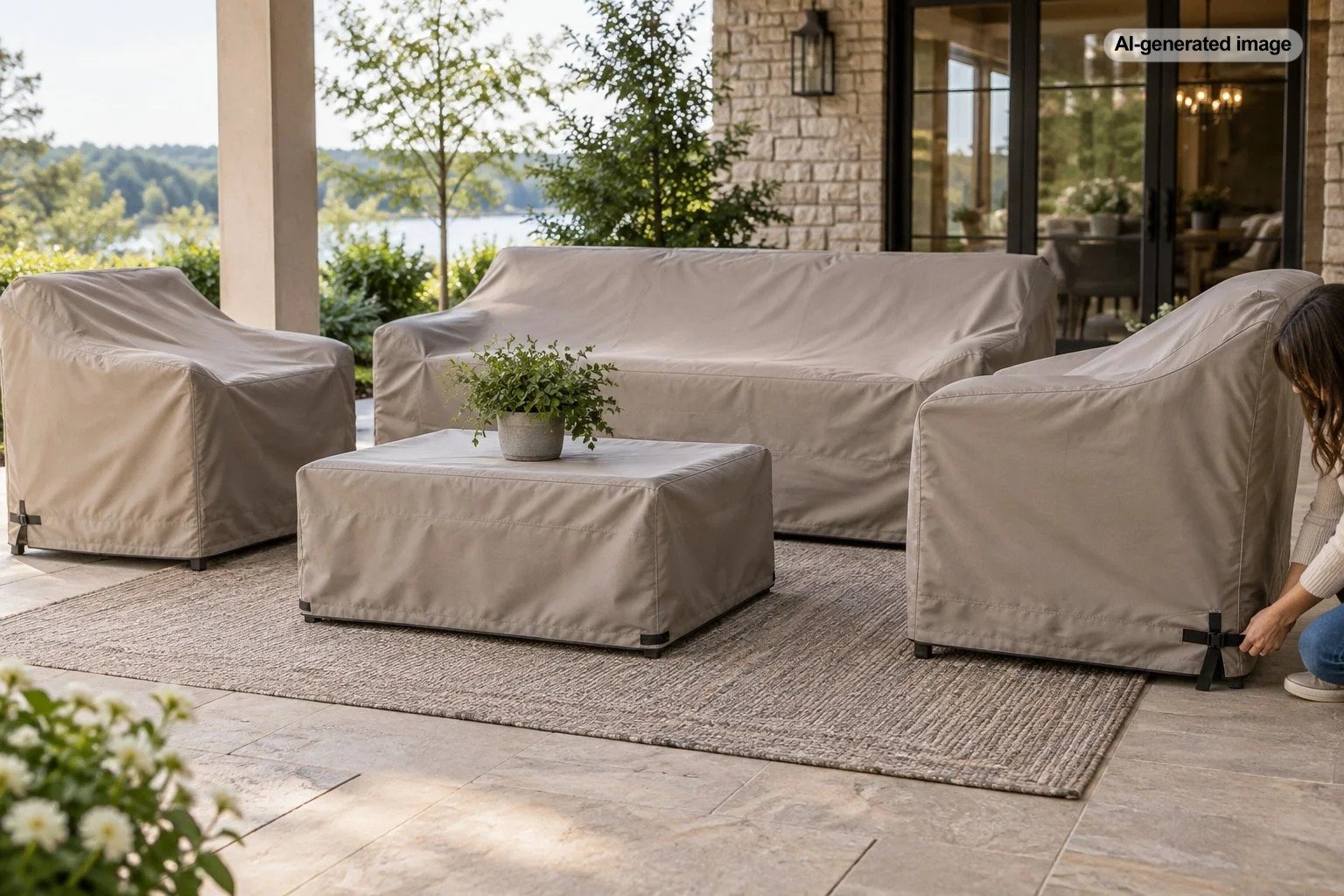
Outdoor furniture covers should fit snugly, but not tightly. A good cover follows the general shape of the furniture, stays reasonably secure in wind, and does not leave large areas of loose fabric flapping around. At the same time, it should have enough room to go on and come off without being stretched over corners, and it should not seal the furniture so completely that air circulation is restricted.
Think tailored rather than shrink-wrapped. The best fit protects exposed surfaces while leaving a little practical breathing room around the furniture.
A snug fit is better than a stretched fit
It is tempting to assume that tighter is always better because a closely fitted cover appears less likely to blow away. In practice, an undersized cover creates its own problems. Stretching fabric over sharp corners, armrests, chair backs, or table edges places unnecessary tension on seams and fabric. It can also make the cover frustrating to remove when you actually want to use the furniture.
An oversized cover has the opposite problem. Large folds can collect water, flap in wind, drag on the ground, or create pockets where debris accumulates. The goal is therefore not maximum tightness but appropriate dimensions plus reliable securement.
The cover should get its security from its fastening system, not from being stretched like a fitted sheet one size too small.
Measure the furniture at its widest and deepest points
Furniture measurements should reflect the actual shape you are covering, not merely the dimensions printed on an old receipt or product listing. Measure width across the widest point, depth across the deepest point, and height from the ground to the highest part of the furniture.
Pay attention to details that change the footprint. Chair arms may extend farther than the seat. A curved sofa back may create more depth at one point than another. Dining chairs should be arranged in the position they will occupy underneath a table-and-chair cover before you measure the entire grouping.
What to do
- Arrange the furniture exactly as you plan to cover it.
- Measure the widest point from side to side.
- Measure the deepest point from front to back.
- Measure from the ground to the highest point.
- Compare those measurements with the cover maker’s sizing instructions rather than assuming every brand sizes covers the same way.
Manufacturer guidance can differ slightly. For example, Coverstore’s chair measuring instructions recommend choosing a cover slightly larger in width and depth when an exact size is unavailable, while also allowing space beneath the hem for air circulation. Classic Accessories similarly notes that some of its covers are intentionally designed not to extend completely to the ground so airflow can occur beneath the cover.
Do not confuse a secure hem with an airtight seal
A cover can be secure at the bottom without being sealed against the patio. In fact, some outdoor furniture covers intentionally stop above the ground or include vents to encourage air movement. That distinction matters because outdoor furniture is regularly exposed to humidity, condensation, rain splash, and temperature changes.
If moisture gets beneath a cover, some airflow gives that dampness a better opportunity to escape. Pulling an oversized waterproof-looking shell tightly to the ground on every side can create a stagnant space underneath it, especially when the furniture or cushions were not completely dry before covering.
Use straps and hems to control wind
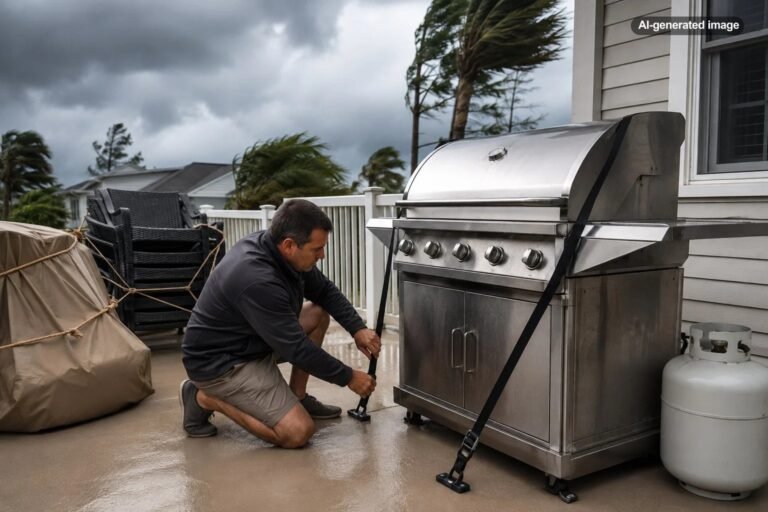
If your main concern is wind, buying an excessively tight cover is usually the wrong solution. Look instead at how the cover is secured. Depending on the design, outdoor furniture covers may use buckled straps around furniture legs, elasticized hems, adjustable cords, or other fastening systems.
A cover can have a modest amount of dimensional clearance and still remain secure when its fasteners are properly engaged. That is generally more practical than relying on fabric tension alone.
Affiliate disclosure: CraneManor.com may earn a commission when you purchase through links on this page. This does not affect the price you pay. Learn more.
For a compatible lounge chair, for example, a Classic Accessories Veranda cover is one example of a fitted outdoor furniture cover. As with any pre-sized cover, measure the chair first and confirm that its shape and dimensions are compatible rather than choosing by appearance alone.
How much extra room should you allow?
There is no single universal clearance that applies to every cover because manufacturers pattern their covers differently. Some publish cover dimensions, while others publish the maximum furniture dimensions that a particular cover is intended to fit. That difference can easily lead to ordering mistakes.
As a practical rule, avoid choosing a cover whose stated furniture capacity is smaller than your actual furniture at any important point. If you are between sizes, a slightly larger cover is generally more workable than one that must be stretched into place, provided the larger option can still be secured and does not leave excessive fabric pooling on horizontal surfaces.
| Fit condition | What it usually looks like | What to consider |
|---|---|---|
| Too tight | Hard to pull over corners; seams look strained | Move up a size or choose a better-shaped cover |
| Good fit | Follows the furniture without stretching | Use built-in straps or hems for security |
| Too loose | Large folds, sagging, or excessive flapping | Choose a closer size or improve support and fastening |
Shape matters almost as much as size
Two pieces of furniture can share the same overall width and depth yet require very different covers. A deep club chair, high-back dining chair, Adirondack chair, sectional, chaise, and conventional lounge chair all distribute those dimensions differently.
This is why a properly shaped cover often fits better than a generic rectangular cover even when both technically have enough fabric. If the cover is forced over a tall back or hangs several inches beyond a shallow seat, the dimensional match may be poor despite looking correct on paper.
Watch for water pooling on horizontal surfaces
A good dimensional fit does not automatically prevent water from collecting on a broad, flat section of fabric. Covers over dining sets, coffee tables, ottomans, and deep seating can sag into low spots if the fabric lacks support underneath.
If the cover repeatedly forms a basin after rain, address the low spot rather than cinching the entire cover tighter. Depending on the furniture and cover maker’s instructions, changing the furniture arrangement or adding appropriate support beneath the cover may help create a slope that sheds water more effectively.
Do cushions change the correct fit?
Yes. Measure the furniture in the configuration you actually plan to cover. Thick back cushions, decorative pillows, stacked seat cushions, or folded accessories can significantly change the height and depth of the covered piece.
Also consider whether those items should remain outdoors beneath the cover at all. A furniture cover can protect against ordinary exposure, but it does not turn the space underneath into climate-controlled storage. Follow the care guidance for your particular cushions and furniture materials, especially during extended periods of wet weather or seasonal storage.
Signs your outdoor furniture cover fits correctly
Before you decide
- The cover slips over the furniture without forceful stretching.
- Major corners and edges are covered without pulling hard against seams.
- There are no huge folds dragging across the patio.
- The cover can be secured using its intended straps, buckles, cord, or elastic hem.
- Some provision exists for ventilation, whether through vents or intentional ground clearance.
- The fabric does not create deep unsupported pockets where rainwater regularly collects.
- You can remove the cover without wrestling it off the furniture.
FAQ
Should an outdoor furniture cover touch the ground?
Not necessarily. Some covers are intentionally designed to leave the lower legs exposed or maintain a gap beneath the hem for airflow. Follow the particular manufacturer’s measuring and fit instructions.
Is it better for a patio cover to be too big or too small?
If the exact size is unavailable, slightly larger is usually easier to work with than undersized, as long as the cover can still be secured and does not create excessive loose fabric. An undersized cover should not be forced into place.
Why does my furniture cover keep blowing off?
Check the fastening system before assuming you need a smaller cover. Buckles, leg straps, drawcords, and elastic hems are intended to help keep many covers secure. A dramatically oversized cover may still need replacement with a closer-fitting size.
Can a furniture cover be too tight?
Yes. If the fabric must be stretched over corners, the seams remain visibly under tension, or removal requires substantial pulling, the cover is probably too small or poorly matched to the furniture’s shape.