
How Often Should Teak Furniture Be Oiled?
The surprisingly useful answer is that teak furniture often does not need to be oiled at all. High-quality teak contains natural oils, and outdoor teak can generally be allowed to weather naturally without adding a conventional wood oil. In fact, some teak furniture manufacturers specifically advise against applying teak oil to outdoor pieces.
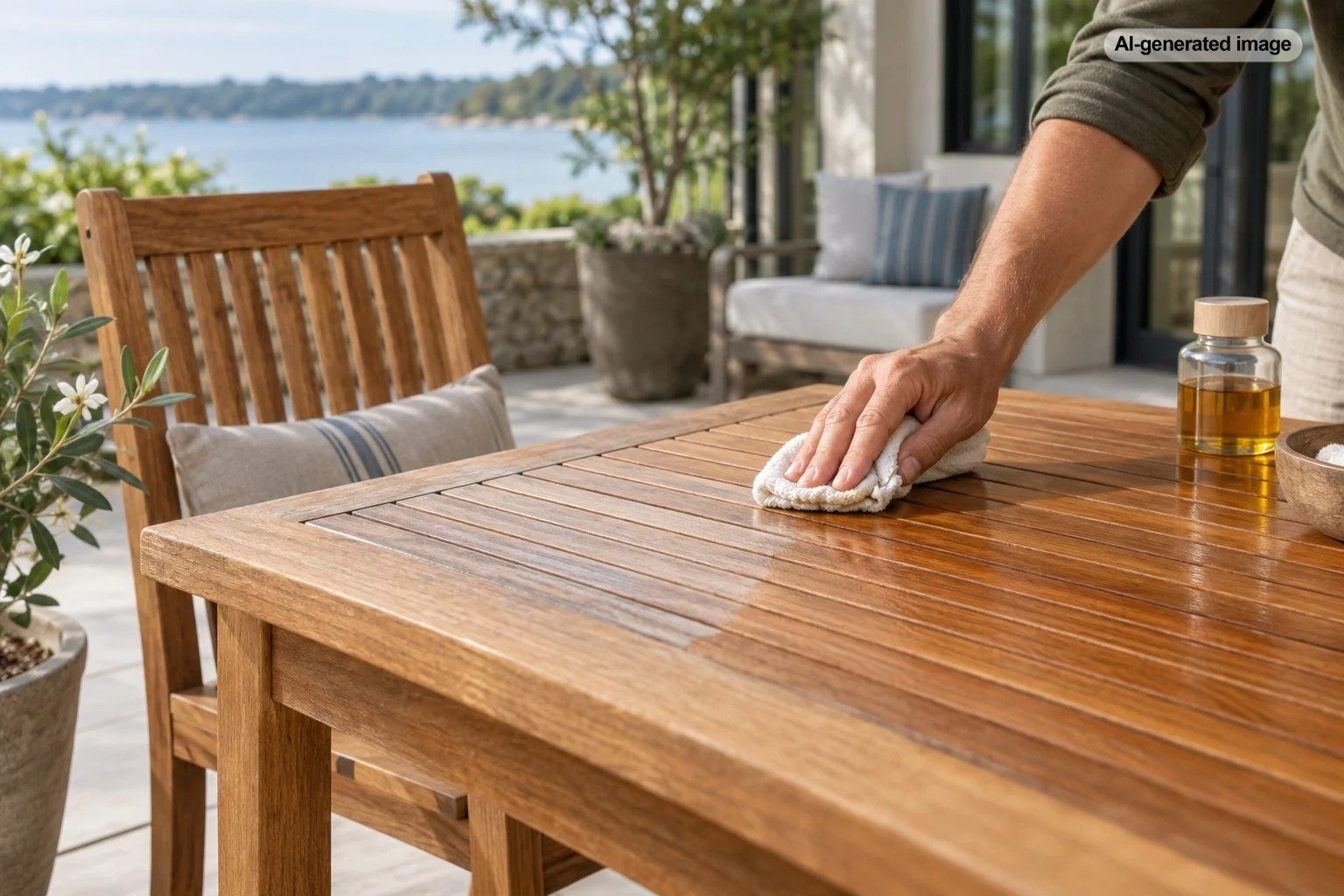
If you want to preserve a warm brown appearance instead of letting teak develop its familiar silver-gray patina, the better maintenance product may be a manufacturer-approved teak protector or sealer rather than teak oil. The correct schedule therefore depends less on a universal calendar and more on the furniture maker, its existing finish, where the furniture is used, and the appearance you want.
Why teak does not need oil like many other woods
Teak is naturally rich in oils and has long been valued for outdoor furniture because it tolerates exposure better than many less durable woods. Those natural properties are also why adding more oil is not automatically beneficial.
Gloster, for example, states in its teak care guidance that its outdoor teak does not require a special maintenance routine beyond occasional cleaning. The company recommends allowing natural teak to weather and specifically says it does not recommend teak oil or other wood oils for teak used outdoors. Its guidance notes that repeatedly adding oil can leave material on the surface that may contribute to discoloration and mildew.
Kingsley Bate takes a similar appearance-based approach. Its maintenance guidance distinguishes between teak that is kept brown and teak that is intentionally allowed to become silver-gray. For outdoor teak that will weather naturally, it recommends ordinary cleaning rather than an oiling schedule.
Teak maintenance is usually about choosing the appearance you want, not continuously replacing oils the wood supposedly lost.
What happens if you never oil outdoor teak?
Unfinished outdoor teak gradually changes from its original golden or brown tone to a lighter silver-gray color as the exposed surface weathers. That color change is primarily an appearance issue rather than proof that the furniture is drying out and needs oil.
Gloster says natural teak can take roughly six months to two years to develop a silver-gray appearance, depending on its location and exposure. During early weathering, the grain can also rise slightly. Periodic cleaning and, when appropriate, very light sanding can address surface texture without requiring an oil finish.
When a teak protector or sealer makes more sense
If your goal is to keep teak looking closer to its original brown color, check the manufacturer’s instructions before reaching for a bottle labeled teak oil. Some outdoor furniture companies offer water-based protectors or sealers designed specifically for that purpose.
Gloster recommends its sealer for owners who want to maintain the fresh brown appearance of its teak. Its published care instructions call for annual application of that sealer, while its protective treatment is generally reapplied annually and more often on highly exposed tabletop surfaces. Those intervals apply to Gloster’s own care system, however, and should not be treated as a universal schedule for every teak product.
Kingsley Bate likewise recommends cleaning followed by a teak protector when owners want to retain or restore the brown appearance of its outdoor teak. The important distinction is that these are manufacturer-designed maintenance systems, not evidence that all teak furniture needs generic teak oil.
| Goal | Typical approach | Oiling needed? |
|---|---|---|
| Allow natural silver-gray patina | Routine gentle cleaning | Usually no |
| Keep a brown teak appearance | Use a manufacturer-approved protector or sealer | Not necessarily |
| Maintain furniture already sold with an oil finish | Follow that maker’s finish instructions | Only if specified |
| Refresh rough weathered teak | Clean and consider careful light sanding if permitted | Usually no |
How to decide whether your teak needs treatment
Before applying anything, determine what you actually own. New unfinished outdoor teak, previously sealed teak, indoor teak, and teak that has already been treated with an oil-based finish should not automatically receive the same care.
What to do
- Find the manufacturer’s care instructions. They take priority over generic teak advice, particularly if the furniture has a proprietary factory finish.
- Decide whether you like gray or brown teak. If you are happy with natural silver-gray weathering, you may need little beyond cleaning.
- Identify previous treatments. Do not casually layer oil, sealer, protector, stain, or another finish over an unknown coating.
- Clean before treating. Dirt, pollen, food residue, and surface contamination should not be trapped beneath a maintenance product.
- Test an inconspicuous area. Any treatment can alter color, sheen, or texture, so verify the result before covering the entire piece.
How often should teak be cleaned instead?
For many outdoor teak pieces, cleaning is more important than oiling. Gloster recommends thoroughly cleaning its naturally weathered teak once or twice a year. Your furniture may need additional spot cleaning when food, drinks, pollen, bird droppings, or environmental debris accumulate.
Use methods suitable for the specific furniture. Gloster warns against pressure washing its teak because the force can erode the softer surface and leave it rough. Kingsley Bate’s guidance for naturally weathering outdoor teak calls for standard cleaning with soap and water.
Harsh cleaning is not a substitute for routine maintenance. Aggressive scrubbing, excessive sanding, or powerful pressure washing can create more cosmetic work than they solve.
Common mistakes with teak oil
One mistake is assuming that fading color means the wood is dangerously dry. Outdoor teak naturally changes color as its surface is exposed to weather. Another is applying oil simply because a product has the word teak on its label, without checking whether the furniture manufacturer actually recommends it.
Repeatedly adding incompatible finishes can also make future maintenance harder. Once you commit to preserving a particular brown appearance, you may be committing to periodic cleaning and reapplication as that treatment weathers.
What about indoor teak furniture?
Indoor teak lives in a different environment. It is not being continuously exposed to rain and sunlight, and some indoor pieces may have a finish selected by the manufacturer or furniture maker. Kingsley Bate, for example, provides different care recommendations for brown teak used indoors than for its outdoor furniture.
That is another reason to avoid a universal oiling interval. If an indoor teak table, cabinet, or chair has a specific applied finish, maintain that finish according to the maker’s directions. Do not assume advice for unfinished patio teak applies to a finished indoor dining table.
FAQ
Should I oil teak furniture every year?
Not automatically. Many unfinished outdoor teak pieces require no oil at all. Some manufacturers instead recommend annual application of their own sealer or protector when the owner wants to preserve a particular color. Follow the instructions for your furniture and chosen finish.
Does teak turn gray because it needs oil?
No. Natural outdoor teak commonly develops a silver-gray surface as it weathers. That appearance does not by itself mean the wood needs oil.
Can teak stay outside without being oiled?
Outdoor teak designed for exterior use can commonly be allowed to weather naturally without routine oiling. Cleaning and proper furniture care still matter, so follow the manufacturer’s guidance for your specific piece.
Can I restore gray teak to a brown appearance?
Often, yes, but the appropriate process depends on the manufacturer and what has previously been applied. Some teak furniture makers provide cleaners and protectors specifically for restoring or maintaining a brown appearance.
Is teak oil the same as teak sealer?
No. The terms describe different kinds of treatments, and formulas vary between manufacturers. A sealer or water-based protector may be recommended for outdoor teak even when conventional teak oil is not. Always check the furniture and treatment-product instructions before application.