
Should You Use a Smart Thermostat’s Eco Mode in Florida?
Yes, a smart thermostat’s Eco mode can make sense in Florida, especially when the house is empty, but it should be configured with the state’s heat and humidity in mind. The goal is usually to reduce unnecessary air-conditioning runtime without allowing the interior to become excessively hot, humid, or uncomfortable.
That makes Eco mode less of an on-or-off decision and more of a settings decision. A modest cooling setback during an afternoon away from home may be useful. An extremely high cooling threshold during a long summer absence can create a very different set of conditions inside the house.
What Eco mode actually does
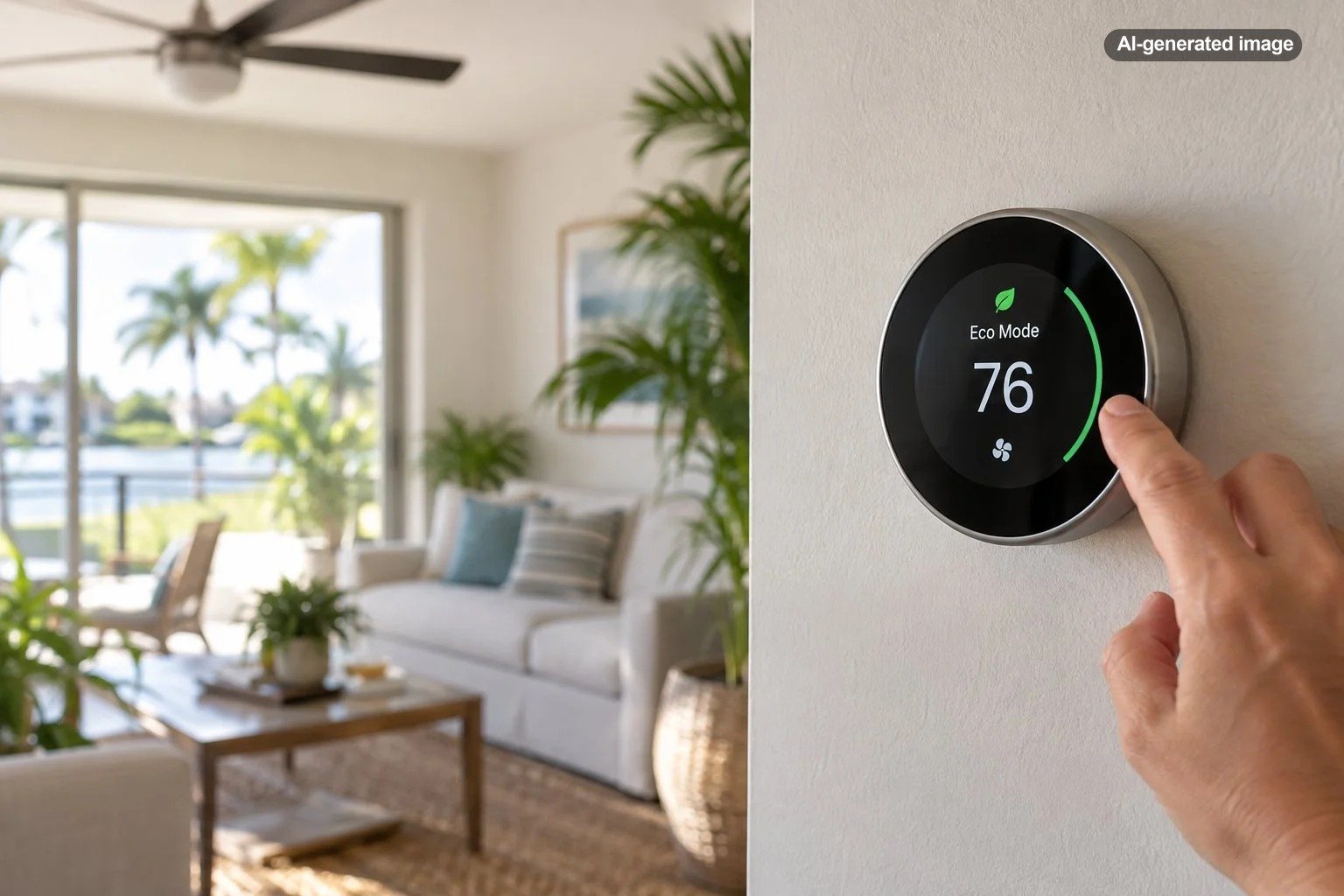
Eco mode generally changes the temperatures at which a smart thermostat calls for heating or cooling. Depending on the thermostat, the feature may activate manually, according to a schedule, or automatically when the system determines that nobody is home.
Google’s documentation for Nest thermostats, for example, explains that Eco Temperatures can activate when the thermostat senses that everyone is away. Cooling still operates if the house becomes warmer than the selected Eco cooling temperature. The thermostat can then resume normal temperature control according to its model, schedule, or presence settings.
The important point is that Eco does not necessarily mean that the air conditioner is turned completely off. Properly configured, it is a way to let the indoor temperature drift farther from your normal comfort target before cooling begins.
Why Florida makes the decision more complicated
In a dry climate, homeowners may think mostly about indoor temperature. Florida adds persistent moisture to the equation. Air conditioning does two useful jobs during much of the year: it lowers temperature and removes moisture from indoor air.
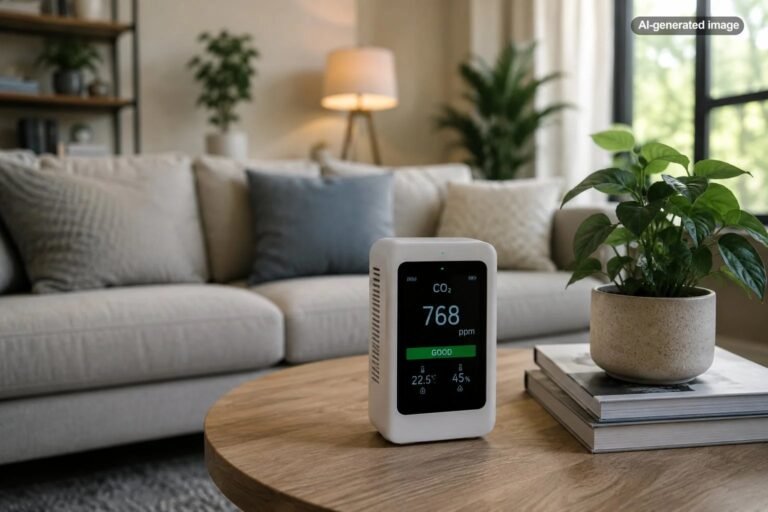
If an Eco setting greatly reduces cooling runtime, the house may spend longer periods without active dehumidification from the air-conditioning system. How much that matters varies significantly from house to house. Air leakage, insulation, HVAC sizing, ventilation, building materials, shade, occupancy, and dedicated dehumidification can all change the result.
In Florida, an energy-saving thermostat setting should be judged by both temperature and moisture control.
This does not mean that a Florida air conditioner must run constantly. It means homeowners should avoid treating a generic maximum Eco temperature as an automatically appropriate target for every property.
Eco mode works best when nobody needs normal comfort
The easiest use case is a predictable period when the home is empty. Instead of maintaining the same temperature you prefer while sitting in the living room, the thermostat can allow the house to warm somewhat before calling for cooling.
Smart thermostats can make this more convenient because many support schedules, occupancy detection, geofencing, or remote adjustments. ENERGY STAR notes that certified smart thermostats may use scheduling and occupancy-related features to reduce heating or cooling when it is not needed, while remote controls allow homeowners to change temperature settings from a connected device.
The duration of the absence matters. A small adjustment for a few hours is different from leaving a Florida house unattended for several weeks. For an extended absence, temperature is only one consideration; humidity management, plumbing, storm preparation, security, and the condition of the HVAC system may also matter.
Do not choose an Eco temperature by chasing the largest setback
It is tempting to assume that if raising the cooling setpoint a little can reduce cooling demand, raising it dramatically must be even better. That approach overlooks how the home behaves while the system is running less.
A practical Eco setting should balance several considerations:
- Humidity: Watch whether indoor relative humidity rises noticeably during long periods of reduced cooling.
- Recovery: Consider how long the HVAC system needs to return the house to a comfortable temperature after Eco mode ends.
- Occupants: Pets or anyone remaining home may require a narrower temperature range.
- Contents: Some household items, electronics, finishes, instruments, collections, medications, or other temperature-sensitive belongings may have their own storage requirements.
- The building: A well-sealed home with good insulation may respond differently from an older or leakier Florida house.
Start with a moderate change rather than the thermostat’s most aggressive available setting. Observe indoor temperature, humidity, comfort, and system behavior over several typical warm days before deciding whether a wider setback is appropriate.
Humidity deserves its own attention
A thermostat primarily reacts to temperature unless the system and controls have specific humidity-management capabilities. That distinction matters because a house can meet its Eco temperature target while still feeling damp.
Some thermostats and HVAC systems offer humidity-related controls. Google, for example, documents a Cool to Dry feature on compatible Nest configurations that can use air conditioning or a heat pump to address excessive humidity. Availability depends on the equipment and thermostat configuration, so homeowners should verify what their own system actually supports rather than assuming a feature is present.
What about Eco mode while you are home?
Eco settings are not limited to vacations or workdays. Some smart thermostats let you select an energy-saving preset while you are home. That can be useful when you are comfortable at a warmer temperature, particularly during periods when ceiling fans or other comfort strategies make a higher thermostat setting pleasant.
The tradeoff is straightforward: Eco mode should not make living in the house unnecessarily uncomfortable merely to preserve an automated setting. A smart thermostat is a control tool, not a commandment. If the house is occupied and the Eco temperature no longer works for the people in it, adjust it.
Presence sensing can be useful, but check whether it fits your household
Automatic away detection is one of the more appealing smart-thermostat features because it can reduce cooling without requiring everyone to remember to adjust the thermostat on the way out.
It also depends on accurate information about whether someone is actually home. Households with irregular schedules, guests, people working in less-used rooms, or phones that do not reliably participate in presence detection should review how their thermostat determines occupancy.
Google recommends configuring reliable presence signals when using automatic Eco behavior on compatible Nest thermostats. Other thermostat manufacturers use their own approaches, so the appropriate settings depend on the specific model.
A smart thermostat should still be compatible with the HVAC system
Advanced software does not eliminate hardware compatibility requirements. ENERGY STAR advises buyers to verify that a smart thermostat is compatible with their heating and cooling equipment. Wiring and power requirements also vary, and some smart thermostats rely on a common wire or another approved method of receiving continuous power.
That is especially important with sophisticated, communicating, variable-capacity, multi-stage, or otherwise specialized HVAC equipment. Replacing a manufacturer’s controller with a generic thermostat can sometimes give up system-specific capabilities. When there is uncertainty, consult the HVAC equipment documentation or a qualified HVAC professional before changing controls.
Affiliate disclosure: CraneManor.com may earn a commission when you purchase through links on this page. This does not affect the price you pay. Learn more.
For a conventional compatible system where remote adjustment and programmable temperature control are priorities, a Wi-Fi-enabled thermostat such as the Google Nest Thermostat is one available approach. Compatibility should be checked against the home’s HVAC equipment and wiring before purchase or installation.
How to test Eco mode without guessing
What to do
- Record the temperature setting you normally find comfortable.
- Choose a modestly warmer Eco cooling setting for periods when the house is empty.
- Check indoor temperature and humidity during several representative Florida afternoons.
- Notice how long the system runs when the home returns to its normal setting.
- Ask whether pets, plants, sensitive belongings, or people with different comfort needs change the acceptable range.
- Adjust the Eco setting gradually rather than making a large jump based only on potential energy savings.
If the thermostat provides energy or HVAC runtime history, that information can make the experiment more useful. ENERGY STAR-certified smart thermostats are required to provide residents with information about HVAC energy use, such as runtime data, and certified models must demonstrate energy-saving performance through real-world field data.
When Eco mode may not be the real problem
If a small thermostat setback causes the home to become unusually humid, takes many hours to recover, or produces major temperature differences between rooms, the thermostat setting may be exposing another issue rather than causing it.
Possible factors include air leakage, duct problems, inadequate insulation, equipment sizing, airflow problems, maintenance issues, or an HVAC system that is not controlling moisture as expected. Those conditions cannot be diagnosed from thermostat behavior alone.
So, should you use Eco mode in Florida?
For many Florida homes, yes. Eco mode can be a sensible way to avoid maintaining full occupied-house comfort conditions when nobody is there. Smart scheduling, remote control, and presence-based adjustments can make that easier than repeatedly changing a conventional thermostat by hand.
The best Eco setting, however, is the one that works with the home’s climate, HVAC equipment, moisture behavior, occupancy, and comfort needs. Start conservatively, watch what happens to both temperature and humidity, and adjust from evidence rather than assuming that the highest available cooling threshold provides the best result.
In other words, use the intelligence in the smart thermostat, but keep a little human judgment in the loop.