
Why Does My Interior Door Stick Only at Night?
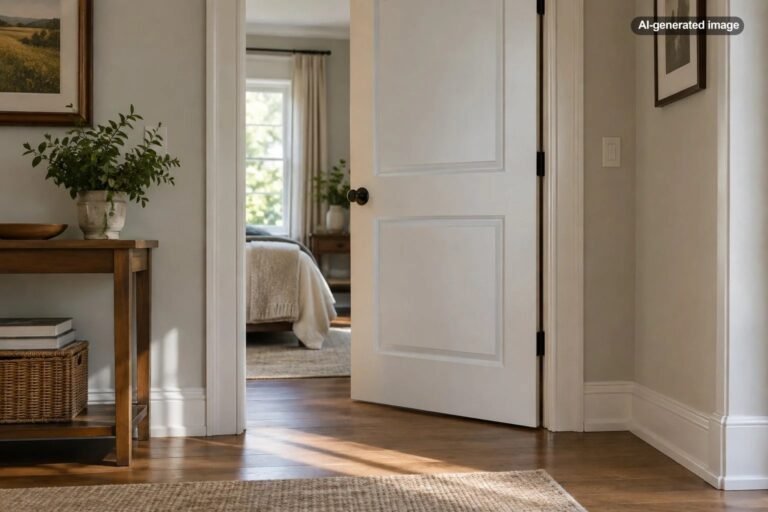
If an interior door opens normally during the day but starts rubbing, dragging, or refusing to latch at night, the most likely explanation is a small change in moisture, temperature, or the relationship between the door and its frame. Wood doors and wood-framed openings can move slightly as indoor conditions change, and a gap that is barely adequate in the afternoon may become too tight several hours later.
The good news is that a night-only sticking door is often a minor alignment or moisture issue rather than a sign that the door suddenly needs replacement. The useful clue is the timing: something about the room, air, or building is changing between daytime and nighttime.
Why a door can behave differently at night
Interior doors need only a small amount of clearance around their edges. If that clearance is already narrow, very slight movement can make the difference between a clean swing and a noticeable scrape.
Several nighttime changes can contribute. Indoor humidity may rise after evening showers, cooking, or reduced air-conditioning operation. A bedroom may become warmer when its door is closed. Exterior temperatures may fall while indoor surfaces cool at different rates. In homes with wood doors, trim, and framing, those changing conditions can affect how tightly the components fit together.
The key distinction is between a door that is consistently misaligned and one that changes predictably with conditions. If it sticks every evening but works again the following morning or afternoon, environmental movement deserves a closer look.
Start by finding the exact contact point
Before adjusting anything, slowly close the door and identify where resistance begins. Look for polished spots, chipped paint, compressed weathering of the finish, or a narrow gap between the door and jamb.
Common contact areas include the upper corner on the latch side, the vertical latch edge, and the bottom of the door. Each location suggests a somewhat different cause.
| Where it rubs | What it may suggest |
|---|---|
| Top corner near latch | Door sag, hinge movement, or a slightly out-of-square opening |
| Latch-side edge | Swelling, tight clearance, or frame movement |
| Bottom edge | Flooring interference, sagging hinges, or changes in the opening |
| Near one hinge | Loose hardware, paint buildup, or localized alignment trouble |
Compare the gap during the day and again when the sticking appears. You do not need specialized measuring equipment to learn something useful. Even a careful visual comparison can reveal whether one side of the gap noticeably tightens at night.
Humidity is one of the most common explanations
Wood is hygroscopic, meaning it exchanges moisture with the surrounding air. As moisture content changes, wood dimensions can change slightly as well. A painted solid-wood door, wood jamb, or wood trim can therefore fit differently under changing indoor humidity conditions.
Nighttime habits can add moisture to the house. Multiple showers, boiling water, running a dishwasher, drying laundry indoors, or simply closing bedroom doors can create localized differences between rooms. In a humid climate, evening outdoor air can also affect indoor conditions when windows or doors are opened.
This does not mean the door is absorbing a dramatic amount of water each evening. The fit may already be so close that a subtle change is enough to create friction.
Temperature changes can expose an already tight fit
Temperature by itself may not be the entire cause, but it can combine with moisture and normal building movement. Different materials expand and contract at different rates, and parts of the home may cool unevenly after sunset.
A door near an exterior wall, attic access, garage, or poorly conditioned hallway may experience greater temperature swings than a door between two consistently conditioned rooms. The result can be a small change in the way the jamb, hinges, flooring, and door line up.
If the door sticks mainly during one season, that pattern matters. Seasonal changes often produce larger shifts than the normal difference between afternoon and evening.
Check the hinges before removing wood
A loose hinge can make a door sag just enough for the upper latch-side corner to contact the frame. That problem may seem inconsistent because the door can settle differently depending on how often it is used, whether it remains closed for several hours, and how the surrounding materials move.
What to do
- Open the door and inspect each hinge for loose screws, visible movement, or a hinge leaf pulling away from the jamb.
- Gently lift the handle side of the open door. Notice whether there is obvious movement at the hinges.
- Close the door slowly and observe which edge touches first.
- Check the same area when the door is operating normally and again when it begins sticking.
- Address simple hardware looseness before deciding that the door edge itself needs to be altered.
Do not keep tightening a screw that no longer grips properly. A stripped or damaged screw hole requires a different repair than an ordinary loose screw, and forcing hardware can make the problem worse.
Paint buildup can make a small clearance problem worse
Older doors and frames sometimes accumulate multiple coats of paint along their edges. A door that once had comfortable clearance may end up with very little room after repeated repainting.
This is especially noticeable when both the door edge and jamb have thick layers of paint. Slight swelling that would otherwise go unnoticed can then create sticking.
Look for paint that appears polished, scraped, cracked, or compressed at the contact point. That evidence is more useful than assuming the entire door needs to be sanded.
Closed rooms can develop their own nighttime conditions
A bedroom door offers a good example. During the day, the door may remain open while air circulates freely through the house. At night, the door closes, occupants enter the room, a nearby bathroom may be used, and airflow changes. The temperature and humidity inside that room can become different from the hallway.
If opening the room, improving normal airflow, or allowing humidity to settle makes the sticking disappear, you have learned something important before making any permanent alteration.
When sanding or planing may make sense
Removing a small amount of material can sometimes solve a genuinely tight door, but it should come after you understand why the contact is happening. If loose hinges, paint buildup, or an alignment issue is responsible, trimming the door may simply hide the real problem.
It is also easy to remove too much. A door trimmed during the most humid part of the year can end up with an unnecessarily large gap when conditions become drier.
If the rubbing is light, localized, and consistent even after hardware and alignment are corrected, a modest adjustment may be appropriate. Protect the door finish afterward as appropriate for the material and coating. For veneered, engineered, specialty, or unfamiliar doors, check the manufacturer’s guidance before altering an edge.
When the problem deserves a closer inspection
A sticking door by itself is often mundane. It becomes more significant when it appears alongside other changes in the house.
Those observations do not prove there is a structural problem, but they are good reasons to avoid simply shaving material off the door and ignoring the broader pattern. A qualified professional can determine whether the issue is limited to the door assembly or connected to something else.
How to prevent the nightly sticking from returning
Once you identify the cause, prevention is usually straightforward. Keep hinge hardware secure, repair damaged fastener points properly, and maintain reasonable clearance around the door. Avoid allowing thick paint buildup to accumulate along mating edges.
If humidity is the main factor, focus on ordinary moisture management rather than repeatedly modifying the door. Use bathroom and kitchen ventilation as intended, address unusual moisture sources, and keep conditioned spaces operating consistently when practical.
Most importantly, make adjustments based on a pattern rather than a single sticky evening. Observe the door through different times of day and, if possible, different weather conditions. A few days of careful observation can prevent an unnecessary repair.
FAQ
Can humidity really make an interior door stick?
Yes. Wood doors and frames can change dimension slightly as moisture conditions change. If the existing clearance is already tight, a small change may be enough to create rubbing.
Why does my door stick at night but not in the morning?
The room may have different temperature, humidity, or airflow conditions at night. Evening activities such as showering and cooking can also increase indoor moisture. The timing can help narrow down the cause.
Should I sand the sticking edge right away?
Usually not. First check hinges, alignment, paint buildup, and whether the sticking changes with humidity or weather. Permanent material removal makes more sense after simpler causes have been ruled out.
Does a sticking door mean my foundation is failing?
Not by itself. A single sticking door commonly has a local explanation such as humidity, loose hinges, tight clearance, or frame alignment. Broader changes involving several openings, floors, cracks, or water damage warrant a more careful professional evaluation.
What is the most useful first step?
Identify exactly where the door contacts the frame and compare that spot when the door works normally versus when it sticks. The location and timing usually provide the best clues about what to check next.