
How High Should a Console Table Be Behind a Sofa?
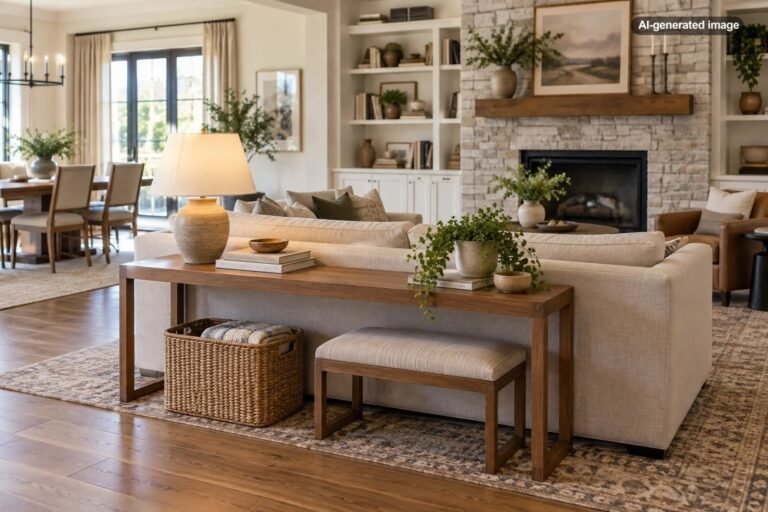
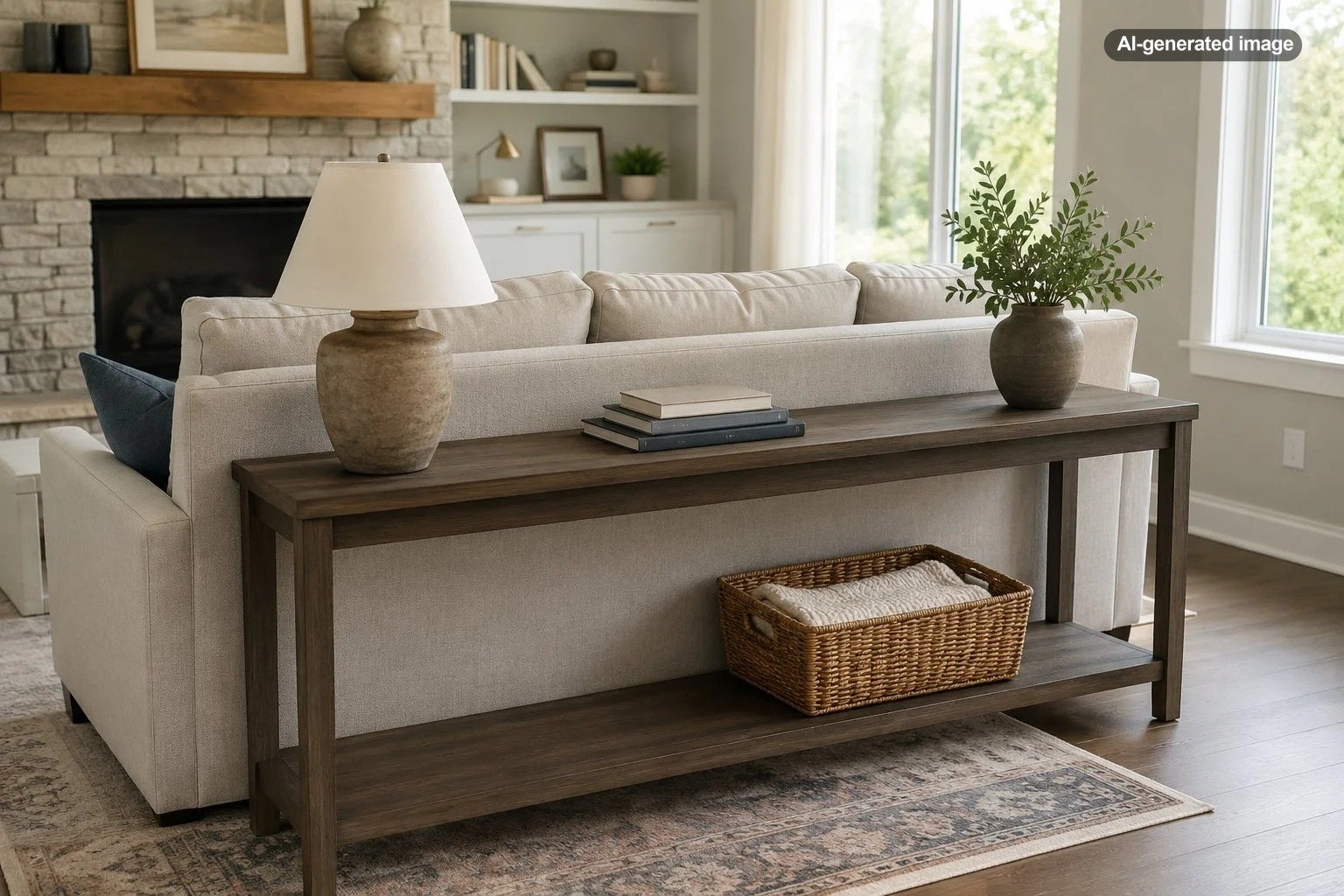
The best height for a console table behind a sofa is generally level with the top of the sofa back or slightly lower. In most rooms, keeping the tabletop within a few inches of the sofa’s back height creates the cleanest proportions and prevents the table from looking as though it is awkwardly towering over the upholstery.
That does not mean there is one universal measurement. Sofas vary considerably in back height, and a low contemporary sectional calls for a different console than a tall traditional sofa. The useful measurement is not an arbitrary number from the floor; it is the relationship between the table and the specific sofa in front of it.
Start With the Height of Your Sofa
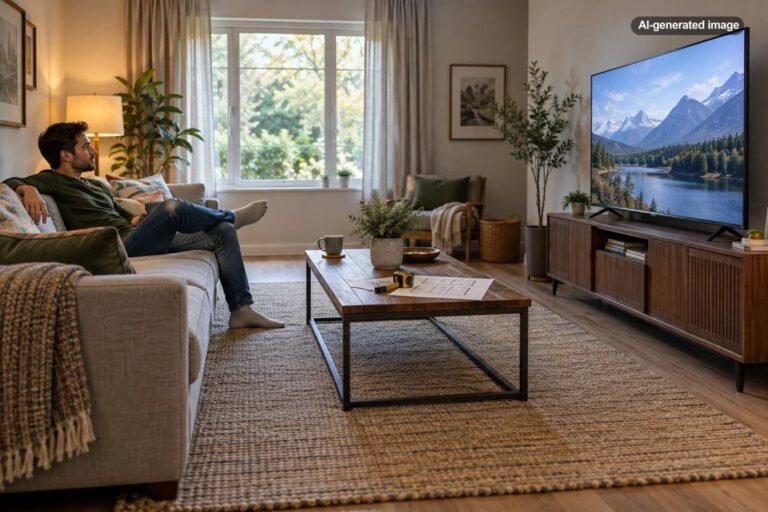
Before shopping for a console table, measure the sofa you already own. Place the end of a tape measure on the floor and measure vertically to the top of the sofa back. Measure the actual frame or upholstered back rather than a loose pillow that can slump, move, or be rearranged.
This measurement gives you a practical reference point. A console that finishes at roughly the same level tends to read as part of the furniture arrangement rather than as a separate wall of furniture behind it. A table that sits an inch or two below the sofa back can be particularly unobtrusive because much of its structure disappears from the main seating-side view.
For example, if the fixed back of your sofa is 32 inches high, a console around 30 to 32 inches tall will usually feel well proportioned. If you have a low-profile sofa with a 27-inch back, a standard-height console may look surprisingly tall behind it, so checking the actual dimensions matters.
The sofa should set the scale; the console should respond to it.
Can the Console Table Be Taller Than the Sofa?
Yes, but the difference should look intentional. A console that extends slightly above the sofa can work when the table itself is visually light, when you want easier access to the surface from behind the sofa, or when the furniture arrangement is primarily viewed from another area of an open-plan room.
The risk increases as the height difference becomes more noticeable. A tall, bulky console behind a lower sofa can create a hard horizontal line that visually chops up the room. It may also make lamps, vases, and other accessories appear unusually elevated when viewed from the seating area.
If you already own a console that is several inches taller, evaluate the whole composition rather than assuming it must be replaced. A slender open-leg table may look perfectly acceptable where a deep cabinet-style console at the same height would feel heavy.
How Long Should a Console Table Be Behind a Sofa?
A well-proportioned console is usually shorter than the sofa rather than exactly matching it from arm to arm. Leaving some sofa visible at both ends gives the arrangement breathing room and keeps the table from appearing oversized.
There is no need to chase a rigid formula. Instead, look at the console from across the room. Its length should feel substantial enough to relate to the sofa without making the two pieces look like a matched furniture set. This is especially important with sectionals, where the overall sectional may be much longer than the straight section behind which the console actually sits.
For a compact living room, a narrower console can preserve visual openness. In a large open-plan space, a longer table can help define the back of a floating seating zone and create a more deliberate transition toward a dining room, hallway, or kitchen.
Do Not Forget the Depth
Depth often determines whether the arrangement actually works in daily life. A narrow console may provide enough room for a lamp, books, a tray, or decorative objects without consuming an important walkway. A deep piece can add useful storage, but it also pushes farther into the room.
Measure the entire path behind the sofa, not just the empty area where the console will stand. Think about people walking past one another, dining chairs pulling out, doors opening, and nearby cabinets or drawers. A table that looks elegant in a product photo can become an obstacle if it leaves an uncomfortable pinch point in your room.
What to do
- Measure the floor-to-back height of the sofa.
- Measure the usable length behind the sofa.
- Determine how much depth the room can spare without compromising circulation.
- Mark the proposed console footprint with painter’s tape.
- View the taped area from the main entrances and seating positions before choosing a table.
How to Style a Console Behind a Sofa
Once the height works, styling should reinforce the proportions rather than overwhelm them. A console behind a sofa is a natural place to add a table lamp, a pair of lamps, stacked books, a sculptural object, greenery, or a decorative bowl. The strongest arrangements usually combine different heights while leaving some open surface visible.
Lighting deserves particular attention. A lamp can add a useful layer of ambient light in a living room, especially when overhead lighting feels harsh. Before placing one behind seating, consider where the cord will run and whether people, pets, or a vacuum cleaner will cross it. Avoid creating a cord that stretches through an active walkway.
If the sofa faces a television or important view, sit down before choosing tall accessories. A vase or lamp that looks beautifully proportioned while you are standing may intrude into the sightline once you are seated.
What If the Sofa Has Loose Back Cushions?
Loose cushions make measuring slightly less obvious because their height changes as they are used. In that situation, measure the fixed back structure first and then look at the normal resting height of the cushions.
A console that aligns with the fixed back often creates the most stable visual relationship. If the cushions extend several inches higher, the table can disappear almost completely from the front, which may be desirable. If you want the console and its accessories to remain more visible, you can choose a slightly taller piece, provided the proportions still look balanced from both sides.
Common Console Table Placement Mistakes
The most common mistake is buying according to the console’s listed height without measuring the sofa. A table described as standard height may be perfectly ordinary on its own but still look too tall beside a low modern couch.
Another mistake is concentrating on height while ignoring depth. Behind-sofa furniture occupies circulation space, and even a few extra inches can matter in a narrow room. Oversized accessories can also upset an otherwise good arrangement by raising the visual center of gravity too far above the seating.
Finally, do not assume the console has to be pressed tightly against the back of the sofa. A small amount of separation can make cleaning easier and prevent the two pieces from rubbing. The right gap depends on the room, but the arrangement should feel deliberate rather than jammed together.
Before you decide
- Measure the fixed sofa back from the floor.
- Aim for a console at approximately the same height or slightly lower.
- Check length and depth as carefully as height.
- Protect walking paths in open-plan rooms.
- Test seated sightlines before adding tall lamps or accessories.
- Plan cord placement if the console will hold lighting.
Frequently Asked Questions
Should a console table be exactly the same height as the sofa?
No. Matching the sofa back closely is an excellent starting point, but being slightly lower usually works just as well. The goal is visual proportion rather than an exact match.
Is it okay for a sofa table to be shorter than the couch?
Yes. In fact, a console that is somewhat shorter in both height and length can look especially balanced because it supports the sofa arrangement without competing with it.
What should I do if my console is too tall?
First evaluate how much taller it is and how visually heavy the piece appears. A modest difference may work with restrained styling. If the table dominates the sofa, moving it to an entryway or wall and choosing a lower piece for behind the sofa will usually create better proportions.
Should a console table go behind a sofa against the wall?
It can, provided there is enough room to pull the sofa forward without making the living area cramped. Console tables are particularly useful behind floating sofas because they visually finish the exposed back and can help define zones in an open floor plan.
The Bottom Line
For most living rooms, choose a console table that reaches approximately the top of the sofa back or finishes slightly below it. Then check the table’s length, depth, visual weight, and effect on circulation. When those proportions work together, the console feels like a natural extension of the seating arrangement rather than another piece of furniture squeezed into the room.