
Can Fire Pit Heat Damage Patio Pavers?
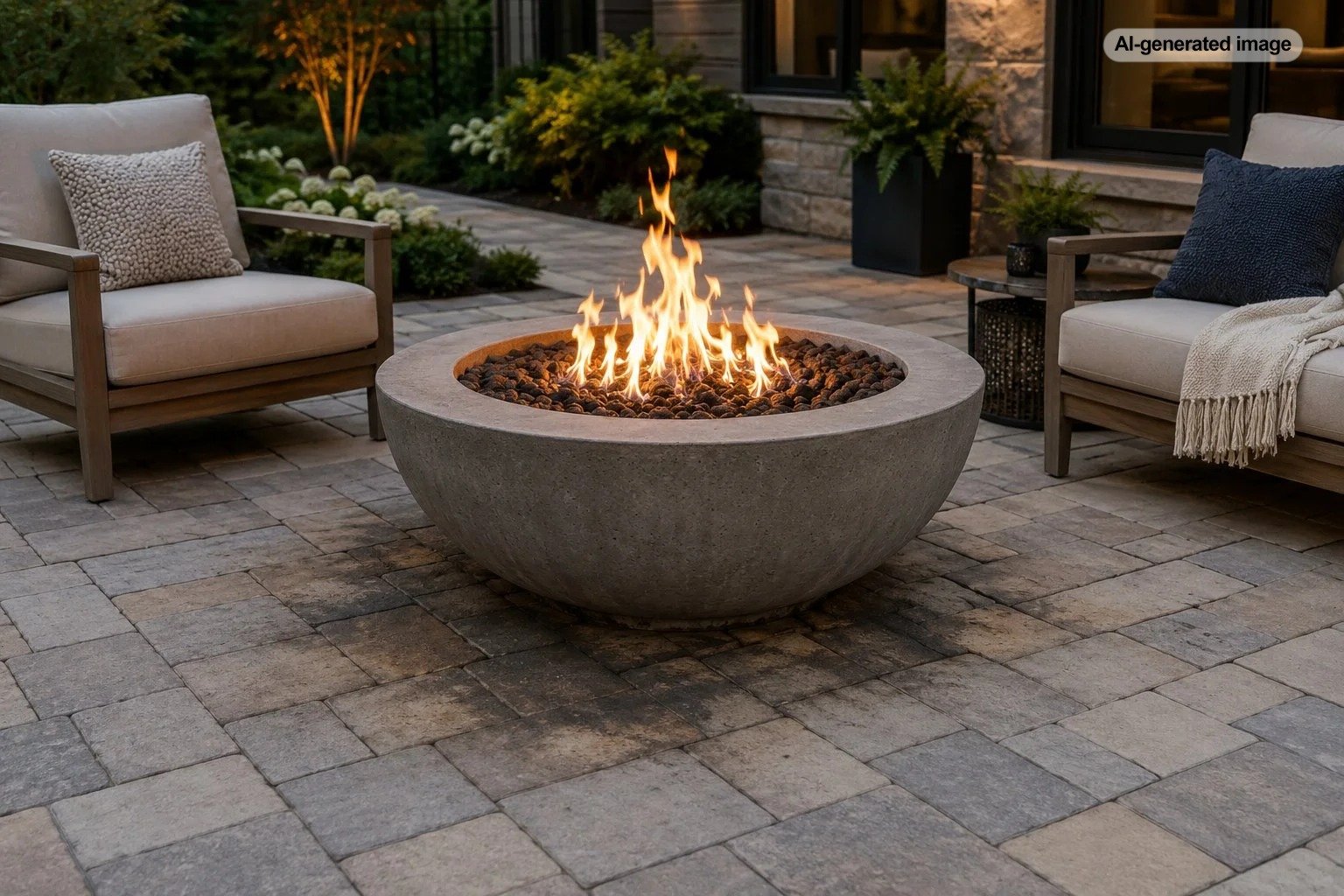
Yes. Fire pit heat can damage patio pavers, especially when high heat is concentrated directly on concrete or masonry for long periods. The most common concerns are discoloration, surface deterioration, cracking, and damage to sealers or decorative finishes. The risk depends on the paver material, the fire pit design, how close the heat source sits to the patio, and whether the installation includes a heat barrier or fire-rated liner.
A portable fire pit that is designed to sit above a noncombustible surface is different from a masonry fire pit built from landscape blocks. In either case, the safest approach is to follow the fire pit manufacturer’s instructions first, then confirm that the paver manufacturer considers the surface suitable for the expected heat exposure.
Why fire pit heat can harm pavers
Concrete pavers are durable outdoor materials, but they are not all intended to act as a firebox. A fire pit can expose a small area of the patio to repeated, concentrated heat. That is different from ordinary summer sun exposure, and the temperature can vary dramatically depending on the fire pit, fuel, airflow, burn duration, and distance from the surface.
Belgard notes that a fire pit can often be placed on existing pavers when proper insulation and protection are used, but it also warns that direct heat from a wood-burning fire pit can crack or discolor pavers. Unilock similarly advises that excessive heat can affect concrete units over time and recommends a metal liner or fire-rated brick for above-ground fire pits made with its wall products.
A paver patio can be a suitable setting for a fire pit without being a suitable firebox.
The distinction matters. The patio beneath a freestanding fire pit may only receive radiant and conducted heat from the appliance. The blocks forming the walls or floor of a built-in fire pit can be exposed much more directly to flame, embers, and intense heat. Those components need to be selected and assembled for that role.
Which paver problems are most likely?
Discoloration and finish damage may appear before structural damage. Stained, sealed, painted, or decorative surfaces can react differently to heat than plain masonry. Even when the underlying paver remains sound, a coating or sealer may darken, haze, blister, or otherwise change appearance.
Cracking or surface breakdown is more serious. Repeated heat exposure can create thermal stress, and concrete units exposed to temperatures beyond what their design can tolerate may deteriorate. If you see new cracks, flaking, popping, or loose material near the fire pit, stop using the setup until you understand the cause.
Soot, ash, and ember marks are another category. These may be mostly cosmetic, but hot embers can still create localized heat exposure. A spark screen or manufacturer-approved shield can help contain flying embers when the fire pit design supports one.
Built-in fire pits need different protection than portable models
If you are building a fire pit from concrete wall units, do not treat ordinary landscape blocks as the exposed interior of the firebox unless the manufacturer specifically permits that use. Unilock states that its wall products are not fire rated and says fire pits made with those products should be lined with fire brick; its guidance also explains that a metal insert helps protect the structural integrity of the surrounding units.
Belgard likewise recommends insulation and protection when a fire pit is installed over pavers and suggests a metal insert or fire ring liner for wood-burning applications. It also notes that, when practical, cutting out the pavers and building the fire pit on the patio’s prepared base can reduce pressure on the pavers and help avoid problems around the installation.
Before you decide
- Identify the exact paver material and any sealer or decorative finish.
- Read the fire pit manual for required surface clearances, stands, bases, or heat shields.
- For a built-in wood-burning pit, use the liner or refractory material specified for the system.
- Keep the fire pit level and stable so heat and embers are not concentrated unpredictably.
- Check local fire restrictions and any property rules that apply to your location.
Portable fire pits: follow the model-specific surface guidance
Portable fire pits vary substantially. Some are designed with elevated bases or stands that reduce heat transfer to the surface below. Others require a separate stand or protective pad. Solo Stove, for example, says its fire pits are generally suitable on stone, pavers, or gravel under normal recommended use, while also advising users to follow its stand guidance and protect heat-sensitive or finished surfaces. That guidance applies to its own products, not to every portable fire pit.
This is why a generic heat mat or a few spare pavers should not automatically be considered adequate protection. A barrier can only help if it is compatible with the fire pit and capable of handling the temperatures and airflow involved. Blocking lower vents or placing an appliance on an unstable stack can create a different hazard while trying to solve the heat problem.
How to protect patio pavers from a fire pit
What to do
- Start with the manual. Use the stand, base, heat shield, liner, or surface protection specified by the fire pit manufacturer.
- Confirm the patio material. If the pavers are sealed, coated, or decorative, check whether the finish has additional heat limitations.
- Create proper separation. For a built-in pit, use fire-rated interior materials or a metal liner as directed by the paver or fire-pit system manufacturer.
- Keep the area clear. Remove dry leaves and other combustible debris around and beneath the unit. Maintain the clearances required by the fire pit manual.
- Inspect after use. Once everything is completely cool, look for new cracks, surface scaling, discoloration, or shifting around the fire pit.
If your patio is expensive, recently installed, heavily sealed, or made from a material with uncertain heat tolerance, it is reasonable to ask the paver manufacturer or installer for guidance before the first burn. For permanent masonry fire features, a qualified installer can also help confirm that the base, liner, drainage, and surrounding clearances suit the planned design.
Basic fire pit safety still matters
Protecting pavers is only one part of a safe setup. The U.S. Consumer Product Safety Commission advises consumers never to use gasoline to start or restart a backyard fire, to use appropriate fire starters only before lighting, to keep a hose or fire extinguisher nearby, and not to burn when wildfire risk is high. Follow the fuel instructions for your specific fire pit and never improvise with a fuel the manufacturer does not authorize.
Clearance from structures, roofs, overhangs, furniture, vegetation, and other combustibles is model-specific, so use the manual rather than a one-size-fits-all distance. If a local burn ban, fire restriction, HOA rule, condo rule, or municipal requirement applies, that can also determine whether and where the fire pit may be used.
FAQ
Can I put a wood-burning fire pit directly on concrete pavers?
Sometimes, but not automatically. Direct heat can discolor or damage pavers, and a built-in wood-burning pit generally needs proper fire-rated protection between the fire and ordinary concrete components. Follow both the fire pit and paver manufacturer’s guidance.
Will a fire pit mat protect pavers?
A compatible heat barrier may reduce heat transfer, but it should not replace the fire pit’s required stand, liner, or base. Make sure any mat is approved for the appliance, surface, and expected temperatures and does not block ventilation.
Are natural stone pavers safer under a fire pit?
Not necessarily. Stone types differ in composition, porosity, moisture behavior, thickness, and finish. Confirm suitability for the specific material rather than assuming all natural stone is heat resistant.
What if my pavers are already cracked near the fire pit?
Stop using the fire pit until the setup is evaluated. Cracking may be cosmetic, heat-related, installation-related, or caused by another issue, and the correct next step depends on the paver, base, and fire pit construction.