
Why Do White Towels Turn Blue or Purple?
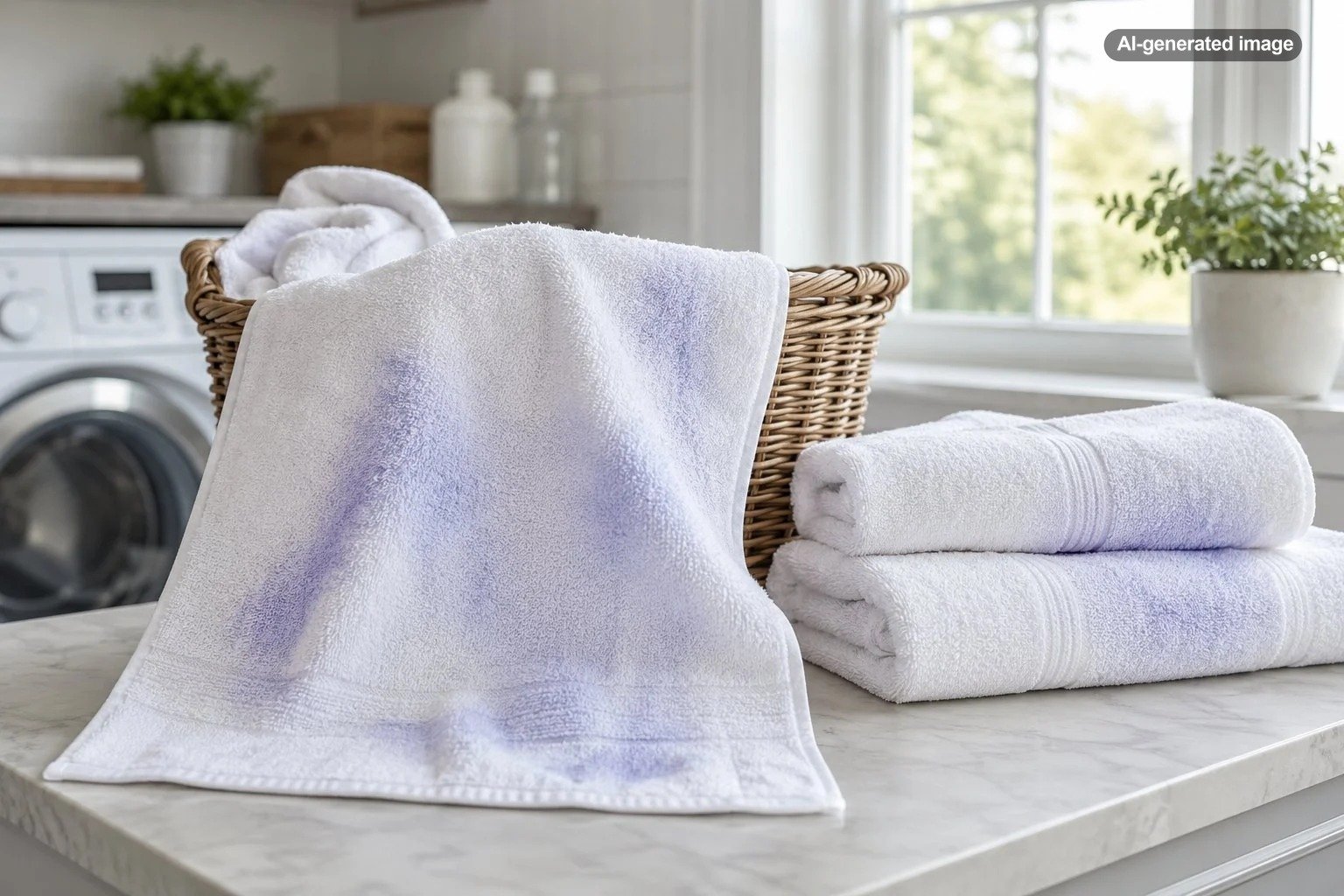
White towels can turn blue or purple for a surprisingly ordinary reason: color has transferred onto the fabric. The source may be a dark or brightly dyed item washed in the same load, or it may be blue coloring from detergent, a laundry aid, or fabric softener that did not fully dissolve or disperse. The American Cleaning Institute specifically lists undispersed blue coloring in detergent, laundry aids, or fabric softener as a cause of blue laundry stains, while appliance guidance also points to mixed-color loads as a common source of dye transfer.
Start with the most likely cause: dye transfer
A white towel is essentially a blank canvas for stray dye. A new navy shirt, dark denim, a saturated bath mat, or another strongly colored textile can release enough dye in the wash to tint nearby whites. Whirlpool notes that dye transfer can happen when colors are mixed and recommends separating dark items from lights and whites.
The pattern can offer a clue. If several towels from one mixed load all changed color at the same time, suspect something else in that load. If only one towel has a concentrated mark, look for direct contact with a colored fabric, product, or residue instead of assuming the whole washer is at fault.
Blue laundry products can leave concentrated stains
Not every blue or purple mark comes from another textile. Some detergents, fabric softeners, and laundry aids contain coloring. If that colored product does not disperse properly, it can leave blue staining on fabric. The American Cleaning Institute identifies this as a specific laundering problem and recommends treating the cause differently depending on whether the residue came from detergent or fabric softener.
This explanation becomes more likely when the stain is small, intense, streaky, or located where a concentrated product may have contacted the towel. It is also worth checking whether detergent, softener, or another additive was poured directly onto dry fabric rather than placed in the washer location specified by the appliance and product directions.
Bathroom products can create look-alike stains
Before blaming the washer, consider what the towel encountered before laundry day. Pigmented hair products, temporary color treatments, purple toning products, makeup, and other strongly colored personal-care products can leave marks that become more obvious after washing. A towel used during hair coloring or toning may develop a blue-violet patch that looks like laundry dye transfer even though the color was already on the towel before it entered the machine.
The easiest way to separate this possibility from washer-related transfer is to look for a pattern. Repeated stains on towels used by the same sink, shower, or grooming routine point toward a bathroom source. Sudden discoloration across unrelated linens from a single wash load points more toward the laundry process.
Do not heat-set the stain while you investigate
If you notice unexpected color when the washer finishes, avoid putting the towel straight into a hot dryer. Laundry guidance from both the American Cleaning Institute and Whirlpool advises addressing transferred color before drying because heat can make a stain harder to remove. Air-drying while you diagnose the problem gives you more room to rewash or treat the towel.
How to narrow down the cause
What to do
- Set the stained towel aside before drying. Keep heat out of the equation until you know whether the color will lift.
- Review the load. Look for dark denim, new clothing, colored washcloths, bath mats, or other items that could have released dye.
- Review the products. Check detergent, softener, scent products, and laundry aids for blue or purple coloring, and confirm that you used them in the correct dispenser and amount.
- Check where the towel was used. Think about hair color, toning shampoo, makeup, or other pigmented bathroom products.
- Rewash according to the care label. If you suspect loose dye, wash the affected towels separately so the problem does not spread to another load.
If the towels repeatedly come out marked even when you wash them alone with a simple routine, inspect the washer for residue in the dispenser, gasket, drum, or other accessible areas described in the appliance manual. Persistent staining across multiple loads is a reason to stop treating each towel as an isolated stain and investigate the laundry setup itself.
What treatment makes sense?
The right treatment depends on the likely source and the towel’s care instructions. For dye transfer, the American Cleaning Institute advises acting quickly, rewashing with detergent, and using a bleach that is safe for the fabric when appropriate. For blue staining from a detergent or powdered laundry aid, its laundering-problems guidance describes a separate vinegar-and-water soak; for fabric-softener staining, it recommends rubbing the stain with bar soap before washing.
Those are not universal recipes for every towel. Care labels, fiber blends, decorative borders, and finishes can change what a fabric tolerates. If you use bleach, stain remover, vinegar, or another laundry treatment, follow the product directions and avoid combining cleaning chemicals unless their labels specifically say the combination is safe.
How to keep white towels white
Prevention is mostly about reducing opportunities for stray color to reach the towels. Sort whites away from dark and saturated colors, especially newer items. Use laundry products in the location and quantity directed by the washer and product labels. Avoid pouring concentrated colored detergent or softener directly onto towels unless the product instructions explicitly tell you to do so.
It also helps to treat white towels as their own practical category. Towels are absorbent, bulky, and frequently exposed to personal-care products, so they can pick up color both in the bathroom and in the washer. A simple routine of checking for visible stains before washing, separating risky colors, and confirming that dispensers are clean can prevent many mystery marks.
When a white towel changes color, the pattern usually tells you more than the color itself.
When the stain keeps coming back
A one-time blue towel is usually a laundry detective story. A recurring problem deserves a more systematic look. If clean white towels repeatedly develop similar marks in loads without colored fabrics, simplify the wash routine for a few cycles: wash a small white-towel load, use only the appropriate amount of one detergent, and skip optional colored additives. If the marks stop, reintroduce products one at a time to identify the likely source.
If discoloration continues despite a simplified routine, consult the washer manual for cleaning and dispenser-maintenance instructions. The goal is not to assume the machine is defective, but to rule out product buildup or leftover dye before replacing towels or changing multiple products at once.
FAQ
Why did my white towels turn purple after washing?
A purple cast can result from blue or violet dye transfer, including color released by another textile or concentrated pigment from a laundry or bathroom product. Review both the wash load and the products that touched the towels.
Can fabric softener cause blue stains?
Yes. The American Cleaning Institute lists failure of blue coloring in fabric softener to disperse as one cause of blue stains. Using the correct dispenser and following the product directions can reduce the chance of concentrated contact.
Should I dry a towel with a fresh blue stain?
It is better to treat or rewash the towel before applying dryer heat. Heat can make transferred color more difficult to remove.
Do I need to replace stained white towels?
Usually not immediately. If the fabric is otherwise in good condition, identify the source and try a care-label-safe stain treatment first. Replacement makes more sense when staining is permanent or the towel is already worn enough that further treatment is not worthwhile.
Sources & further reading
- American Cleaning Institute: Laundering Problems & Solutions
- Whirlpool: How to Remove Color Bleeding from Clothes
- Article specification and CraneManor publishing requirements: