Why Does One Air Vent Smell Bad but the Others Do Not?
When one air vent smells bad but the others do not, the problem is often somewhere near that particular vent, inside its duct branch, or in the surrounding room. Dust and debris, trapped moisture, odors entering through a duct leak, and occasionally pest activity can all produce a smell that seems to come from one register. The good news is that a localized odor does not automatically mean your entire heating and cooling system is contaminated. The important part is determining whether the smell actually originates in the duct or is simply being carried toward you by moving air.
One smelly vent can be surprisingly difficult to diagnose because air moves through spaces you cannot see. A bedroom vent might smell musty while the hallway vent beside it seems perfectly normal. A bathroom register might release an unpleasant odor only when the air conditioner starts. Understanding how individual duct branches and surrounding rooms interact can help you narrow down the possibilities without taking your HVAC system apart.
Why Can One Air Vent Smell When the Rest Are Fine?
In a typical forced-air HVAC system, conditioned air travels through larger ducts before splitting into smaller branches serving different rooms. Although those branches share equipment, they do not necessarily share the same physical conditions.
One duct may pass through a humid attic while another runs through an interior wall. One register might sit beside a damp carpet, while another is surrounded by dry flooring. A branch duct may also have a loose connection or damaged section that allows air from a crawl space, wall cavity, or other concealed area to enter.
This means an odor concentrated at one vent can point toward a localized issue. However, it is not conclusive proof. Airflow patterns, different run times, variations in odor sensitivity, and the position of individual registers can make a shared system problem more noticeable in one location than another.
The Most Common Reasons One Vent Smells Bad
1. Dust, debris, or an odor source near the register
Start with the simplest possibility: something around the vent opening smells unpleasant.
Supply registers collect household dust, lint, pet hair, and occasionally small debris. A nearby carpet, upholstered chair, pet bed, or damp floor can also hold odors that become more noticeable when conditioned air circulates through the room.
For example, a register beside a rarely moved dresser may appear to be producing a stale odor. The actual source could be dust behind the furniture or something spilled near the floor.
Look for visible debris around the grille and just inside the accessible opening. Ordinary dust buildup does not necessarily explain a powerful odor, but it is an easy starting point.
2. Moisture or microbial growth around the vent
A musty, earthy, or damp-basement smell is a reason to investigate moisture. Condensation around a cold supply register, water intrusion near a duct, or damp building materials can create conditions favorable to microbial growth.
This is particularly relevant when ductwork passes through unconditioned attics, crawl spaces, or other humid locations. Insufficient insulation, air leakage, or nearby water damage can contribute to condensation.
According to the U.S. Environmental Protection Agency, moisture control is central to preventing mold growth in HVAC ductwork. The EPA also cautions that visible material cannot always be identified as mold by appearance alone.
Inspect the surrounding wall or ceiling for staining, softened drywall, peeling paint, or recurring condensation. These clues may be more useful than the smell itself.
3. A duct leak pulling in odors from another space
Not every unpleasant vent odor begins inside the vent.
Leaky duct connections can allow air from surrounding spaces to enter a duct system, depending on the pressure conditions during operation. A return-side leak may draw air from a dusty attic or crawl space, while airflow through supply-side leaks is generally outward when the blower operates.
Odors originating in an attic, crawl space, garage-adjacent cavity, or wall opening can sometimes migrate through pressure differences and air leakage pathways. A leaky return system may distribute those odors more broadly, but the smell might still be most noticeable at one outlet.
Potential clues include unusually dusty airflow, visible gaps at accessible duct connections, or an odor that becomes stronger during particular weather conditions.
4. Pest activity inside or near a duct
A distinctly foul, decaying smell can sometimes indicate a dead rodent or another animal in a duct, wall cavity, attic, or crawl space.
The location of the smell does not necessarily pinpoint where the animal is. Air movement can carry odors from concealed spaces toward a nearby register.
Other evidence may include scratching noises, droppings in accessible areas, damaged insulation, or signs of entry around the building exterior.
A strong odor without visible evidence is not enough to diagnose an animal problem. If the smell persists or pest signs are present, arrange an appropriate inspection rather than reaching blindly into ductwork.
5. A smell originating in the room itself
Air moving from a vent can stir up odors already present in a room. This can make the register appear responsible even when the source is elsewhere.
Possibilities include damp carpet padding, a hidden plumbing leak, a floor drain, stored cleaning supplies, food residue, or moisture behind furniture.
A bathroom offers a useful example. If the room develops an unpleasant odor when the HVAC fan starts, the source could be a nearby drain or plumbing issue rather than the duct. Changes in room pressure and airflow may make an existing smell easier to notice.
That is why checking the surrounding room before assuming the duct is contaminated can prevent unnecessary work.
6. A problem shared by the HVAC system that is more noticeable at one outlet
Sometimes the odor originates in equipment serving multiple rooms. Dust on heating components, moisture around cooling coils, condensate drainage problems, or contaminated equipment surfaces can contribute to odors carried by the system.
Even then, the smell may seem stronger at one register because of differences in airflow, room size, location, or where someone happens to be standing.
If additional vents begin smelling similar, or the odor appears immediately whenever the blower starts, consider the possibility of a shared system issue rather than an isolated branch problem.
What Different Air Vent Smells May Indicate
The character of an odor provides useful clues, but it is not a reliable diagnosis on its own.
| Smell | Possible explanation | Sensible next step |
|---|---|---|
| Musty or earthy | Moisture, damp building materials, or microbial growth | Check for condensation and water damage |
| Stale or dusty | Accumulated dust or nearby room odors | Inspect and clean accessible surfaces |
| Rotten or decaying | Pest activity or another concealed odor source | Request an inspection if persistent |
| Sewage-like | Drain, plumbing, or sewer-gas issue | Have the plumbing source evaluated |
| Burning or electrical | Overheating equipment, wiring, or another source | Stop using the system and seek qualified help |
| Gas-like or chemical | Possible fuel-gas leak or chemical contamination | Follow emergency precautions appropriate to the suspected source |
One important distinction is whether you have identified a specific odor or are simply describing an unfamiliar smell. A rotten-egg odor, for example, should not automatically be interpreted as a dead animal because some fuel gases are deliberately odorized to aid leak detection.
How to Narrow Down Which Part of the Vent Is Causing the Smell
Once an immediate safety concern has been ruled out, a short investigation can help distinguish an accessible surface problem from something requiring professional inspection.
What to do
- Identify when the odor appears. Notice whether it occurs with cooling, heating, fan-only operation, or even while the HVAC system is off. Do not deliberately operate equipment that may be unsafe.
- Check the surrounding room. Inspect nearby flooring, furniture, walls, ceiling surfaces, pet areas, and plumbing fixtures for odor or moisture.
- Compare other vents. Notice whether nearby registers have the same smell and whether the odor is equally noticeable at the central return grille.
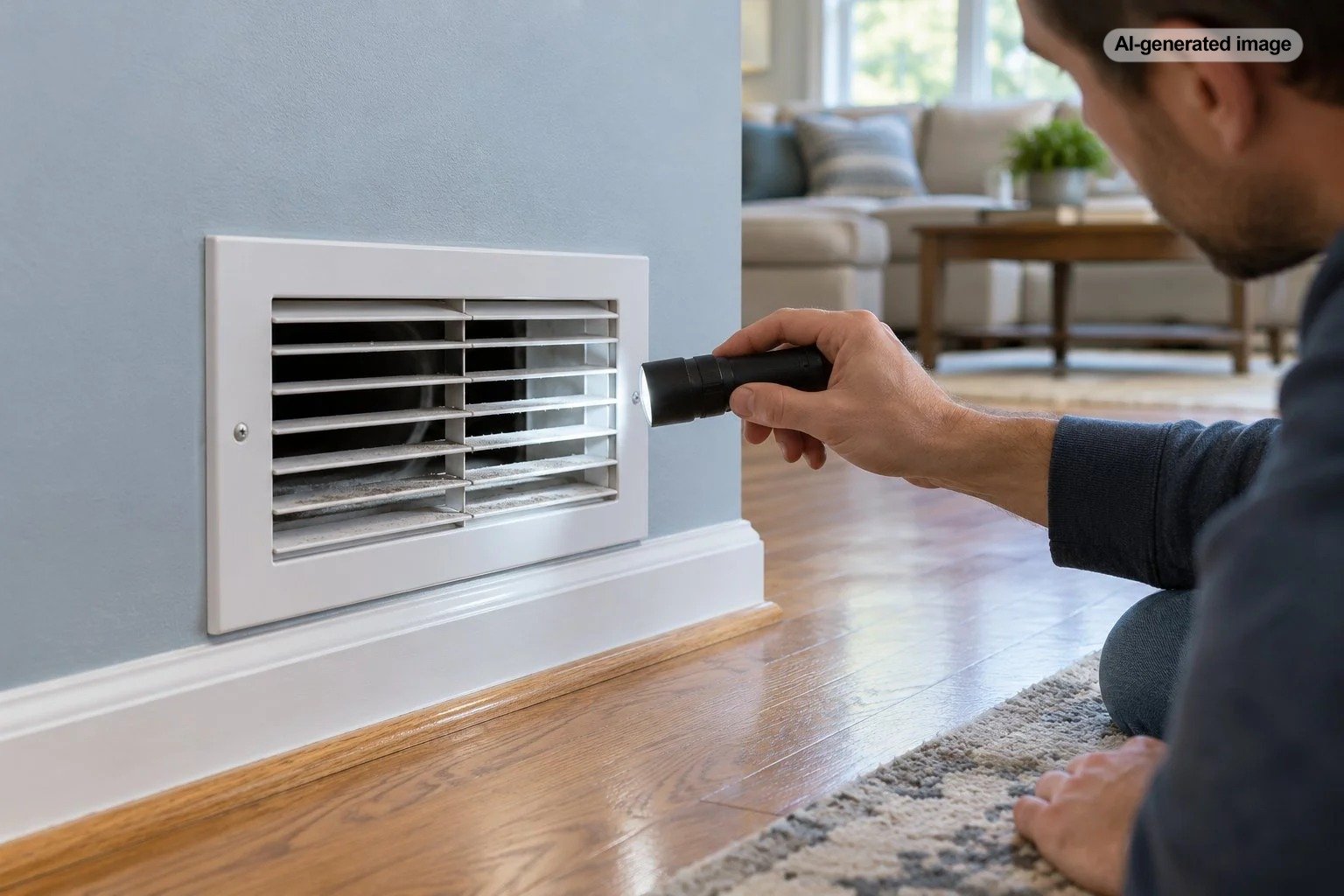
- Inspect the visible register. With the HVAC system off, look for dust, debris, water staining, or condensation around the cover and reachable opening.
- Clean only accessible surfaces. If the grille is removable without disturbing equipment or wiring, follow appropriate cleaning guidance for its material and let it dry completely before reinstalling.
- Document persistent clues. Record when the odor occurs, where it is strongest, whether moisture appears, and whether the problem changes with weather or HVAC operation.
Do not insert tools deep into ductwork, disturb suspected contaminated insulation, or open sealed equipment compartments. A flashlight inspection of a reachable grille is different from dismantling the ventilation system.
What It Means If the Vent Smells Only When the AC Turns On
An odor associated specifically with cooling often shifts attention toward moisture and airflow conditions.
Air conditioners remove moisture from indoor air. Water normally collects at the cooling coil and flows away through the condensate drainage system. If drainage is impaired, equipment or surrounding materials can remain wet.
A cooling-related odor could also originate from condensation near an inadequately insulated duct or register. This is especially worth investigating in humid climates, where cold air moving through a duct can create large temperature differences between duct surfaces and surrounding air.
However, timing alone does not establish that mold is present. A smell that appears when the AC starts may simply be an existing odor carried by increased airflow.
What If the Smell Happens Only When the Heat Runs?
Heating-related odors have a somewhat different set of possibilities.
A mild dusty smell can occasionally occur when a heating system starts after an extended period of inactivity. However, a smell concentrated at one register should not automatically be dismissed as ordinary seasonal dust.
Check whether the odor quickly disappears, persists throughout heating cycles, or becomes progressively stronger. A localized stale smell might reflect debris or another source near one register, while a burning or electrical odor could indicate equipment trouble.
If the smell suggests overheating, smoke, or combustion problems, stop using the equipment when it is safe to do so and seek professional evaluation. Do not repeatedly restart a suspicious system to see whether the smell returns.
For homes with fuel-burning heating equipment, properly functioning carbon monoxide alarms are essential because carbon monoxide itself has no detectable odor.
Can You Fix a Smelly Air Vent Without Cleaning All the Ducts?
Yes, sometimes. The appropriate remedy depends on the actual source.
If dust has accumulated on the accessible register, gentle cleaning may be sufficient. If a nearby spill or damp carpet is responsible, treating that specific problem makes more sense than cleaning the ventilation system.
A loose duct connection may need professional sealing. Wet or contaminated insulation may need replacement. An animal-related odor may require pest removal and repair of entry points. A condensate drainage issue calls for correcting the drainage problem.
These situations demonstrate why a whole-house duct cleaning service should not be the automatic first response.
The EPA does not recommend routine air duct cleaning without a demonstrated need. It identifies substantial visible mold growth in hard-surface ducts, vermin infestation, and heavy debris accumulation as conditions that can justify considering cleaning.
Even when duct cleaning is appropriate, fixing the source of contamination matters. Cleaning a damp duct without correcting the moisture problem may simply allow the odor to return.
When Should You Call an HVAC Professional?
A qualified HVAC contractor is a sensible next step when an odor persists after basic surface checks, appears linked to heating or cooling operation, or accompanies signs of moisture or equipment trouble.
Professional evaluation is particularly useful if you notice recurring condensation, visible water damage, suspected growth inside ductwork, or an odor associated with an inaccessible duct branch.
Depending on the symptoms, an inspection may include accessible duct connections, insulation, condensate drainage, cooling coils, return-air pathways, and airflow conditions.
Not every odor is an HVAC problem. A suspected sewer-gas issue may be more appropriate for a plumber, while pest evidence may justify contacting a pest-control professional. Visible or extensive moisture damage may require someone experienced in moisture investigation and remediation.
Before scheduling an inspection
- Record which vent smells and whether nearby vents are affected.
- Note whether the odor occurs during heating, cooling, or with the system off.
- Check for visible dampness, staining, or condensation.
- Describe the odor without assuming its cause.
- Ask whether the provider will investigate the source before recommending cleaning or replacement.
- Request an explanation of findings and why any proposed work is necessary.
A useful inspection should explain the likely source and the evidence supporting it, not simply conclude that every unpleasant vent odor requires an expensive system-wide service.
How to Keep Vent Odors From Coming Back
Preventing repeat odors is largely about maintaining a reasonably clean, dry building and a properly functioning HVAC system.
Follow the equipment manufacturer’s filter guidance, keep supply and return openings unobstructed, and have cooling and heating equipment maintained as appropriate for the system. Address plumbing leaks, roof leaks, and persistent condensation promptly.
In humid areas, pay particular attention to indoor humidity and ductwork running through unconditioned spaces. The EPA recommends controlling indoor moisture and generally maintaining relative humidity in the 30% to 50% range when practical.
Regularly vacuuming around registers and removing dust from accessible grille surfaces can also help prevent minor buildup. Avoid blocking vents with furniture, rugs, or stored belongings, and do not use register covers to hide an unresolved odor.
For renters and condo residents, documenting the smell, its timing, and any visible moisture makes it easier to report the issue to the landlord, building manager, or maintenance team. Shared building systems and concealed ductwork should be inspected by authorized personnel.
Frequently Asked Questions
Can one air vent smell bad because of mold?
Yes, moisture-related microbial growth is one possible explanation, particularly when the odor is musty and there are signs of dampness. However, a musty smell does not prove mold is present or show exactly where it is growing. Investigating moisture is more useful than assuming the duct needs disinfecting.
Why does the smell get worse when the fan is running?
Moving air can carry existing odors into the room or make nearby odor sources more noticeable. Fan operation can also change pressure relationships between rooms, ducts, and surrounding building cavities. A stronger smell during operation helps narrow the timing but does not establish the precise source.
Could a dead mouse make only one air vent smell?
Yes. An animal inside a branch duct or nearby concealed cavity may cause an odor that appears concentrated at one register. A strong decaying smell, especially with other pest evidence, justifies inspection. Avoid reaching into inaccessible areas or disturbing potentially contaminated materials.
Should I close the smelly vent until it is fixed?
Closing the register may temporarily reduce air entering that room, but it does not correct the source and can affect system airflow. Do not treat a closed grille as a safety solution. If you suspect a hazardous odor, follow the appropriate emergency precautions. Otherwise, arrange evaluation of the underlying problem.
Will changing the HVAC filter remove the smell?
Replacing a dirty filter may improve filtration and airflow when done according to the manufacturer’s instructions, but it will not reliably eliminate odors caused by water damage, pests, duct leakage, or plumbing. The remedy needs to match the actual source.
The Bottom Line
When one air vent smells bad but the others do not, the most useful clue is the odor’s location and timing. Begin with the nearby room and accessible register, then consider the individual duct branch, surrounding building materials, and the central HVAC system.
Many localized smells turn out to have manageable causes. Persistent mustiness, suspected water damage, pest evidence, or unfamiliar equipment odors deserve further investigation, while gas-like, burning, and other potentially hazardous conditions require immediate safety precautions.
The goal is not simply to make the vent smell better for a day. It is to identify why the odor exists and correct that specific problem so the air in the room stays comfortable without masking a potentially important warning sign.
Sources & Further Reading
- U.S. Environmental Protection Agency: Should You Have the Air Ducts in Your Home Cleaned?
- U.S. Environmental Protection Agency: Mold Course, Chapter 2
- U.S. Environmental Protection Agency: What Does Mold Smell Like?
- U.S. Environmental Protection Agency: Guide to Air Cleaners in the Home
- U.S. Environmental Protection Agency: Improving Your Indoor Environment