
What Should Every Guest Room Have?
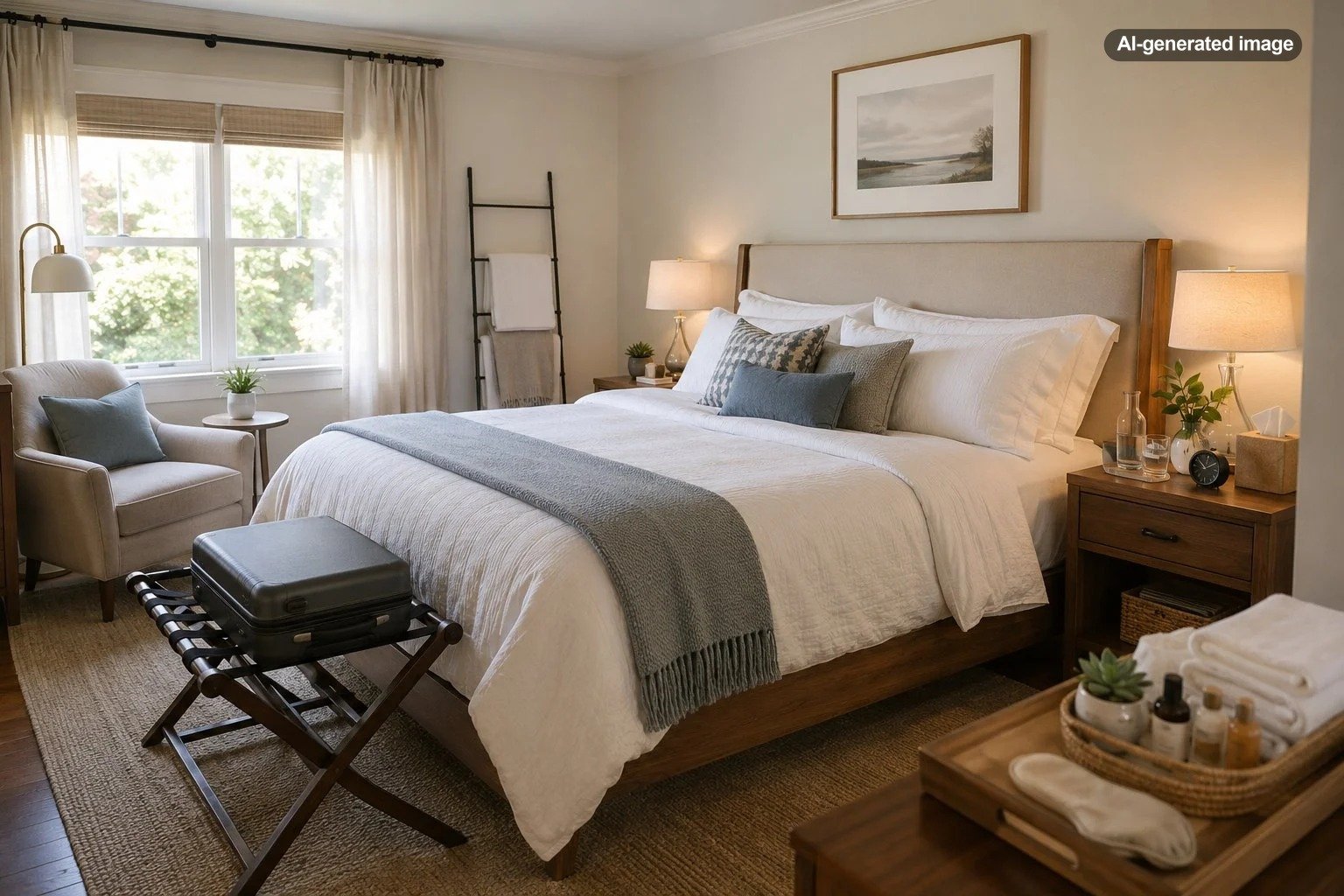
Every guest room should provide five basic things: a comfortable place to sleep, control over light and temperature, convenient bedside lighting and charging, space for personal belongings, and a few clearly visible essentials. The room does not need to resemble a hotel suite. It simply needs to help someone settle in without having to ask where everything is.
The best guest rooms are considerate rather than crowded. They anticipate ordinary needs, make unfamiliar surroundings easy to navigate, and leave enough open space for a visitor’s own things. Start with sleep and function; decorative layers can follow.
Start With a Bed That Supports Real Sleep
The bed is the room’s central responsibility. A guest can overlook an unfinished wall or a modest dresser, but a sagging mattress, unstable frame, or bedding that feels damp and stale will define the visit. Check the frame for movement, make sure the mattress sits evenly, and lie down briefly in several positions to notice obvious dips, squeaks, or pressure points.
Room size should guide bed size. A queen bed is versatile for couples when it still allows comfortable movement around at least the most-used sides. In a narrow room, a full bed may preserve space for a nightstand and luggage rack. Twin beds can work especially well for siblings, friends, or grandchildren, but they require more floor area than many people expect once the walking paths are considered.
Use clean, adaptable bedding
Dress the bed in freshly laundered sheets, a washable blanket or duvet, and an extra layer that guests can add or remove. Layering is more useful than choosing one very heavy comforter because sleep temperatures vary considerably. Inspect linens before each visit for marks, worn elastic, loose fasteners, and lingering fragrance.
Two pillows per sleeper offer a reasonable starting point. If possible, provide different levels of firmness rather than four identical pillows. A clean spare blanket should be visible in a closet, basket, or drawer so guests do not have to search through private storage.
A gracious guest room makes comfort easy to find and choices easy to understand.
Put Useful Surfaces and Light Beside the Bed
At least one stable bedside surface should be reachable without getting out of bed. It needs enough room for a phone, glasses, and a glass of water after the lamp is in place. In a compact room, a narrow wall-mounted shelf, small stool, or sturdy floating nightstand can do the job without consuming much floor space.
Bedside lighting should have a switch that is obvious and easy to reach. A warm reading lamp is generally more comfortable at night than relying only on a bright ceiling fixture. If two people regularly use the room, lighting and a surface on both sides of the bed prevent one guest from becoming the unofficial keeper of every phone and water glass.
Provide an accessible electrical outlet, a charging station, or a clearly labeled extension solution that is appropriate for the devices being connected. Avoid hiding the only usable outlet behind a heavy bed. Charging cords are a thoughtful extra, but an open outlet remains important because connector types change and guests may bring watches, medical devices, or other personal equipment.
Give Guests Control Over Privacy, Light, and Temperature
Window treatments should close fully and provide an appropriate level of privacy after dark. Check them from outside when practical, because a shade that looks opaque during the day may reveal more once the room is illuminated. In bright locations, combining blinds or shades with curtains can improve light control without making the room feel severe.
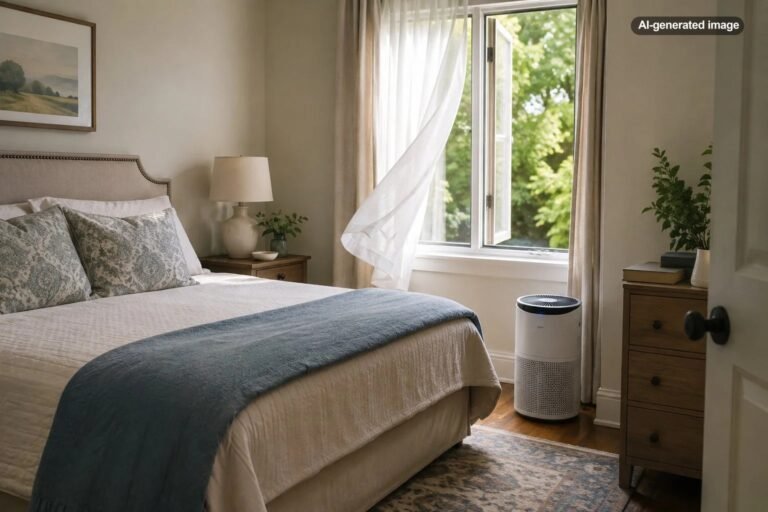
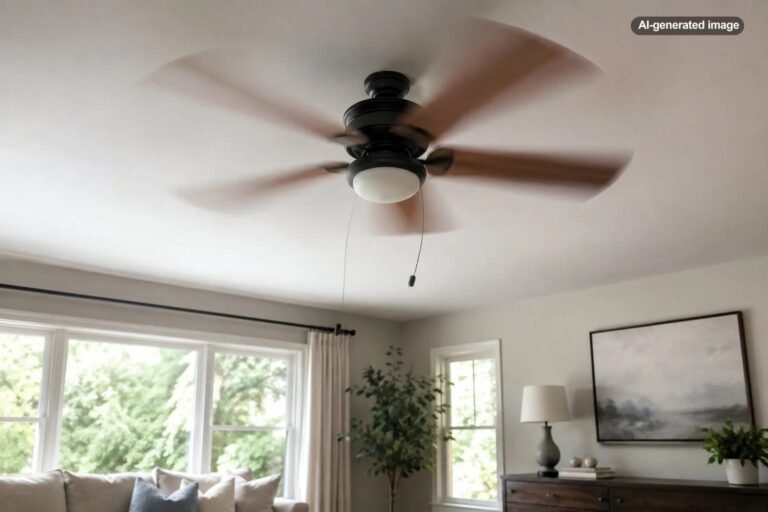
Guests should also know how to adjust the room’s temperature or airflow. Make sure supply vents are not blocked by furniture, and explain any thermostat rules that are not intuitive. A quiet portable fan can help in warmer rooms, while an accessible extra blanket is a better solution than expecting every guest to sleep at the same temperature.
Look for small sources of nighttime irritation: blinking electronics, a clock with an intense display, rattling blinds, or hallway light pouring under the door. These details are easy to miss when the room is rarely occupied but quite noticeable at two in the morning.
Leave Space for Luggage and Clothing
A guest room should not function as storage that happens to contain a bed. Visitors need somewhere to place a suitcase without blocking the doorway or turning the bed into a permanent unpacking station. A folding luggage rack is convenient, but a sturdy bench, low dresser, or clear section of floor can also work.
Leave several empty hangers and enough closet width for a few garments. If the closet is unavailable, add wall hooks or an over-door hanging option that does not interfere with the door. One empty drawer is useful for longer stays, although it is less important than a visible place for a suitcase during a short visit.
| Guest need | Simple solution | Helpful upgrade |
|---|---|---|
| Luggage | Clear floor area | Folding rack or bench |
| Hanging clothes | Hooks and hangers | Open closet section |
| Small belongings | Bedside tray | Empty drawer |
| Laundry | Spare bag | Small hamper |
Make Bathroom Essentials Easy to Identify
Set out a clean bath towel, hand towel, and washcloth for each guest, or show them exactly where those items are stored. Towels placed in the guest room are less likely to be confused with decorative or household linens. A small hamper, basket, or clear instruction about used towels removes another minor uncertainty.
Keep spare toilet paper visible in the bathroom and check that soap is available. A covered wastebasket belongs in both the bathroom and, when space allows, the bedroom. Basic backup toiletries such as an unopened toothbrush, toothpaste, and unscented soap can be helpful, but they should be offered as conveniences rather than arranged like a miniature store display.
Add Information That Reduces Awkward Questions
Guests often need practical information more than additional decor. A small card with the Wi-Fi network and password is useful, as are brief directions for an unfamiliar shower, coffee maker, alarm system, or door lock. Keep instructions concise. A five-page household manual may technically answer every question while creating several new ones.
Make the room navigable after dark. A night-light in the hallway or bathroom can help guests move around an unfamiliar home. Point out stairs, pets, doors that lock automatically, and any morning routines that may affect them. These are simple courtesies, not reasons to make the house feel governed by regulations.
Include Thoughtful Extras Without Creating Clutter
Once the essentials are covered, a few extras can make the room more comfortable. A carafe or sealed bottle of water, a drinking glass, tissues, a small mirror, and a wastebasket are broadly useful. A chair can provide a place to put on shoes, provided it does not obstruct the path around the bed.
Choose decor with restraint. One or two pieces of artwork, a durable throw, and a small plant or simple arrangement can give the room character. Avoid strongly scented candles, diffusers, heavily perfumed linens, and large collections of decorative pillows. Fragrance preferences vary, and guests should not need to perform a nightly pillow-removal ceremony before reaching the sheets.
Consider Accessibility and Different Types of Guests
A room that works for one visitor may be awkward for another. Older guests or anyone with limited mobility may benefit from a clear route to the bed, stable furniture, good nighttime lighting, and a sleeping surface that is not unusually low or high. Loose rugs, trailing cords, and tightly packed furniture can make movement more difficult.
Families with young children may prefer space for a portable crib and fewer breakable objects. Pet owners might appreciate an easy-to-clean spot for a carrier or bed. Guests working during their stay may value a supportive chair and usable desk more than an elaborate display of accessories. Ask about important needs before arrival rather than trying to anticipate every possible arrangement.
Remove the Things That Work Against Comfort
Before guests arrive, remove personal paperwork, medications, valuables, unstable furniture, and anything that makes the room feel off-limits. Check under the bed and inside the most obvious drawers. A visitor should not discover that the only apparent storage space contains tax records, tangled holiday lights, or a collection of objects too mysterious to touch.
Test the room from a guest’s perspective. Close the curtains, turn off the main light, charge a phone, walk to the bathroom, and open the closet. This short trial often reveals blocked outlets, missing bulbs, squeaky doors, and nowhere sensible to place a suitcase.
Before your guest arrives
- Make the bed with clean sheets and layered covers.
- Set out two pillows per sleeper and an extra blanket.
- Confirm that lamps, outlets, curtains, and door hardware work.
- Clear a luggage surface, several hangers, and usable walking paths.
- Place towels, tissues, water, and a wastebasket where they are easy to find.
- Share Wi-Fi details and any essential household instructions.
- Air out the room and remove strong fragrances.
Frequently Asked Questions
Does a guest room need a dresser?
Not always. A dresser is useful for extended stays, but a luggage rack, hooks, hangers, and one small tray may serve short-term visitors better in a compact room.
Should a guest room have a television?
A television is optional. Some guests appreciate it, while others prefer a quieter room. Reliable Wi-Fi, accessible charging, and a comfortable reading light are generally more universal priorities.
How many pillows should be on a guest bed?
Begin with two usable sleeping pillows per person. Decorative pillows are optional and should not overwhelm the bed or leave guests wondering where to put them at night.
What should be on a guest-room nightstand?
A lamp, accessible charging, tissues, water, and enough open space for personal items are sufficient. A clock or small book can be added, but the surface should remain functional.
How can a small guest room feel more comfortable?
Use appropriately scaled furniture, keep the floor path open, add wall-mounted lighting or hooks, and provide one designated place for luggage. In a small room, visible breathing space is often more valuable than another piece of furniture.
A well-planned guest room does not depend on square footage or expensive furnishings. It succeeds when the bed is comfortable, the essentials are easy to find, and the visitor has enough room to feel temporarily at home without feeling as though they have displaced the household.