Can a High-MERV Filter Reduce Airflow Too Much?
Yes, a high-MERV filter can reduce HVAC airflow too much, particularly when the filter creates more resistance than the system’s blower and ductwork can comfortably handle. A higher rating can capture more airborne particles, but that improvement is not automatically beneficial if the equipment struggles to move enough air through the filter.
That does not mean a MERV 13 filter is too restrictive for every home. Many residential systems can accommodate one, and the U.S. Environmental Protection Agency recommends MERV 13 or the highest efficiency the system can support. The important distinction is between a filter’s ability to capture particles and its effect on airflow.
For homeowners trying to improve indoor air quality without compromising heating or cooling performance, the answer lies in understanding filter resistance, checking system compatibility, and recognizing when professional evaluation is worthwhile.
What MERV Ratings Actually Tell You
MERV stands for Minimum Efficiency Reporting Value. It describes how effectively an air filter captures particles within specified size ranges, generally between 0.3 and 10 microns.
As the rating increases, the filter typically captures a greater percentage of particles in those tested ranges. This can help reduce airborne dust, pollen, certain allergens, and other particles circulating through the HVAC system.
However, MERV is a particle-capture rating, not an airflow-resistance rating. Two filters carrying the same MERV number can have different pressure drops because their materials, pleat designs, dimensions, and effective filtering surface areas differ.
Similarly, a well-designed MERV 13 filter may create less resistance than a poorly designed lower-rated filter under comparable conditions. The number printed on the packaging does not tell the entire story.
How a High-MERV Filter Can Restrict Airflow
A forced-air heating and cooling system uses a blower to pull air through return ducts, move it through the equipment, and distribute conditioned air into living spaces. The air filter sits in that airflow path.
Every filter creates some resistance. As air passes through the filtering material, a pressure difference develops across it. HVAC professionals call this filter pressure drop.
When resistance increases, the blower must operate against greater pressure. What happens next depends on the blower design and the rest of the system.
Some blowers deliver less airflow as resistance rises. Others attempt to maintain airflow by increasing their operating effort, potentially producing more noise or consuming more electricity. Neither response guarantees that the system will continue operating within its intended limits.
Why Filter Surface Area Matters
Imagine air moving through two filters with the same face dimensions. One contains relatively little filtering material. The other has deeper pleats that provide substantially more surface area.
The second filter may allow air to pass through more filtering material at a lower velocity through the media. Depending on its construction, that can reduce resistance while still capturing small particles effectively.
This is one reason filter thickness deserves attention. A properly designed deep-pleated media filter can offer favorable airflow characteristics compared with a thin filter of similar efficiency.
However, thicker filters are not interchangeable with thinner ones unless the filter housing is designed to accept them. Never crush, bend, or force a deeper filter into an incompatible slot.
Why a Dirty Filter Changes the Equation
As particles accumulate in a disposable mechanical filter, airflow resistance generally increases. A filter that performed adequately when new can eventually become too restrictive if replacement is delayed.
Homes undergoing renovation, households with multiple shedding pets, and properties experiencing substantial dust exposure may need more frequent filter inspections. Heavy system use can also accelerate loading.
A replacement schedule should reflect actual conditions and manufacturer instructions rather than relying exclusively on the longest interval advertised on the package.
MERV 8 vs. MERV 11 vs. MERV 13: Which Is Better?
The most appropriate filter is the one that provides useful particle capture while allowing the HVAC system to deliver its required airflow.
The following comparison describes general filtration differences, not guaranteed performance in a particular furnace or air handler.
| Rating | Filtration characteristics | Practical consideration |
|---|---|---|
| MERV 8 | Captures many larger airborne particles, including common household dust and pollen. | May suit systems with limited filtration capacity when permitted by the manufacturer. |
| MERV 11 | Provides stronger capture of smaller particles than MERV 8. | A possible middle ground when its pressure drop is compatible with the system. |
| MERV 13 | Captures a greater share of fine particles, including some particles in the 0.3-1 micron range. | EPA’s recommended target when the equipment and filter housing can support it. |
| MERV 14-16 | Offers still higher particle-capture efficiency. | Requires particular attention to pressure drop and equipment compatibility. |
A homeowner with a system designed for a MERV 13 media filter may be able to use that rating without difficulty. Another homeowner with a restrictive return-air arrangement and a small, thin filter slot might encounter problems with a particular MERV 13 product.
It would be misleading to claim that every MERV 8 filter is safe or that every MERV 13 filter causes problems. The complete system determines the outcome.
Signs Your Air Filter May Be Restricting Airflow
Filter-related airflow problems sometimes become noticeable shortly after installing a different filter. Other times, they develop gradually as the filter loads with dust.
Potential warning signs include:
- Weaker airflow at supply registers: Air movement feels noticeably reduced compared with normal operation.
- Longer heating or cooling cycles: The system struggles to reach the thermostat setting, although weather and other equipment issues can produce similar symptoms.
- New airflow noises: Whistling at the return grille or around the filter compartment may indicate increased resistance, leakage, or an improperly seated filter.
- Unexpected equipment shutdowns: Some furnaces or air conditioners may interrupt operation when abnormal conditions trigger protective controls.
- Cooling performance problems: Insufficient airflow across an evaporator coil can contribute to excessively low coil temperatures and freezing.
These symptoms do not prove that the filter is responsible. Blocked return grilles, dirty coils, duct restrictions, blower problems, and other mechanical faults can cause similar difficulties.
How to Tell Whether Your HVAC System Can Handle MERV 13
Before replacing a standard filter with a higher-efficiency model, gather a little information about the equipment and the filter itself.
What to do
- Check the equipment manual. Look for the manufacturer’s filter requirements, approved configurations, and maintenance instructions. Some documentation specifies filtration arrangements or acceptable resistance limits.
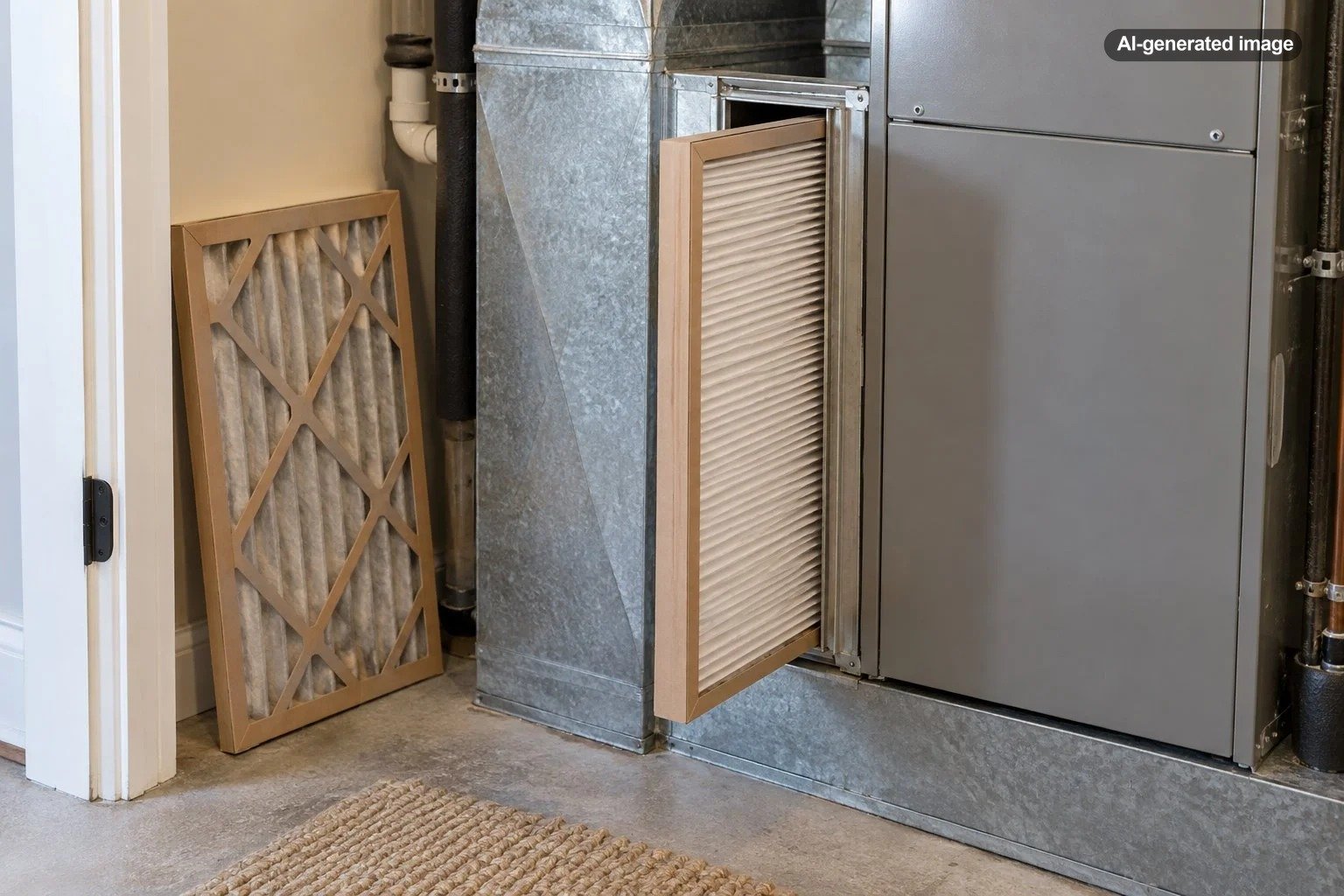
- Confirm the filter dimensions. Check the actual size and depth of the filter slot, not only the nominal dimensions printed on the existing filter.
- Inspect the existing filter. If it is heavily loaded with dust, replace it with a clean filter approved for the equipment before drawing conclusions about another rating.
- Review the prospective filter’s specifications. When available, compare initial pressure drop at a representative airflow rate rather than relying solely on MERV ratings.
- Observe system operation. After a properly installed filter change, pay attention to new noises, reduced airflow, or unusual heating and cooling behavior.
- Request a professional assessment when uncertain. An HVAC technician can evaluate system airflow and pressure measurements against equipment requirements.
Always follow manufacturer instructions for shutting down equipment before filter replacement. Install the filter in the correct airflow direction, and ensure it fits securely without significant gaps around the edges.
What a Technician Can Measure
Instead of guessing from how strongly air blows from a register, an HVAC technician can measure static pressure and evaluate the system’s operating conditions.
Two measurements are particularly informative: the pressure difference across the filter and the total external static pressure experienced by the air-moving equipment. These are related but distinct values.
The pressure difference across the filter helps characterize the resistance introduced by that component. Total external static pressure reflects resistance across the external airflow path as defined by the equipment manufacturer.
A technician can interpret those readings alongside blower performance information, duct conditions, and applicable equipment specifications. Airflow may also be estimated or measured using appropriate instruments and procedures.
There is no universal pressure reading that makes every MERV 13 filter acceptable or unacceptable. The applicable limits depend on the specific equipment and its installation.
Why the Same Filter Works in One House but Not Another
Consider two homes with similar heating and cooling equipment. Both homeowners want better capture of airborne particles and are considering a MERV 13 filter.
Return-duct sizing, grille design, filter face area, duct restrictions, and blower characteristics all affect available airflow.
An HVAC system with a restrictive return path has less room for additional filter resistance. Installing a higher-efficiency filter may reveal an existing ductwork limitation rather than being the sole cause of poor performance.
This distinction becomes especially important during equipment replacement. A new system with appropriate filtration provisions can be designed around the intended filter efficiency instead of treating filtration as an afterthought.
Can a High-MERV Filter Damage Your Furnace or Air Conditioner?
Excessive airflow restriction can contribute to equipment problems, although damage is not inevitable simply because a high-MERV filter is installed.
In heating mode, inadequate airflow through certain furnaces can contribute to excessive operating temperatures. Safety controls may shut the equipment down to limit overheating.
In cooling mode, reduced airflow across the evaporator coil can contribute to coil icing, reduced cooling output, and abnormal system operation.
Blower behavior also depends on motor design. Some systems experience substantial airflow reduction as static pressure increases, while others increase motor effort to maintain a commanded airflow. Both situations require evaluation in the context of the particular equipment.
The sensible approach is not to avoid effective filtration altogether. It is to select filtration that the installed HVAC system can support and address meaningful restrictions before they lead to recurring operational problems.
Better Ways to Improve Filtration Without Sacrificing Airflow
If your existing system cannot comfortably accommodate the filter efficiency you want, there are several practical alternatives.
Consider a Larger Media Filter Cabinet
A properly designed filter cabinet with greater media surface area may support higher-efficiency filtration with a manageable pressure drop. This can involve a deeper filter or a larger effective filtering area.
However, changing the filter cabinet or return ductwork is a system modification, not a matter of squeezing a different filter into the existing opening. A qualified professional should assess the design and installation.
Improve Existing Airflow Restrictions
A high-resistance filter is only one possible contributor to an airflow problem. An HVAC technician may find that restrictive ductwork, a dirty coil, or an inadequate return-air arrangement deserves attention.
Correcting those problems can improve system performance and potentially create more flexibility in filter selection. Simply buying a lower-rated filter does not fix an underlying mechanical defect.
Use a Portable Air Cleaner for Additional Particle Removal
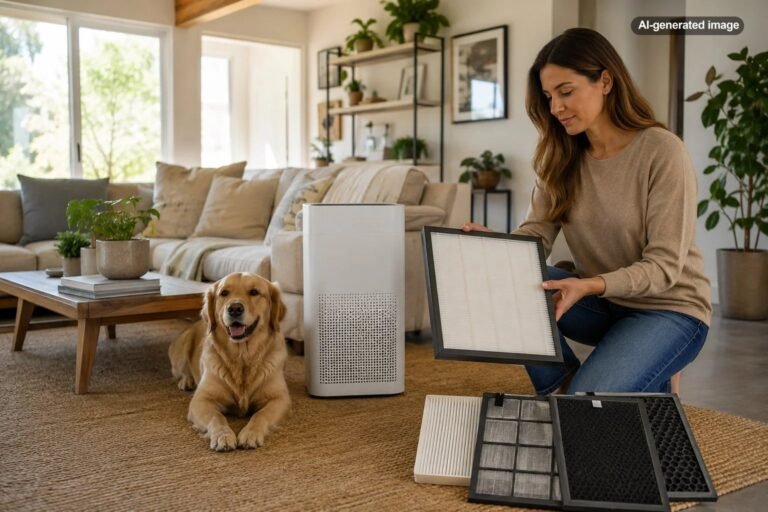
If a central HVAC system cannot accommodate MERV 13, a portable air cleaner can provide supplemental filtration in important rooms.
Look for an appropriately sized unit with a suitable clean air delivery rate, commonly abbreviated CADR. The EPA provides guidance for selecting portable air cleaners based on room size and the types of particles being addressed.
A portable cleaner operates separately from the central HVAC filter, so it does not add resistance to the furnace or air handler’s return-air path. It still requires electricity, filter maintenance, and thoughtful placement.
Filtration is also not a substitute for controlling indoor pollution sources or providing appropriate ventilation. The most effective indoor air quality strategy often combines those approaches.
Common Mistakes When Upgrading HVAC Filters
Even a high-quality filter can perform poorly when selected or installed incorrectly.
- Shopping by MERV alone: Efficiency ratings do not reveal a filter’s complete airflow characteristics.
- Buying the wrong dimensions: An undersized filter can allow air to bypass the media, while an oversized filter may not fit correctly.
- Ignoring the airflow arrow: Filter orientation should follow the manufacturer’s instructions.
- Assuming thicker always means better: Media design matters, and the filter must fit the designated housing.
- Neglecting replacement: Dirt accumulation can increase resistance and undermine otherwise appropriate filter selection.
- Using multiple filters without approval: Adding a filter at a return grille when the system already has a filter at the equipment may create additional resistance.
- Removing filtration to solve a problem: Operating without a required filter can expose internal HVAC components to dust accumulation.
Also avoid treating proprietary filter ratings as automatically equivalent to MERV. Manufacturer-specific scales may describe particle capture differently, so comparisons require care.
How Often Should You Replace a High-MERV Filter?
There is no replacement interval that applies equally to every filter, house, and HVAC system.
ENERGY STAR advises homeowners to inspect HVAC filters monthly, particularly during heavy heating and cooling use, and replace dirty filters. Its general maintenance guidance recommends changing filters at least every three months, but product-specific instructions and operating conditions may require a different schedule.
Deep-pleated media filters can have different service-life requirements from thin disposable filters. Follow the manufacturer-approved interval and inspect more frequently when household conditions warrant it.
If a filter becomes heavily loaded well before its expected replacement time, investigate possible sources of excessive dust or unusual system operation rather than assuming that every replacement product is defective.
The goal is to maintain adequate filtration without allowing resistance to climb beyond what the HVAC system can handle.
Frequently Asked Questions
Is MERV 13 too high for a residential furnace?
Not necessarily. Many residential systems can use MERV 13 filtration, and the EPA recommends that efficiency when the fan and filter housing can accommodate it. Check manufacturer guidance and seek professional evaluation if airflow capacity is uncertain.
Can a MERV 13 filter make my electric bill higher?
It is possible. Additional resistance may increase blower energy consumption in some systems or affect operating time and efficiency. The actual outcome depends on blower controls, system conditions, filter pressure drop, and maintenance. A specific increase cannot be predicted from the MERV rating alone.
Does a MERV 13 filter always restrict airflow more than MERV 8?
No. Actual resistance depends on filter construction, available media area, airflow rate, and dust loading. Compare published pressure-drop information under similar conditions.
Can I put a HEPA filter in my furnace?
Ordinary residential filter slots generally are not designed for true HEPA filtration. Installing a HEPA filtration system in central ductwork may require specialized equipment or professional modifications. A separate portable HEPA air cleaner may be a more practical option for individual rooms.
Should I switch back to a lower-MERV filter if airflow drops?
If airflow becomes noticeably weaker after an upgrade, check that the new filter is the correct size, properly installed, and permitted by the equipment manufacturer. A return to an approved filter may be appropriate, but persistent symptoms should be assessed professionally. Do not use temporary filter removal as a substitute for diagnosis.
The Bottom Line
A high-MERV filter can reduce airflow too much, but its rating alone does not determine whether it will cause trouble. The important questions are how much resistance the particular filter creates and whether the complete HVAC system can operate properly with that resistance.
For many homes, MERV 13 offers a worthwhile improvement in particle capture. For systems with limited blower capacity, undersized return ducts, or restrictive filter compartments, reaching that level of filtration may require careful product selection or professional adjustments.
Choose the highest practical filtration efficiency that the equipment can accommodate, replace filters as needed, and take changes in airflow or equipment behavior seriously. Effective air cleaning should work with the heating and cooling system, not against it.
Sources & Further Reading
- U.S. Environmental Protection Agency: Guide to Air Cleaners in the Home – Guidance on residential filtration, MERV 13 recommendations, HVAC compatibility, and portable air cleaners.
- U.S. Environmental Protection Agency: What Is a MERV Rating? – Explanation of particle-capture ratings and filter selection.
- U.S. Environmental Protection Agency: Residential Air Cleaners, A Technical Summary – Detailed information on filter resistance, compatibility, and residential HVAC filtration.
- ENERGY STAR: Heat & Cool Efficiently – Home heating and cooling maintenance guidance, including filter inspection and replacement.
- U.S. Environmental Protection Agency: Do Ducted Air-Source Heat Pumps Filter Fine Particles Out of Indoor Air? – Guidance on system-level filter compatibility and alternatives when high-efficiency filtration is impractical.