How Far Should an Area Rug Extend Past a Sectional?
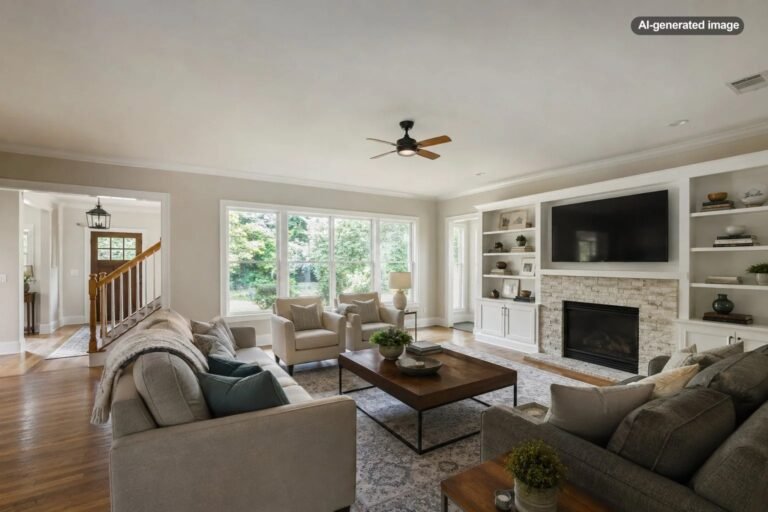
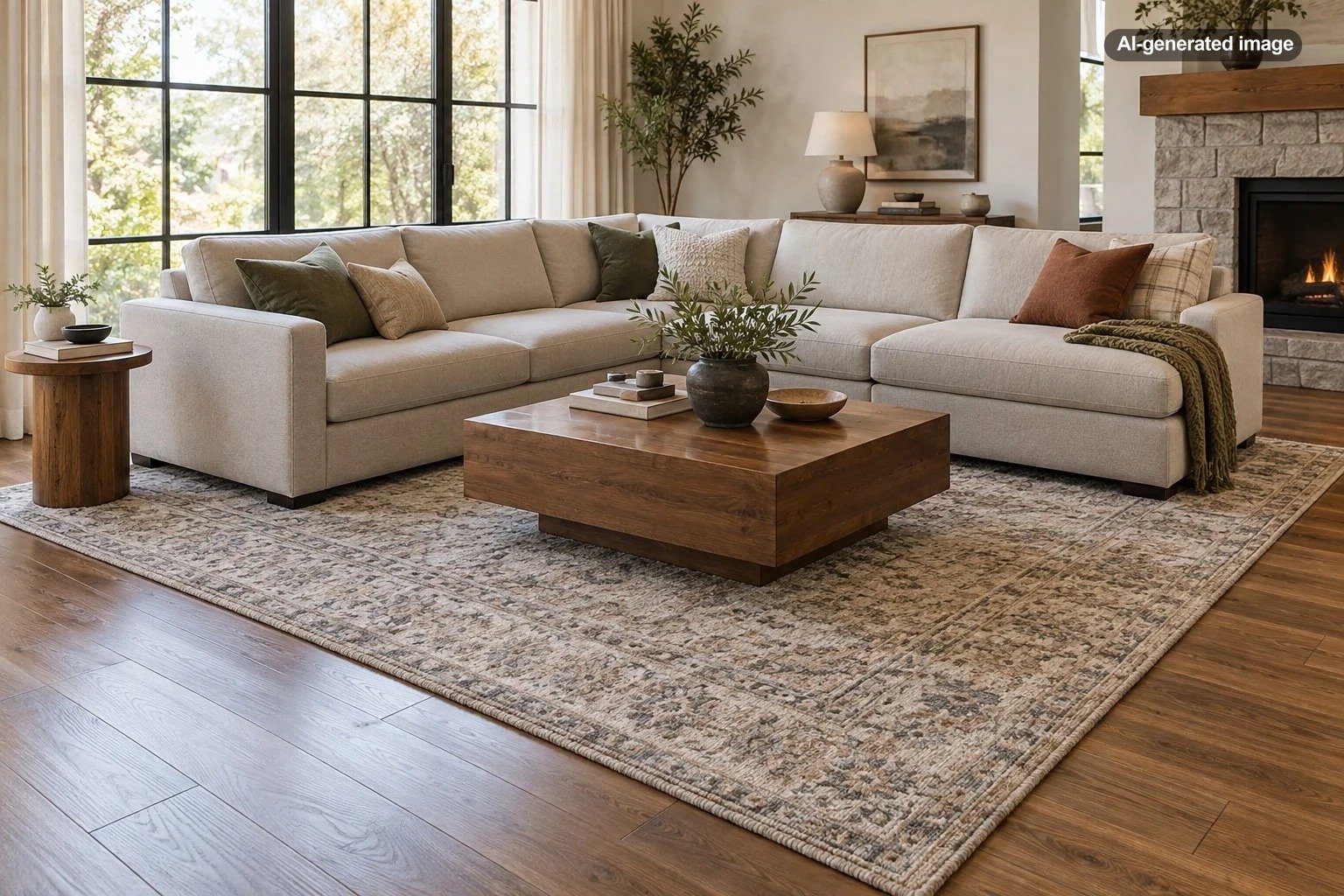
An area rug should generally extend about 6 to 12 inches beyond the exposed sides of a sectional, with enough depth to accommodate the front legs of every seating section. For a more generous, grounded appearance, extending the rug 12 to 18 inches beyond the seating footprint can work beautifully when the room allows. These are useful design guidelines rather than rigid requirements, and the ideal arrangement depends on the sectional’s shape, the room’s dimensions, and how much furniture sits on the rug.
The most important principle is visual connection. A rug should make the sectional, coffee table, and surrounding seating feel like one intentional arrangement. A rug that is too small can leave a substantial sofa looking disconnected from the room, while an oversized rug may interfere with circulation or crowd the surrounding furniture.
Why Rug Extension Matters With a Sectional
A sectional has a larger and more complicated footprint than a conventional sofa. An L-shaped design may extend in two directions, while a chaise sectional creates a particularly deep projection on one side. This makes rug placement less about matching a single furniture dimension and more about balancing an entire seating zone.
The visible portion of the rug provides breathing room around the furniture. When the rug stops exactly at the sectional’s outer edges, the arrangement can look cramped, even if the rug is technically large enough to support the front legs. Allowing a little extra material to show creates a more deliberate composition.
The rug also helps establish boundaries in open-plan living rooms. A sufficiently generous rug visually separates the conversation area from the dining space, kitchen, or circulation routes without requiring additional furniture.
How Much Rug Should Show on Each Side?
Although equal rug borders might sound ideal, a sectional rarely creates a perfectly symmetrical arrangement. The chaise, return, and surrounding furniture can influence where extra rug coverage is most useful.
| Location | Suggested coverage | Design purpose |
|---|---|---|
| Exposed outer sides | 6 to 12 inches beyond furniture | Creates a visible border |
| Open floor in front | 12 to 18 inches of visible rug, when space permits | Provides comfortable visual depth |
| Under front legs | Enough for secure placement, often 6 to 12 inches beneath the furniture | Connects the seating to the rug |
| Behind the sectional | Variable; full coverage is optional | Depends on furniture placement |
These measurements are starting points, not dimensions that every room must satisfy simultaneously. A sectional positioned directly against a wall does not need an equal rug border behind it. Similarly, a chaise may require additional coverage along one side to keep the entire arrangement visually connected.
Front Legs on the Rug or All Legs on the Rug?
Front Legs on the Rug
For many living rooms, placing the front legs of the sectional on the rug offers the best balance between appearance, flexibility, and cost. The rug extends underneath the front portion of the sofa while the rear legs remain on the surrounding floor.
With an L-shaped sectional, aim to include the front legs of both seating runs. If only the longer sofa section touches the rug and the shorter return remains completely outside it, the arrangement may look visually divided.
This approach is particularly useful when the sectional sits against two walls or occupies a compact room. It also allows a slightly smaller rug than an arrangement that supports every furniture leg.
All Legs on the Rug
Placing the entire sectional on the rug creates a more expansive and unified seating area. This can be especially attractive when the sofa floats away from the walls or sits within a large open-concept space.
For this arrangement, the rug must accommodate the full sectional footprint, including its deepest return or chaise. Ideally, some rug remains visible beyond the exposed sides, rather than disappearing entirely beneath the furniture.
The tradeoff is size. Large rugs generally require a higher budget, can be more difficult to move for cleaning, and need adequate space around their perimeter.
Rug Only Under the Coffee Table
A smaller rug placed entirely in front of the sectional can work in a particularly compact room, but it is usually less effective at visually connecting a large sectional. If choosing this arrangement, make the placement deliberate: center the rug within the conversation area and avoid leaving an awkwardly narrow strip of floor between the rug and sofa.
What Size Rug Works Best Under a Sectional?
Standard rug dimensions offer convenient starting points, but the sectional’s actual measurements should determine the final choice. A compact sofa with a short chaise requires a different footprint from a deep, modular sectional with an extended return.
8-by-10-Foot Rugs
An 8-by-10-foot rug may work well with a smaller sectional, especially when only the front legs rest on the rug. It can also suit a modest living room where a larger rug would leave too little exposed flooring.
However, this size may feel narrow beneath a substantial L-shaped sectional. Check the position of the chaise and outer front legs before assuming the dimensions will work.
9-by-12-Foot Rugs
A 9-by-12-foot rug is a useful starting point for many medium-size and larger sectionals. The additional width and length can accommodate both arms of an L-shaped sofa while leaving a visible border around the seating area.
It may also provide enough coverage for a coffee table and an additional chair, depending on the room. The rug should relate to the entire furniture arrangement rather than the sectional alone.
10-by-14-Foot Rugs and Larger
Large L-shaped and U-shaped sectionals may benefit from a 10-by-14-foot rug or a larger custom dimension. These sizes are particularly useful when the furniture floats in an expansive living room or when the design calls for all legs to rest on the rug.
Do not automatically choose the largest available rug. Check nearby doorways, walking paths, floor vents, and other furniture before committing to a substantial footprint.
How to Measure for a Rug Under a Sectional
The simplest way to avoid an expensive sizing mistake is to map the arrangement before buying. Measure the furniture and the room rather than relying on a rug-size recommendation alone.
What to do
- Measure the sectional’s full width. Record the distance between its outermost ends, including the arms.
- Measure its maximum depth. Include the chaise, return, or deepest projecting section.
- Choose your leg placement. Decide whether the rug will sit beneath the front legs or the entire sectional.
- Add visible border space. Start with approximately 6 to 12 inches beyond the exposed sides, adjusting for the room.
- Include nearby seating. Account for accent chairs, ottomans, and the coffee table if they belong within the same rug-defined zone.
- Mark the proposed rug dimensions. Use painter’s tape to outline the rug on the floor, then walk around the arrangement.
For example, imagine a sectional measuring 108 inches along its longest side, with a chaise that projects 66 inches into the room. The sofa is 9 feet wide, but that does not mean every 9-foot-wide rug will work. The rug must also accommodate the desired leg placement, visible side borders, and surrounding furniture.
Test an 8-by-10-foot outline and a 9-by-12-foot outline. The larger option may provide the breathing room needed to make the chaise feel connected, while the smaller option may be sufficient if the room is narrow and only the front legs require coverage.
Remember that nominal rug sizes are not always exact. Confirm the listed product dimensions before making the final decision.
How the Sectional Shape Changes Rug Placement
L-Shaped Sectionals
With an L-shaped sectional, account for both seating runs. The rug should ideally connect the longer section and its perpendicular return. A rug centered beneath only the longest side may leave the corner arrangement looking incomplete.
Consider shifting the rug toward the inside corner of the L if doing so provides more useful coverage. The best visual center is often the conversation area, not the mathematical midpoint of the room.
Sectionals With a Chaise
A chaise creates additional depth that can complicate rug placement. A rug that fits beneath the main sofa seats may stop short of the chaise’s front support.
If possible, choose a rug deep enough to reach beneath the chaise’s front legs or supporting base while still leaving visible material toward the coffee table. The front edge of the chaise should not appear awkwardly disconnected from the main seating arrangement.
U-Shaped Sectionals
U-shaped sectionals surround the central seating area on three sides, creating a strong need for visual balance. A larger rug can connect both returns and support a coffee table in the open center.
In this configuration, an undersized rug may resemble a small island surrounded by furniture. Consider a size that reaches beneath the front legs of all three sides, or beneath the entire arrangement if the room allows.
Choosing the Right Rug Material and Pattern
Once the dimensions are settled, material and pattern can influence how successfully the rug works with the sectional. A busy room with a substantial patterned sofa may benefit from a quieter rug, while a simple solid-color sectional can provide a useful foundation for texture or a more expressive design.
Low- and medium-pile rugs are often practical beneath heavy seating because furniture sits relatively steadily and everyday cleaning can be easier. A thick, plush rug may create a softer appearance but can complicate furniture placement or make moving a coffee table more difficult.
Affiliate disclosure: CraneManor.com may earn a commission when you purchase through links on this page. This does not affect the price you pay. Learn more.
For a relaxed, layered look, a Threshold woven area rug is one example of the kind of textile to consider. Confirm the available dimensions, material, and care requirements before deciding whether it suits your sectional and household.
Pattern scale matters, too. A large sectional can visually overpower a delicate design, while an extremely bold rug may compete with heavily patterned upholstery. Consider how much of the rug will remain visible after the furniture is positioned.
Common Rug Placement Mistakes to Avoid
Choosing a rug based only on the sofa’s longest dimension. The shorter return and chaise depth are equally important to the finished arrangement.
Leaving one sectional section completely off the rug. This can make the furniture look disconnected. Try adjusting the rug or moving up a size so both seating runs participate in the same arrangement.
Centering the rug on the room instead of the seating area. An asymmetrical sectional may require an asymmetrical rug position. Align the rug with the furniture composition first.
Buying a large rug without checking circulation. A generous rug can look elegant, but it should not create awkward edges across doorways or interrupt frequently used walking paths.
Ignoring rug movement and furniture stability. Use an appropriate rug pad where needed, check that sectional supports remain stable, and prevent edges from curling into walking paths.
Frequently Asked Questions
Does a Rug Need to Extend Beyond Both Ends of a Sectional?
Ideally, yes, on the exposed sides. A visible extension of roughly 6 to 12 inches usually creates a pleasing border. A side positioned tightly against a wall may not need the same clearance as one facing an open part of the room.
Can an 8-by-10 Rug Work With a Large Sectional?
Sometimes, but a large sectional may overwhelm it. An 8-by-10 rug can work if the furniture footprint allows both seating sections to connect to the rug. Larger L-shaped and U-shaped arrangements often benefit from a 9-by-12 or larger rug.
Should the Rug Be Centered Under the Sectional?
Center it visually within the seating arrangement rather than automatically aligning it with the room’s walls. An asymmetrical chaise or return may call for a slight shift to create a more balanced composition.
Should the Coffee Table Sit Entirely on the Rug?
Usually, yes. Keeping the coffee table fully on the rug helps establish a coherent conversation area. Leave enough space between the table and sectional for comfortable movement and access to the seats.
Is a Bigger Rug Always Better?
No. Although choosing a slightly larger rug often produces a more cohesive appearance, a rug that interferes with circulation or overwhelms a compact room is not necessarily the best choice. Furniture proportions and available floor space should guide the decision.
The Best Rug Placement Is the One That Connects the Room
For most sectionals, begin with 6 to 12 inches of visible rug beyond the exposed sides and a placement that accommodates the front legs of both seating sections. Increase the coverage when the room is generous or when the sectional floats away from the walls.
Before purchasing, outline the proposed rug dimensions and check the arrangement from the entryway, surrounding seating, and main walking paths. The right rug should make the sectional look comfortably grounded without demanding attention of its own. When the proportions are right, the room feels organized, inviting, and visually complete.