How Do You Keep a Toilet From Developing a Ring When It Is Rarely Used?
A toilet that is rarely used can develop a ring precisely because nobody is disturbing the waterline. Minerals, microscopic residue, and other deposits have plenty of time to collect where the standing water meets the porcelain. The simplest prevention is to flush the toilet periodically, give the bowl a quick brush at the waterline, and make sure the bowl is not slowly losing water between visits.
You do not need an elaborate cleaning ritual. A brief maintenance routine is usually more effective than waiting for a visible ring to become stubborn enough to require aggressive scrubbing.
Why a rarely used toilet can develop a ring
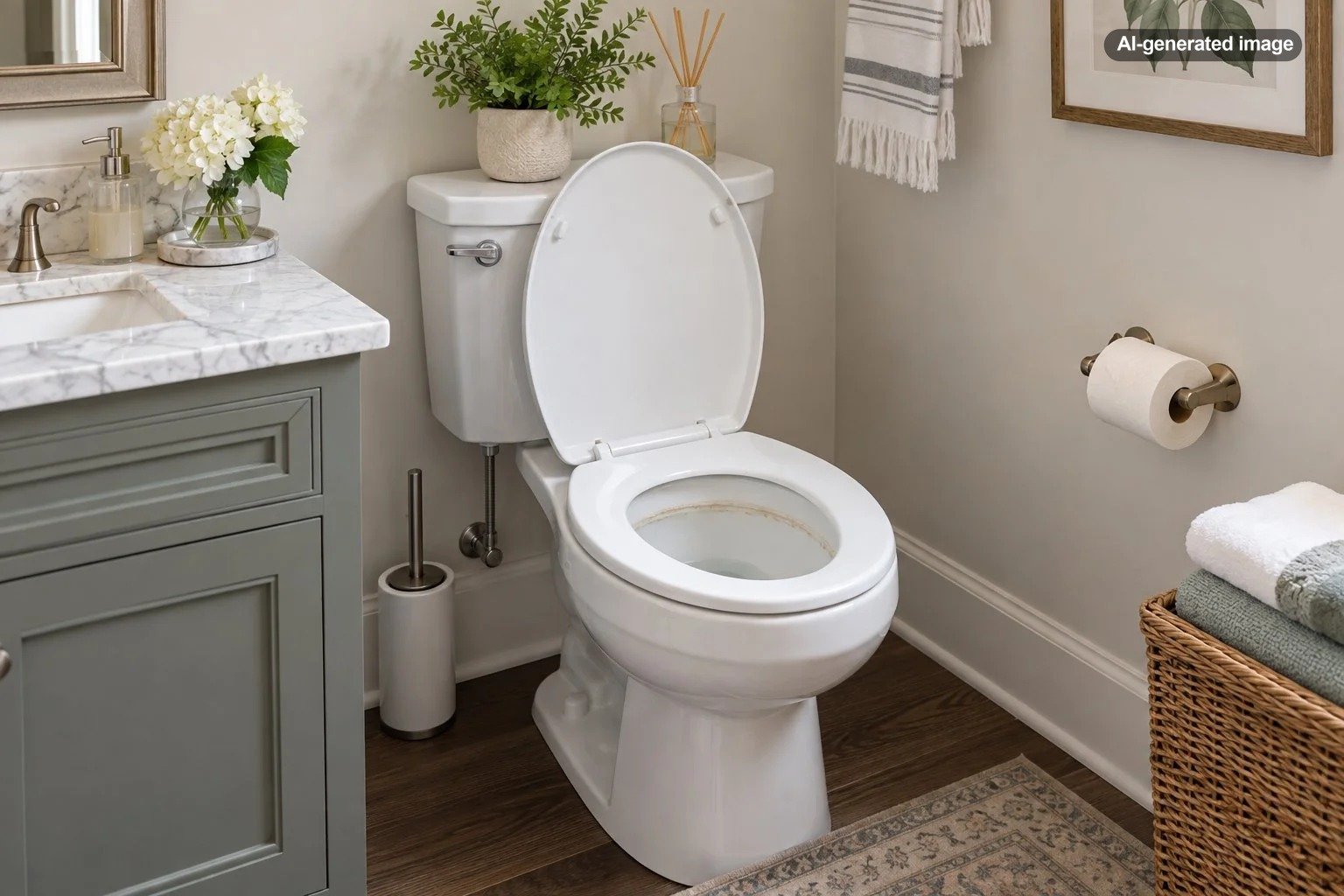
A toilet bowl is not a perfectly static environment. Water remains in contact with the glazed surface, small amounts evaporate, and dissolved minerals can remain behind. In homes with harder water, that process can leave a pale, tan, gray, rusty, or chalky-looking line near the normal water level.
A ring can also develop from ordinary surface buildup. A frequently used toilet is flushed repeatedly, so fresh water regularly moves through the bowl. A guest bathroom, basement bathroom, vacation home, or little-used powder room may sit undisturbed for days or weeks at a time.
The important distinction is between surface buildup and a problem with the toilet itself. A faint ring that gradually appears and brushes away is usually a cleaning issue. Water that disappears unusually quickly, recurring staining that returns almost immediately, or poor flushing may deserve closer inspection.
Flush the toilet even when nobody is using it
Periodic flushing is one of the easiest preventive measures. It replaces water that has been sitting in the bowl and sends fresh water through the rim and trapway. It also gives you a convenient opportunity to notice whether the toilet is flushing normally.
For an ordinary guest bathroom, checking the toilet during regular household cleaning is often enough. If the room goes untouched for long stretches, placing the toilet on a simple weekly or every-other-week household checklist can be a practical starting point. Homes with noticeable mineral staining may need more frequent attention.
Brush the waterline before you can see a heavy ring
Prevention is mostly about interrupting buildup before it hardens. Run a toilet brush around the normal waterline, under the rim, and through the easily reached portion of the bowl. You do not have to perform a full deep cleaning every time.
If a cleaning product is needed, use one intended for toilet bowls and follow its directions. The toilet manufacturer should take priority when it specifies compatible cleaners or warns against particular products. Stronger is not automatically better, especially when routine brushing will do the job.
What to do
- Flush the toilet and observe whether the bowl refills to its normal level.
- Brush around the waterline, paying attention to the area where a ring usually begins.
- Brush beneath the rim so deposits are less likely to accumulate around the water outlets.
- Flush again to rinse away loosened material.
- Check again during the next routine cleaning rather than waiting for a visible ring to become established.
Hard water changes the maintenance routine
If the same toilet repeatedly develops a chalky or rusty-looking ring despite being clean, the water itself may be contributing to the appearance. Hard water contains dissolved minerals that can remain on plumbing fixtures as water evaporates or repeatedly wets and dries the surface.
This is why an unused toilet can sometimes seem to stain faster than expected. The ring is not necessarily evidence that the bathroom is dirty. It may simply be the most visible place where mineral deposits are collecting.
Hard-water buildup can also affect the small openings beneath the toilet rim over time. If the flush pattern becomes uneven or weak around part of the bowl, inspect the rim area rather than focusing only on the visible waterline. Toilet manufacturers commonly recommend keeping rim openings free of mineral deposits and using cleaners suitable for the fixture material.
Keep an eye on the water level
Because a seldom-used toilet may go unchecked for long periods, make a habit of looking at the bowl water level when you enter the room. Some evaporation during an extended period of nonuse is normal. What matters is whether the water appears to be disappearing much faster than expected.
A consistently low bowl level can expose a new band of porcelain to repeated wetting and drying, which may create additional visible deposit lines. If the water level drops rapidly or the toilet behaves differently from the other toilets in the home, the issue is no longer just about cleaning. The toilet or plumbing may need evaluation.
Do not rely on harsh in-tank cleaners as the solution
It can be tempting to place a long-lasting cleaning product in the tank and forget about the bathroom. That approach deserves caution. Some toilet manufacturers specifically warn that certain in-tank chemicals can damage internal components, seals, flush valves, or other working parts.
If you want an automatic cleaning method, check the care instructions for the actual toilet first. A method that is harmless to the visible porcelain is not necessarily harmless to everything inside the tank.
For a rarely used bathroom, a scheduled flush and quick brush are simple precisely because they do not require leaving a powerful chemical in constant contact with plumbing components.
What if a ring has already formed?
Start conservatively. Flush the toilet, apply a bowl cleaner appropriate for the fixture and the type of deposit, allow it to work according to its instructions, and scrub with a toilet brush. Mineral scale may require a cleaner specifically formulated for hard-water deposits.
Avoid attacking the surface immediately with unusually abrasive tools. Toilet bowls are durable, but scratching or dulling a glazed surface can make future cleaning more troublesome. Manufacturer care instructions are especially useful when you are considering anything beyond normal toilet-bowl cleaner and brushing.
If a stain remains even though the surface feels smooth and clean, it may be discoloration rather than removable residue. Repeatedly increasing the abrasiveness of the cleaning method can cause more harm than the original mark.
A simple routine for guest bathrooms and vacation homes
The best maintenance plan is the one simple enough to happen consistently. When checking a little-used bathroom, flush the toilet, brush the waterline if necessary, glance beneath the rim, and confirm that the bowl refills normally. That entire routine can fit naturally into ordinary household cleaning.
For a vacation property or bathroom that may sit unused for much longer periods, toilet care should be part of the broader property-check routine. Extremely long vacancies, seasonal shutdowns, freezing conditions, or formal plumbing winterization involve different considerations than an occasionally used guest bathroom and may require property-specific plumbing guidance.
The easiest toilet ring to clean is the one that never gets enough uninterrupted time to become stubborn.
Frequently asked questions
Does flushing an unused toilet help prevent rings?
Yes. Flushing refreshes the standing water and interrupts the long period during which deposits can accumulate at one waterline. Pairing an occasional flush with a quick brush is more effective than flushing alone when a toilet is prone to mineral buildup.
Why does my guest toilet get a ring when nobody uses it?
Nonuse does not prevent mineral or surface deposits. Standing water, evaporation, and local water chemistry can all contribute to a visible line even in a bathroom that receives almost no traffic.
Should I leave toilet cleaner sitting in the bowl while I am away?
Use cleaning products only according to their instructions and the toilet manufacturer’s care guidance. Do not assume that leaving a cleaner in prolonged contact with the fixture is better. Be especially cautious with products placed in the tank because some manufacturers warn that certain chemicals can damage internal parts.
Can a water filter or softener prevent toilet rings?
If mineral-heavy water is contributing to deposits throughout the home, treating the water may reduce some scale-related cleaning problems. However, a toilet ring alone is not enough to determine that a whole-house treatment system is necessary. Look for similar mineral buildup on faucets, shower glass, sinks, and other fixtures before treating the toilet as evidence of a broader water-quality issue.
When should a toilet ring be treated as more than a cleaning problem?
Pay closer attention when the bowl water level changes quickly, the toilet runs, flushing becomes weak or uneven, water appears around the fixture, or discoloration returns unusually fast. Those clues can point toward a maintenance issue that routine cleaning will not solve.