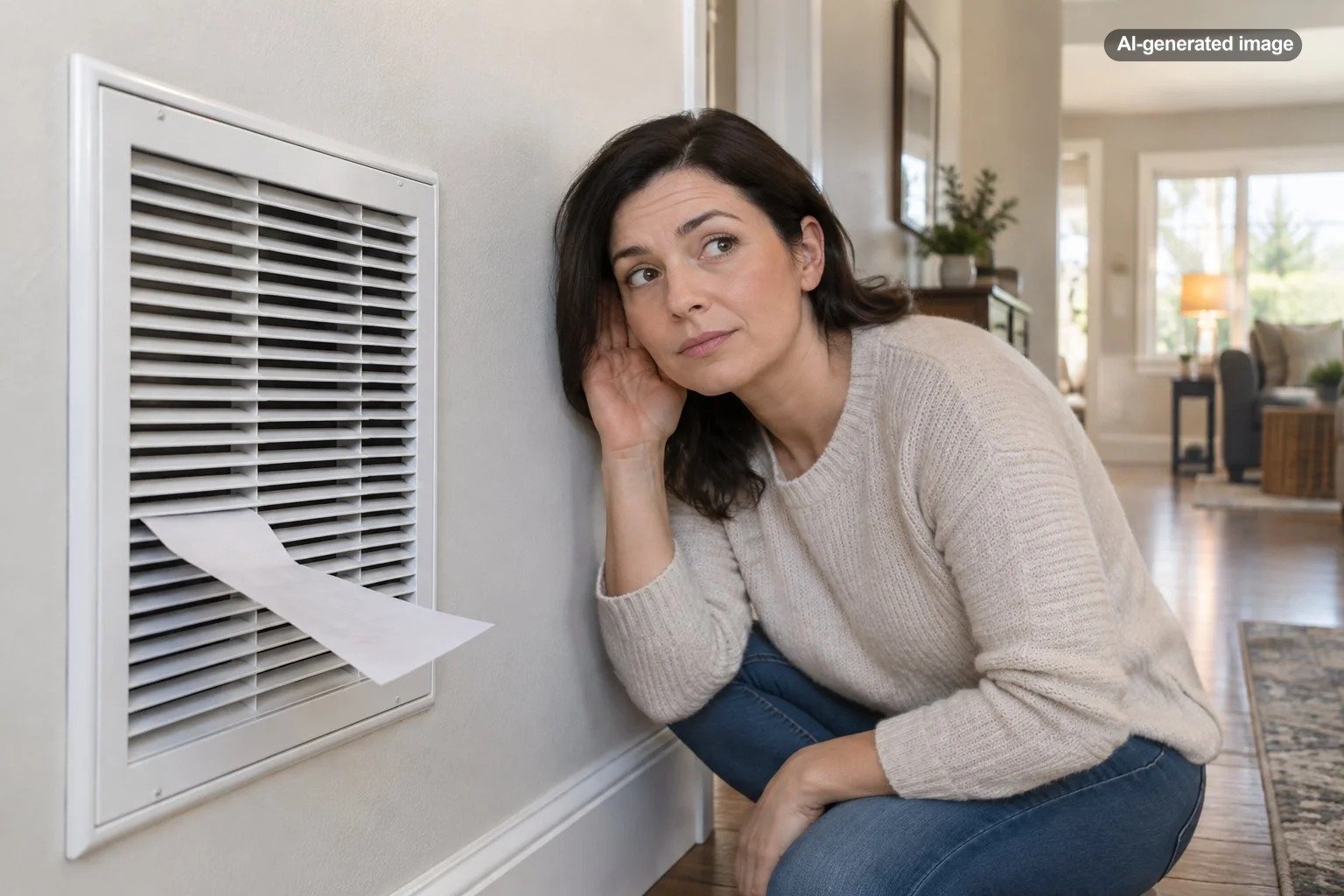
Why Does My Return Air Vent Make a Whistling Noise?
A whistling return air vent usually means air is being pulled through an opening or restriction fast enough to create a high-pitched sound. Common causes include a dirty air filter, an overly restrictive filter, a return grille that is too small or partially blocked, air leaking around the filter or grille, or a return duct that is undersized or otherwise restricting airflow. The sound itself is not a diagnosis, but it is a useful clue that the return side of the HVAC system deserves attention.
Start with the simple things you can inspect without opening HVAC equipment: the filter, the return grille, nearby furniture, and obvious gaps. If the whistle remains, especially if it occurs along with weak airflow, unusual equipment noise, or comfort problems, an HVAC professional can measure airflow and static pressure to determine whether the return system is properly sized and configured.
Why a return vent can whistle
Your HVAC system does not only push conditioned air into rooms. It also needs to pull air back toward the air handler through the return system. The return grille, filter, return ducts, and air handler all become part of that airflow path.
A whistle can develop when a large amount of air is forced through a relatively small opening. Think of the difference between breathing normally and blowing through pursed lips. In an HVAC system, the restrictive point might be the grille, filter, filter rack, ductwork, or a narrow gap where air is bypassing an imperfect seal.
The U.S. Department of Energy notes that incorrectly sized return grilles can contribute to noise and airflow problems. DOE guidance also explains that turbulence at the entrance of a return duct can restrict airflow and create noise even when the nominal duct and grille dimensions might otherwise appear adequate.
Check the air filter first
A loaded air filter is one of the easiest potential causes to investigate. As dust accumulates on a filter, resistance to airflow can increase. The Department of Energy specifically warns that a dirty or clogged filter can dramatically reduce airflow and increase furnace run time, motor wear, and energy consumption.
Turn the HVAC system off before removing or replacing a filter. Inspect the existing filter and confirm that it is the correct physical size for its rack or grille. It should fit properly rather than being bent, crushed, or surrounded by large gaps.
A recently installed filter can also be relevant. A filter with greater resistance than the system was designed to handle may contribute to an airflow problem. Higher filtration efficiency is not automatically better for every existing HVAC system. The U.S. Environmental Protection Agency recommends choosing a filter that the system fan and filter slot can accommodate and notes that a qualified HVAC technician can help determine the appropriate efficiency for a particular system.
Make sure the return grille is not blocked
Return vents need clear access to room air. A sofa, cabinet, stack of boxes, curtain, or other object placed directly against a return grille can reduce its effective open area. Even a grille that remains partly visible may become noisy if much of its surface is obstructed.
Move obvious obstructions away and listen again during normal HVAC operation. Also look at the grille itself. Heavy dust buildup on the face of the grille can narrow its openings, while a bent or damaged grille can change the way air passes through it.
Be cautious about treating the grille as purely decorative hardware. Its dimensions and free area affect airflow. DOE guidance states that properly sized supply and return grilles promote appropriate airflow and that incorrectly sized grilles can contribute to noise and comfort problems.
Listen for air leaking around the filter or grille
Not every whistle comes from air traveling normally through the grille. Sometimes air is squeezing through a narrow unintended gap around the filter frame, filter access panel, grille, or adjacent return assembly.
If the sound seems concentrated at one edge rather than across the entire grille, inspect the area visually while keeping fingers and loose objects away from moving equipment. A poorly fitting filter can allow air to bypass the filter media. EPA and DOE guidance both emphasize proper filter fit and sealing as part of good HVAC performance.
A loose return grille can create its own vibration or edge noise as well. If accessible screws are visibly loose, ordinary grille hardware can be checked, but do not open air-handler panels or disassemble ductwork merely to hunt for a whistle.
What to do
- Turn the HVAC system off before handling the filter.
- Inspect the filter for heavy loading, damage, incorrect size, or an obviously poor fit.
- Confirm that furniture, curtains, and stored items are not restricting the return grille.
- Look for visible dust buildup, bent grille sections, or loose accessible grille hardware.
- Restart the system and note whether the whistle changes with the grille unobstructed and an appropriate clean filter installed.
- If the sound continues, arrange for an HVAC professional to evaluate return airflow, duct configuration, grille sizing, and system static pressure.
The return grille or duct may be undersized
If easy checks do not reveal a problem, the whistle may involve the design of the return-air system itself. A return grille with insufficient open area can make air velocity through the grille high enough to produce noticeable noise. The duct behind it can also create a restriction.
Return-air design is more complicated than matching the visible grille to the size of the room. Duct dimensions, fittings, transitions, filter resistance, blower airflow, grille free area, and the layout of the return path all influence pressure and air velocity.
DOE air-distribution guidance describes how poor return grille placement and turbulent airflow at a return entrance can restrict flow and cause noise issues. That is one reason replacing a noisy grille with a random larger grille does not necessarily solve the root problem. The restriction may be farther inside the system.
A whistling grille may be where you hear the airflow problem, not necessarily where the airflow problem begins.
Why the noise may appear only at certain times
A whistle that comes and goes can still make sense mechanically. Some variable-speed HVAC systems operate at different airflow levels depending on demand. A restriction that is quiet at a lower airflow may become audible when the blower moves more air.
The same clue can appear after household changes. A whistle might start after installing a different filter, placing furniture near a return, replacing a grille, completing remodeling work, or making other changes that affect the return-air path.
What not to do to a whistling return vent
A few apparent shortcuts can create new problems. Do not permanently operate a system without its required filter just because removing the filter makes the whistle disappear. That experiment may reveal that filter resistance influences the sound, but the HVAC system still needs appropriate filtration.
Do not stuff foam, fabric, paper, or other material into the grille to dampen the whistle. Adding material to the return opening can restrict airflow further. Likewise, avoid closing or covering other vents in an attempt to redirect air unless the system was specifically designed to be adjusted that way.
Cutting ductwork, enlarging openings, modifying the blower, or making improvised changes to air-handler components is also beyond a simple homeowner noise check. The appropriate fix depends on measurements and the design of the system.
When a professional HVAC evaluation makes sense
Professional evaluation is reasonable when a whistle persists after the filter and obvious obstructions have been addressed, when the problem began after HVAC equipment or ductwork was changed, or when several rooms have airflow and comfort problems at the same time.
An HVAC technician can investigate factors that are difficult to judge by ear, including system static pressure, return-air capacity, filter pressure drop, grille sizing, duct restrictions, blower settings, and leakage. These measurements can distinguish a simple noisy grille from a broader air-distribution problem.
Can replacing the return grille stop the whistle?
Sometimes, but the grille should not be replaced on guesswork alone. A damaged grille or one that is poorly suited to the required airflow can contribute to noise. However, a larger or differently shaped grille will not correct an undersized return duct, excessive filter resistance, or another restriction elsewhere in the system.
If the existing return opening appears unusually small or the sound has always been present, having the return system evaluated before changing components is the more useful approach. The goal is not merely to silence the grille. It is to provide the air handler with an appropriate return-air path.
Does a whistling return vent mean the HVAC system is failing?
Not necessarily. The whistle may come from something as ordinary as a dirty filter, blocked grille, or small air gap. It can also indicate that the return side is more restrictive than it should be. The sound should therefore be treated as a troubleshooting clue rather than proof that the furnace, heat pump, or air conditioner itself has failed.
Checking the filter and keeping the return grille unobstructed are sensible first steps. If those checks do not change the sound, professional airflow testing can answer a question that listening alone cannot: whether the system is operating against excessive resistance and where that resistance originates.
Sources & further reading
- U.S. Department of Energy Building Science Education: HVAC Proper Installation of Filters
- U.S. Department of Energy Building Science Education: HVAC Duct Terminal Sizing
- U.S. Department of Energy: Air Distribution Basics and Duct Design
- U.S. Environmental Protection Agency: Guide to Air Cleaners in the Home