

What Should You Remove From a Guest Room Before Visitors Arrive?
A welcoming guest room is defined as much by what you remove as by what you add. Before visitors arrive, take out personal paperwork, overflow storage, worn or questionable bedding, strong fragrances, fragile objects, unfinished projects, and anything that prevents guests from using the closet, drawers, nightstand, outlets, or walking paths.
The goal is not to strip the room of personality. It is to give visitors enough physical and psychological space to settle in without feeling as though they have been placed inside someone else’s storage closet.
Start with personal and private belongings
Begin with the objects that could make either you or your guests uncomfortable. Bills, medical paperwork, financial records, medications, spare keys, work documents, and personal correspondence should move to a secure location. The same applies to valuables and sentimental items that would be difficult to replace.
Remove clothing from the bed, chair, and visible hooks, even if it is clean. A robe hanging behind the door or a stack of folded laundry on a bench subtly signals that the room still belongs to someone else. Family photographs do not need to disappear entirely, but an abundance of highly personal memorabilia can make the room feel less available to visitors.
If the room doubles as an office, relocate confidential files and create a clear boundary around any equipment that must remain. Log out of shared computers, put cables away, and avoid leaving a printer or monitor blinking beside the bed all night.
Clear the surfaces guests actually need
A guest does not need an empty room, but every useful surface should have some open space. Clear the nightstand sufficiently for a phone, glasses, and a glass of water. Remove decorative pillows from the only chair, clear the top of the dresser, and make room around the sink if the bedroom includes a private bath.
Books and decorative objects can stay when they contribute to the room, but edit them rather than letting them spread across every surface. A lamp, a small dish, and one decorative item usually feel more considered than a crowded arrangement guests must dismantle.
Remove bedding and bath items that have seen better days
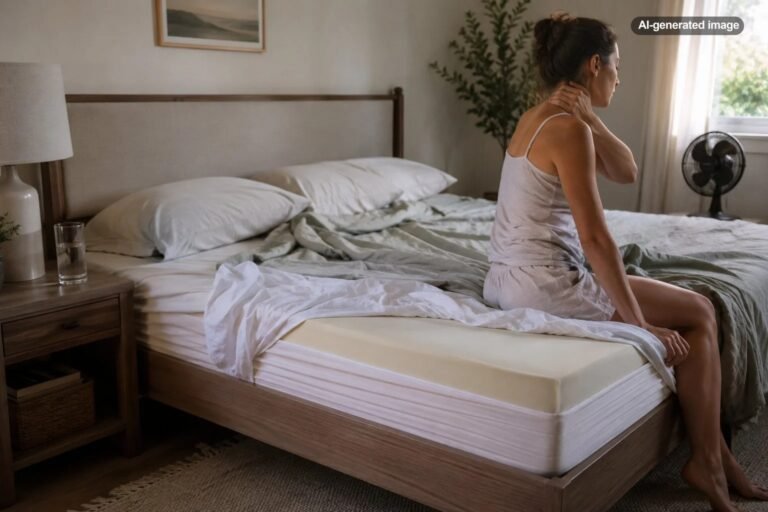
Take off bedding that smells stale, carries visible stains, feels damp, or has been sitting uncovered for months. Wash linens according to their care labels and allow them to dry completely before making the bed. Check mattress protectors, pillow protectors, blankets, and decorative shams rather than judging the bed by its top layer alone.
Flattened pillows should also leave the guest bed. Pillow comfort is personal, so offering two different lofts is more useful than piling the bed with identical pillows. In the bathroom, remove used soap bars, nearly empty toiletries, frayed towels, and bath mats that will not dry properly between uses.
Affiliate disclosure: CraneManor.com may earn a commission when you purchase through links on this page. This does not affect the price you pay. Learn more.
If the duvet insert is still in good condition but the outer layer looks tired, a neutral duvet cover with matching shams can provide a cleaner finish without replacing the insert. Confirm the required dimensions and laundering instructions because the insert is not included. For a basic refresh, a pair of down-alternative pillows for a guest bed can replace visibly compressed options, although softness and support preferences vary considerably.
Take out strong scents and unnecessary toiletries
Remove plug-in fragrance devices, heavily perfumed candles, potpourri, and strongly scented linen sprays before visitors arrive. A fragrance you barely notice may be overwhelming to someone with sensitivities. Clean air and freshly laundered fabric are safer defaults than attempting to manufacture a particular scent.
Bathroom amenities deserve similar restraint. Discard expired products and remove open containers that look as though they belong to the household. A few unopened basics are more inviting than a crowded collection of old samples. If guests have known allergies or sensitivities, ask what they need instead of guessing.
Remove fragile, awkward, and potentially unsafe objects
Relocate delicate collectibles, unstable lamps, sharp-edged objects, and decor that could be knocked over while someone reaches for a phone in the dark. Check that rugs lie flat, electrical cords do not cross walking paths, and doors and drawers open without obstruction. Do not leave a folding bed frame, stepladder, exercise equipment, or renovation supplies leaning where they might shift.
If children will visit, look at the room from their height. Medicines, button batteries, cords, breakable objects, and tempting items placed on top of furniture require particular attention. Dressers and televisions should be properly secured in accordance with their manufacturers’ instructions; simply removing clutter does not correct unstable furniture.
Move luggage off the bed and floor
Remove bins, boxes, baskets, and spare furniture that leave no logical place for a suitcase. Guests should not have to balance luggage on clean bedding or step around it during the night. A clear bench, sturdy low dresser, or dedicated stand can solve the problem.
Where floor area is limited, a pair of folding guest-room luggage racks can be stored between visits and brought out when needed. Before buying, consider the available footprint, assembly requirements, floor stability, folded storage dimensions, and the size of luggage your guests typically carry.
Do not remove everything that makes the room useful
A perfectly bare room can feel less hospitable than a lightly furnished one. Keep a working bedside lamp, accessible outlets, window coverings that provide privacy, a wastebasket, tissues, clean towels, extra toilet paper, a drinking glass, and simple instructions for Wi-Fi or household routines.
Retain a small amount of decor so the room still belongs to the home. One piece of artwork, a washable throw, and a few books can add warmth without consuming functional space. The practical test is simple: can a guest identify what they may use without first moving your belongings?
Before you decide
- Open the door fully and walk from the entrance to both sides of the bed.
- Check the room after dark to find glare, shadows, and hidden obstacles.
- Leave clear space on the nightstand, dresser, and luggage surface.
- Test the lamp, outlets, window coverings, fan, and door lock.
- Remove private papers, valuables, medications, and unfinished projects.
- Smell the room after it has been closed for several hours.
- Make sure guests can control the temperature or know how to request an adjustment.
Frequently asked questions
Should you remove family photos from a guest room?
Not necessarily. A few photographs can make the room feel connected to the home. Remove highly private images, crowded collections, or irreplaceable framed pieces that could be damaged.
How much closet space should overnight guests receive?
There is no universal amount, but several empty hangers and a clearly available section are reasonable for a short stay. Longer visits call for more hanging space and at least one empty drawer or shelf.
Should decorative pillows stay on the bed?
Keep only as many as guests can move easily. If removing the decorative pillows would fill the only chair or consume the closet floor, there are too many.
What if the guest room is also a home office?
Remove confidential material and work clutter, then give the sleeping area visual priority. Shut down noisy electronics, manage cables, clear a bedside surface, and explain whether any office equipment must remain accessible.
When should you avoid using the room altogether?
Use another sleeping space when the room has an unresolved electrical concern, unstable furniture, active moisture, pest activity, a broken lock, inadequate temperature control, or another condition that could affect safety or basic comfort.