
What Foods Should Be in a Hurricane Emergency Pantry?
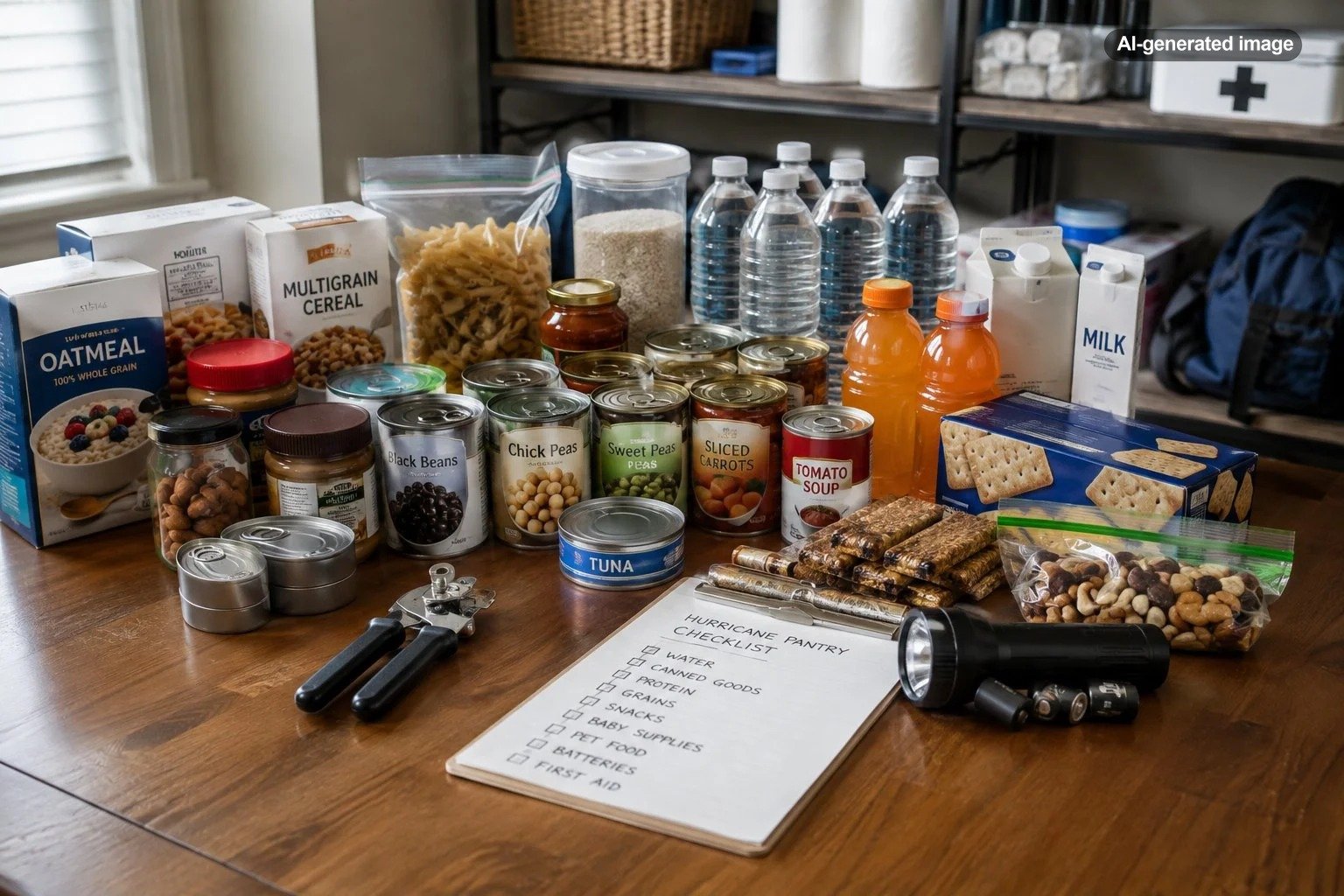
A hurricane emergency pantry should contain enough water and shelf-stable food to keep your household fed when electricity, refrigeration, stores, or normal cooking routines are unavailable. Start with foods that require little or no preparation: canned proteins, beans, nut or seed butters, ready-to-eat grains, fruit, vegetables, crackers, cereal, shelf-stable milk, snacks, and familiar comfort foods. Just as important, choose things your household will actually eat.
FEMA preparedness guidance recommends keeping at least a three-day supply of nonperishable food and one gallon of water per person per day for at least three days. Depending on your location, household needs, and the possibility of extended outages, keeping a larger rotating supply can provide additional flexibility.
Start With Water Before Food
Water is the foundation of an emergency pantry. FEMA recommends at least one gallon per person per day for a minimum of three days, covering drinking and sanitation. Households in hot climates, people with certain medical or dietary needs, children, and pets may require additional water.
Do not count on filling containers after a hurricane warning becomes urgent. Municipal water can be interrupted or subject to advisories, and bottled water may disappear quickly from stores. Keep an organized supply at home and rotate it as appropriate for the containers you use.
Choose Main Foods That Work Without Refrigeration
The best hurricane foods remain safe at room temperature before opening and require little preparation. A pantry stocked only with ingredients that need boiling, baking, or refrigeration can become surprisingly inconvenient during a prolonged outage.
Useful meal foundations include canned beans, canned soups, canned chili, ready-to-eat rice or grain products that do not require refrigeration before opening, canned pasta, and other shelf-stable entrees. When choosing cans, include some foods that taste acceptable at room temperature. A manual can opener belongs in the same pantry area.
| Pantry group | Useful choices | Why they help |
|---|---|---|
| Protein | Canned tuna, chicken, beans, nut or seed butter | Provides filling meal options with little preparation |
| Grains and starches | Crackers, tortillas, cereal, shelf-stable grain meals | Easy bases for quick meals and snacks |
| Fruit and vegetables | Canned fruit, applesauce, canned vegetables, dried fruit | Adds variety without relying on fresh produce |
| Breakfast foods | Dry cereal, granola, shelf-stable milk | Simple when cooking equipment is unavailable |
| Snacks | Trail mix, pretzels, crackers, fruit bars | Convenient during cleanup, evacuation, or travel |
Include Shelf-Stable Sources of Protein
Protein makes emergency meals more satisfying, and several pantry-friendly choices require no cooking. Canned tuna, salmon, chicken, beans, lentils, nut butters, and seed butters can be combined with crackers, tortillas, or ready-to-eat grains.
Buy package sizes that fit your household. A large container can be economical in ordinary circumstances, but smaller cans or pouches are often more practical during an outage because leftovers may require refrigeration once opened.
Add Fruits and Vegetables That Do Not Depend on the Refrigerator
Canned fruit packed in juice, applesauce cups, dried fruit, canned vegetables, and shelf-stable vegetable products can keep meals from becoming a parade of crackers and peanut butter. Choose lower-sodium or lower-added-sugar versions when they suit your normal eating habits, but do not build an emergency supply around foods your family normally avoids.
Whole fresh produce can also supplement the pantry immediately before a storm. Apples, oranges, and other relatively sturdy fruits may remain useful for a while without refrigeration, although they should not replace the dependable shelf-stable portion of your plan.
Keep Simple Breakfasts and Snacks
During a hurricane, meals may happen at irregular times. Cleanup, storm monitoring, evacuation decisions, and lack of electricity can make elaborate cooking unrealistic. Dry cereal, granola, crackers, trail mix, pretzels, dried fruit, and shelf-stable snack bars provide quick options without creating dishes or requiring fuel.
Shelf-stable milk can make cereal more useful, especially for households with children. Buy container sizes that can be finished reasonably soon after opening if refrigeration is unavailable, and follow the package directions once opened.
Do Not Forget Comfort Foods
An emergency pantry should be practical, but it does not have to be joyless. Familiar snacks, cookies, coffee, tea, powdered drink mixes, or another favorite shelf-stable treat can make several days of disruption feel more manageable.
Think about caffeine habits as well. If someone in the household regularly drinks coffee, consider an option that does not depend on an electric drip machine. The same principle applies to infant foods, specialized dietary items, and pet food: emergency supplies should reflect the people and animals actually living in the home.
Plan for Meals You Can Eat Without Cooking
A pantry full of dried pasta, dry rice, and dried beans may look well stocked, but those foods depend on water, fuel, cookware, and time. They can still be useful if you have a safe backup cooking method, but they should not make up the entire emergency supply.
Build Around Your Household’s Real Dietary Needs
Generic emergency checklists are only a starting point. Someone managing food allergies needs safe alternatives. A baby may need formula or baby food. Older adults may prefer softer foods and easy-open packaging. People who must limit sodium, sugar, or certain ingredients should stock appropriate versions before shelves become picked over.
Do not assume emergency conditions make dietary restrictions optional. Read labels when purchasing the food, group specialized items together, and make sure other household members know which supplies are reserved for particular needs.
Store Food Where Storm Damage Is Less Likely to Reach It
Keep emergency food in a cool, dry area whenever possible. In homes vulnerable to flooding, storing at least part of the supply above anticipated floor-level water exposure is sensible. FoodSafety.gov advises discarding food that has contacted floodwater and warns that damaged cans may also be unsafe.
Inspect your pantry periodically for leaking, bulging, badly rusted, or damaged containers and replace anything questionable. Rotate ordinary groceries through the emergency supply so food does not simply disappear into the back of a cabinet for years.
Prepare for the Refrigerator to Stop Being Reliable
A hurricane pantry becomes especially valuable once the power goes out. FoodSafety.gov states that an unopened refrigerator generally keeps food cold for about four hours. A full freezer can maintain its temperature for about 48 hours, or about 24 hours when half full, if the door stays closed.
Do not repeatedly open the refrigerator to check whether food still feels cold. Keep the doors closed and use appliance thermometers when available. FoodSafety.gov advises never tasting questionable food to determine whether it is safe.
A Practical Hurricane Pantry Checklist
Before you decide
- Water for every person in the household, plus appropriate supplies for pets
- Several days of shelf-stable meals that can be eaten without cooking
- Canned or pouched protein such as fish, chicken, beans, or lentils
- Nut or seed butter if appropriate for your household
- Crackers, tortillas, cereal, granola, and other easy grains
- Canned fruit, applesauce, dried fruit, and canned vegetables
- Shelf-stable milk or suitable alternatives
- Quick snacks and familiar comfort foods
- Foods for babies, older adults, allergies, or specialized diets
- Pet food and additional pet water
- A manual can opener and basic eating utensils
The most useful hurricane pantry is not necessarily the largest one. It is the pantry that still works when the lights are off, the refrigerator is warming, cooking options are limited, and nobody wants to discover that every meal requires three cups of boiling water.
Frequently Asked Questions
How many days of hurricane food should I store?
FEMA’s basic emergency guidance calls for at least a three-day supply of nonperishable food. Households that want additional resilience may choose to maintain more based on local hurricane risk, storage space, evacuation plans, and individual needs.
What foods are best if I cannot cook?
Choose foods that are safe and palatable without heating, including canned proteins, beans, crackers, nut or seed butters, canned fruit, shelf-stable milk, cereal, ready-to-eat grain products, and snacks.
Should I stock frozen food before a hurricane?
Frozen food can be useful, but it should not replace your shelf-stable emergency supply because a prolonged power outage eventually compromises freezer storage. Keeping the freezer closed helps preserve safe temperatures longer.
What is commonly forgotten in a hurricane pantry?
Water, a manual can opener, specialized dietary foods, pet supplies, shelf-stable breakfast choices, and foods that require no cooking are easy to underestimate. Many people also buy ingredients rather than complete meals, only to discover that those ingredients depend on electricity or large amounts of water.