
Should a Guest Room Have a Television?
A guest room does not need a television to feel complete, but in the right household, a TV can make the room considerably more comfortable. The better question is not whether every guest bedroom should have one, but whether television fits the way your guests actually use the space.
If you regularly host relatives for several nights, accommodate guests with different schedules, or use the room as a flexible retreat when nobody is visiting, a television can be useful. If the room is small, rarely occupied, or intentionally designed as a quiet place to sleep and read, leaving the screen out may produce a calmer and more attractive result.
Think About How Long Guests Usually Stay
A television becomes more valuable as stays get longer. Someone visiting for one night may do little more than shower, sleep, and leave the next morning. A parent staying for a week, a friend recovering from a long travel day, or relatives visiting during the holidays may spend much more time in the room.
Private entertainment can also be considerate in a busy household. Guests do not necessarily want to join every television program, conversation, or activity happening in the main living area. Giving them the option to retreat for an hour can make a longer visit feel less socially demanding.
At the same time, television should remain an option rather than the centerpiece of the room. A comfortable mattress, usable bedside lighting, accessible outlets, room for luggage, uncluttered surfaces, and reasonable privacy usually contribute more to a successful guest room than another screen.
Consider the Size and Layout of the Room
In a spacious guest bedroom, a television can often sit quietly within the overall design. In a compact room, it can become visually dominant very quickly. A large black rectangle facing the bed may be the first thing someone notices, particularly when wall space is limited.
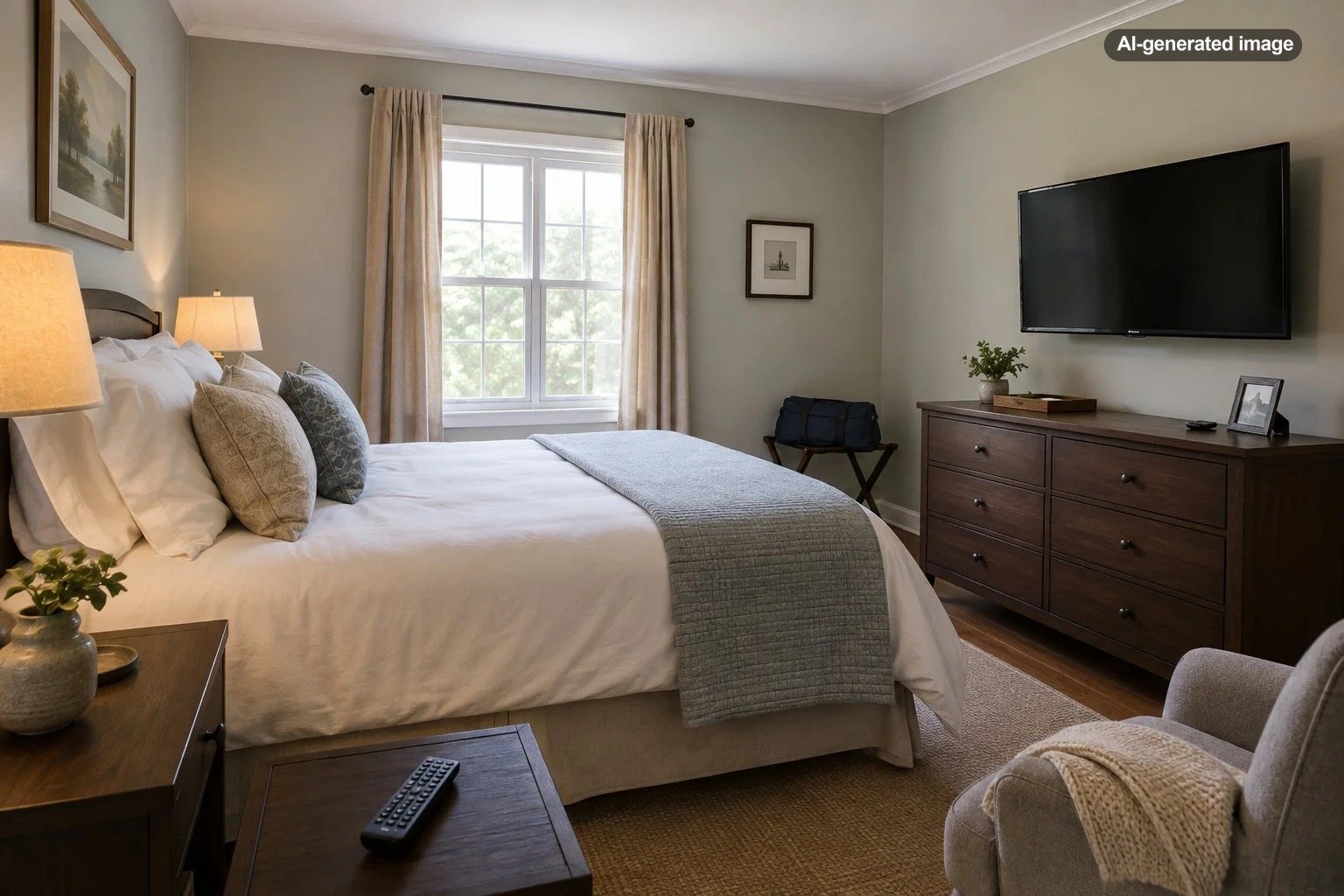
Before adding one, stand where a guest would naturally view the screen. Is there a sensible wall opposite the bed or an angled location that can be viewed comfortably? Can the television be positioned without competing with artwork, blocking a window, crowding a dresser, or creating an awkward furniture arrangement?
Small rooms also benefit from visual restraint. When every surface already serves a purpose, keeping one wall relatively quiet can make the bedroom feel more spacious. If the screen is included, a clean installation and restrained surrounding decor generally keep it from overwhelming the room.
Decide Whether the Room Is Meant to Encourage Rest
Some guest rooms are designed primarily around sleep. Others function almost like miniature hotel rooms, with a chair, desk, television, and enough space for visitors to spend part of the day comfortably on their own. Neither approach is inherently better.
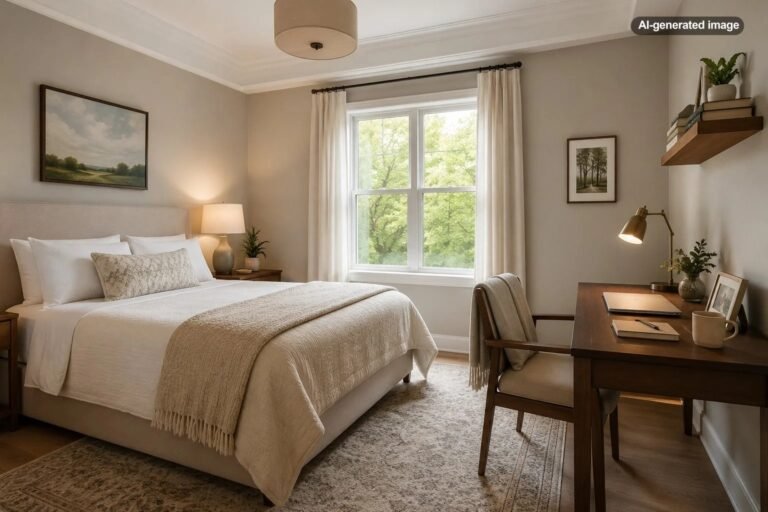
If you want the room to feel restful and disconnected, omitting the TV is perfectly reasonable. A bedside lamp, a few books or magazines, comfortable bedding, and a place to charge a phone may be all the entertainment a short-term guest needs. This approach can be especially appealing when the room has a pleasant view or a strong decorative focal point that would otherwise compete with a screen.
Conversely, guests who routinely watch television before bed may appreciate having the option. Hosts do not need to predict every preference. The goal is simply to decide which amenities make sense for the people who most often stay in the home.
A thoughtful guest room is less about supplying every possible amenity and more about removing small inconveniences.
Do Not Forget About Controls and Convenience
A television that guests cannot easily operate is not much of an amenity. If you include one, simplicity matters. Keep the remote somewhere obvious rather than hidden inside an unfamiliar drawer, and avoid an arrangement that requires guests to navigate a complicated collection of devices just to watch something.
Streaming has also changed what a guest-room television needs to accomplish. Visitors may prefer their own services and viewing choices instead of whatever happens to be available through the household’s main entertainment setup. Whatever system you choose, consider how easily a guest can understand it without needing a late-night tutorial.
Balance the Television With the Rest of the Design
A guest bedroom should still look like a bedroom. If the TV becomes the dominant feature, soften its visual presence by giving the room other intentional focal points. An upholstered headboard, attractive bedding, substantial bedside lamps, curtains, artwork, or a well-proportioned dresser can keep the screen from defining the space.
Avoid surrounding the television with decorative objects simply to disguise it. Too many accessories can make the wall look busier, not quieter. Often the better approach is straightforward placement with enough open space around the screen to make the arrangement feel deliberate.
If the television sits on furniture rather than the wall, make sure the surface still has a useful purpose. Guests appreciate somewhere to place belongings. Filling the entire top of a dresser with electronics can remove valuable landing space in a room that may already have limited storage.
Remember That Guests May Have Different Schedules
One of the strongest arguments for a guest-room television has little to do with decorating. It can give visitors independence. An early riser can watch something quietly without occupying the family room, while a night owl can unwind after the rest of the household has gone to bed.
This is particularly relevant when several people share the main living space. In a quieter household with abundant common areas, a private television may add relatively little. As with most guest-room decisions, usefulness depends more on household habits than on decorating rules.
When It Makes Sense to Skip the TV
There are plenty of good reasons to leave a television out. The room may be too small. You may prefer artwork on the available wall. The room may double as a home office, exercise area, or another space where an additional screen would create clutter. Your guests may simply never use one.
Skipping the television can also free the budget and attention for amenities with broader appeal. Better bedside lighting, an extra blanket, supportive pillows, a luggage rack, accessible charging space, window coverings that provide privacy, and an empty section of closet can improve almost every stay.
Before you decide
- Consider how frequently guests stay and whether visits usually last more than a night or two.
- Identify a sensible viewing location that does not compromise furniture placement or circulation.
- Decide whether you want the bedroom to function primarily as a quiet sleeping space or a more independent retreat.
- Make sure the television will be straightforward for visitors to operate.
- Consider privacy and account management if the television uses connected streaming services.
- Ask whether another guest-room improvement would provide more everyday value.
So, Should You Put a Television in the Guest Room?
Yes, if it solves a real comfort problem. A television is particularly useful for frequent guests, extended visits, households with different schedules, and bedrooms spacious enough to accommodate a screen without sacrificing function. It is far less important for occasional overnight visitors or rooms where visual calm and efficient use of space are the priorities.
Do not add one simply because a guest room seems as though it ought to have one. There is no universal checklist that makes a bedroom hospitable. A well-prepared room that lets someone sleep comfortably, charge a phone, unpack a few belongings, find a towel, adjust the lighting, and enjoy some privacy already does the important work.
Frequently Asked Questions
Do guests expect a television in a guest bedroom?
Not necessarily. Expectations vary widely, and many guests are perfectly comfortable using a phone, tablet, book, or shared living-room television. Basic comfort and convenience are generally more important than providing a dedicated screen.
Is a TV a good idea for a small guest room?
It can be, but only if there is a natural location for it. If the television crowds useful furniture, dominates the wall, or makes the room feel tighter, leaving it out may create a more comfortable space.
What should a guest room have instead of a television?
Prioritize a comfortable bed, bedside lighting, charging access, privacy, a place for luggage, some available storage, and uncomplicated temperature and lighting controls where possible. Books, magazines, or a comfortable chair can provide simple alternatives for downtime.
Should the guest-room TV be the focal point?
Usually not. The bed and the overall composition of the room can carry more visual weight, while the television remains a secondary convenience. Keeping the surrounding arrangement simple helps the room feel considered rather than electronics-driven.