Why Do White Towels Look Dingy After Washing?
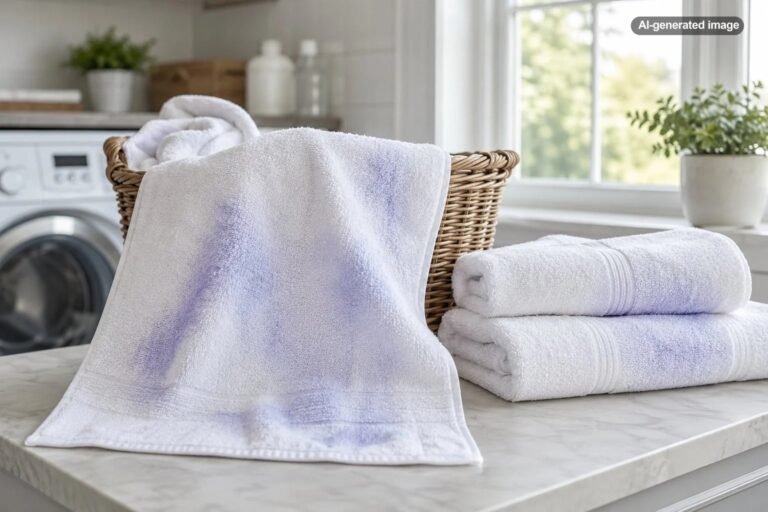
White towels usually look dingy after washing because something is being deposited on the fibers, something is not being removed completely, or both. Common culprits include excess detergent, minerals in hard water, body oils and skin-care products, overloaded wash loads, fabric-softener residue, and wash settings that do not give heavily used towels enough cleaning or rinsing.
The frustrating part is that adding more detergent is often not the answer. If residue is already contributing to the gray or dull appearance, increasing the dose can make the problem worse. The better approach is to identify what the towels are telling you and adjust the laundry routine accordingly.
Why white towels lose their bright appearance
A white towel has nowhere for residue to hide. A small amount of mineral film, detergent, oil, transferred dye, or accumulated laundry product that might be nearly invisible on a darker fabric can create a noticeable gray, beige, or yellow cast on white cotton.
Towels also present a tougher cleaning job than many everyday garments. Bath towels repeatedly absorb water, body oils, hair products, lotions, makeup, and whatever else remains on the skin after bathing. Their dense loops can hold onto soil and laundry products when the washer is crowded or the rinse is inadequate.
| What you notice | Possible cause | Good first step |
|---|---|---|
| Gray, generally dull appearance | Detergent or soil buildup | Use the recommended detergent dose and avoid overloading |
| Dull color plus stiff or rough fibers | Hard-water minerals or laundry-product residue | Review water hardness and detergent directions |
| Yellowish areas | Body oils, lotions, or other oily soil | Pre-treat affected areas with a fabric-safe laundry product |
| Random discoloration after mixed loads | Dye transfer | Wash whites separately from colored items |
| Waxy feel or reduced absorbency | Fabric-softener or product buildup | Reduce or temporarily skip softener |
Too much detergent can leave towels looking worse
It is easy to assume that heavily used towels require a generous pour of detergent. In reality, detergent needs enough water and movement to disperse, lift soil, and rinse away. Using more than the detergent maker recommends can leave residue behind, particularly in high-efficiency machines that use less water.
That leftover film can make white towels look less brilliant and can also change how the fibers feel. If you tend to measure detergent by eye, try measuring according to the product instructions instead. Also make sure the detergent is appropriate for your washer.
Hard water can contribute to a dull or stiff finish
Hard water contains dissolved minerals that can complicate laundry. If you regularly see mineral deposits around faucets or notice that laundered fabrics become stiff more readily than expected, water hardness may be part of the puzzle.
This does not mean every dingy towel requires a water-softening system. Start with the detergent manufacturer’s guidance for hard water and make sure you are using an appropriate dose. If hard water is a persistent household issue, knowing your water conditions can make detergent choices and laundry troubleshooting much less mysterious.
Body oils and bath products may not be washing out completely
A towel can emerge smelling clean while still carrying small amounts of oily soil. Body oils, moisturizer, hair conditioner, styling products, and some cosmetics can gradually accumulate in the fibers. On a white towel, that buildup may appear as an overall beige or yellowish dullness rather than a dramatic stain.
If discoloration is concentrated in particular areas, treat those areas according to the towel’s care label and the directions on the laundry product you are using. A normal wash cycle is excellent for routine soil, but persistent oily residue sometimes benefits from pre-treatment rather than simply adding more detergent to the entire load.
Overloading prevents proper washing and rinsing
Towels are bulky, and a washer that seems only moderately full when dry can become a dense, heavy load once everything is saturated. When towels cannot move adequately, water and detergent have a harder time reaching every surface and soil has a harder time leaving.
A smaller load is one of the simplest troubleshooting tests. If the next batch looks noticeably fresher after being washed with more room to move, loading habits were probably contributing to the problem.
Fabric softener can become part of the buildup problem
Liquid fabric softeners and some other laundry products are designed to leave materials on fibers. Used according to directions, they may provide qualities some households enjoy, but repeated use can also alter the feel and absorbency of towels. If white towels seem coated, waxy, less absorbent, or persistently dull, temporarily simplifying the laundry routine can help narrow down the cause.
Skip unnecessary additives for a few washes and assess the result. If the towels improve, reintroduce products selectively rather than returning everything to the washer at once.
Water temperature and cycle choice matter
Cold water is useful for many laundry loads, but a heavily soiled white towel may sometimes benefit from warmer water when the care label permits it. The correct temperature depends on the towel’s fiber, construction, decorative details, and manufacturer instructions, so the care label should take precedence over a blanket rule.
Cycle selection matters for the same reason. A quick cycle designed for lightly soiled items may not be ideal for a load of heavily used bath towels. Choose a cycle appropriate for the fabric and soil level rather than relying on the shortest setting by default.
What to do with dingy white towels
- Check the care labels before changing temperature, bleach, or treatment methods.
- Separate white towels from colored textiles to reduce the possibility of dye transfer.
- Wash a comfortably sized load rather than packing the drum tightly.
- Measure detergent according to its directions instead of adding an extra dose for good measure.
- Use the warmest water permitted by the towel’s care label when heavier soil needs attention.
- Select an extra rinse if your washer offers one and residue is suspected.
- Temporarily reduce optional laundry additives so you can determine whether they are contributing to buildup.
- For persistent stains or discoloration, use a fabric-safe pre-treatment or whitening product according to its label rather than improvising mixtures of laundry chemicals.
Should you bleach white towels?
Some white towels can be treated with chlorine bleach, while others should not be. Fiber content, colored borders, embroidery, decorative finishes, and manufacturer care instructions all matter. If the care label allows bleaching, follow the bleach manufacturer’s directions and the washer instructions rather than assuming a stronger concentration will produce a brighter result.
Oxygen-based laundry boosters are another option for some washable fabrics. Again, the product label and towel care instructions should determine suitability. Laundry products should be used only as directed, and different cleaning chemicals should not be combined unless their labels specifically indicate that the combination is appropriate.
How to keep white towels from becoming dingy again
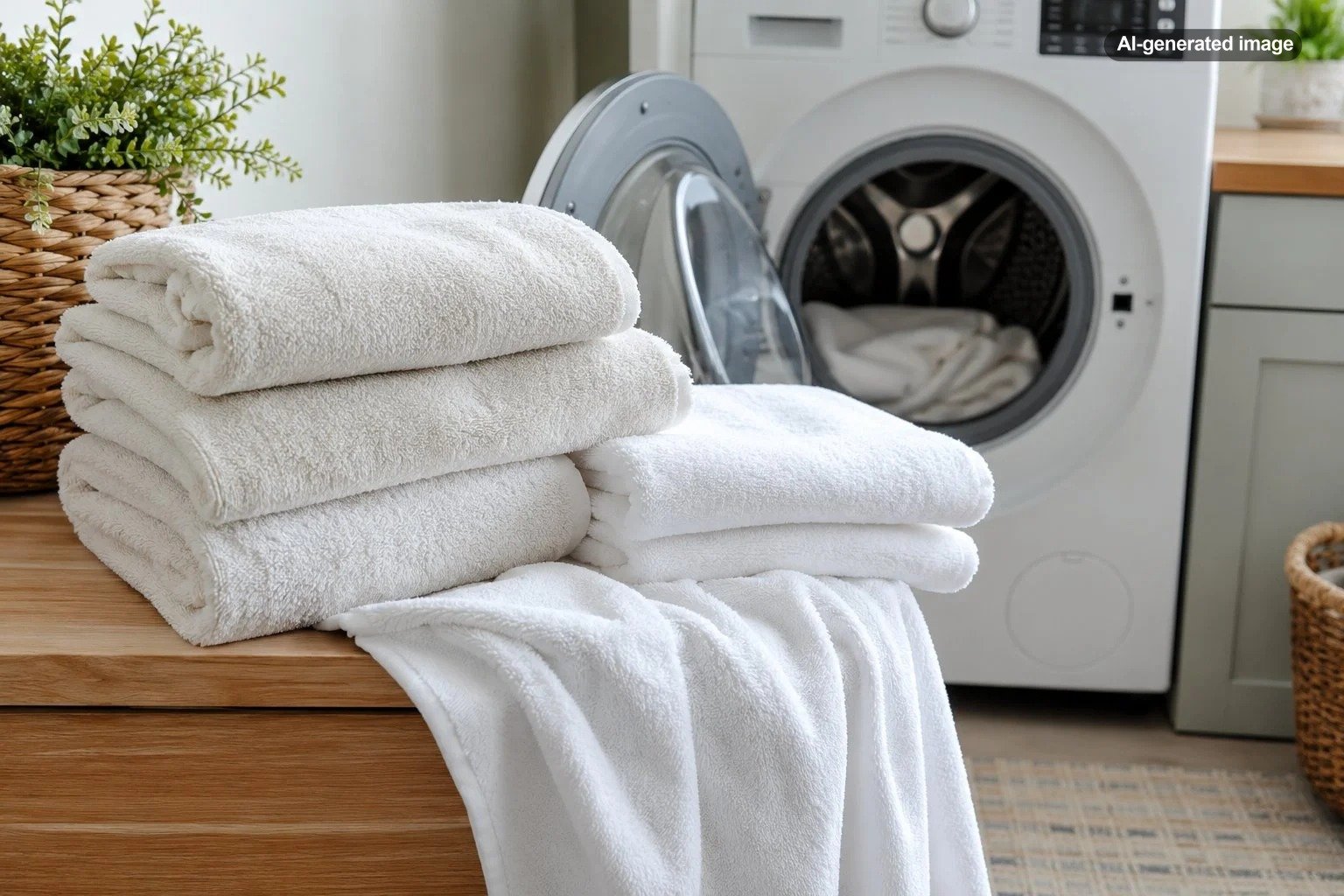
Once the towels look better, prevention is considerably easier than periodic rescue missions. Wash whites separately when practical, avoid stuffing the washer, measure detergent, and give towels a cycle suited to their soil level. If hard water is an issue, account for it when following detergent directions.
It also helps to wash towels before oily residues have weeks to settle into the fibers. Let damp towels dry between uses rather than leaving them crumpled in a hamper, and address makeup, self-tanner, hair dye, or other obvious stains promptly using a treatment suitable for the fabric.
The brightest white towels usually come from a well-balanced wash routine, not from continually adding stronger products.
When dinginess may simply be permanent wear
Not every towel can be restored to its original showroom white. Cotton fibers experience friction, repeated washing, drying, staining, and gradual wear. Older towels may remain clean and perfectly usable even after their color has softened from bright white to a more muted shade.
That distinction matters because there is little benefit in repeatedly subjecting an aging towel to increasingly aggressive treatments simply for cosmetic reasons. If the towel is clean, absorbent, intact, and pleasant to use, a slightly softened white may be ordinary wear rather than a laundry failure.
Frequently asked questions
Why do my white towels look gray after washing?
A gray cast can come from accumulated soil, excess detergent, mineral residue, inadequate rinsing, or dye transferred from darker items. Start by washing whites separately in a smaller load with a carefully measured amount of detergent.
Why are my white towels dingy and stiff?
The combination of dull color and stiffness can point toward mineral or laundry-product buildup. Hard-water conditions, excess detergent, and repeated use of products that coat fibers are reasonable places to investigate.
Does extra detergent make white towels whiter?
Not necessarily. More detergent than the load requires can be difficult to rinse completely and may contribute to residue. Follow the detergent manufacturer’s dosing instructions for your washer, load size, soil level, and water conditions.
Should white towels always be washed in hot water?
No. Use the temperature permitted by the towel’s care label and appropriate for the soil you are trying to remove. Some towels tolerate hotter washing than others, while decorative details or certain materials may require gentler treatment.
When is it time to replace white towels?
Dinginess alone does not make a towel unusable. Replacement makes more sense when the fabric is badly worn, frayed, permanently stained beyond your preferences, or no longer performs the way you want. A towel that is merely a softer shade of white may still have plenty of useful life left.