Do Air Purifiers Help With Bathroom Odors?
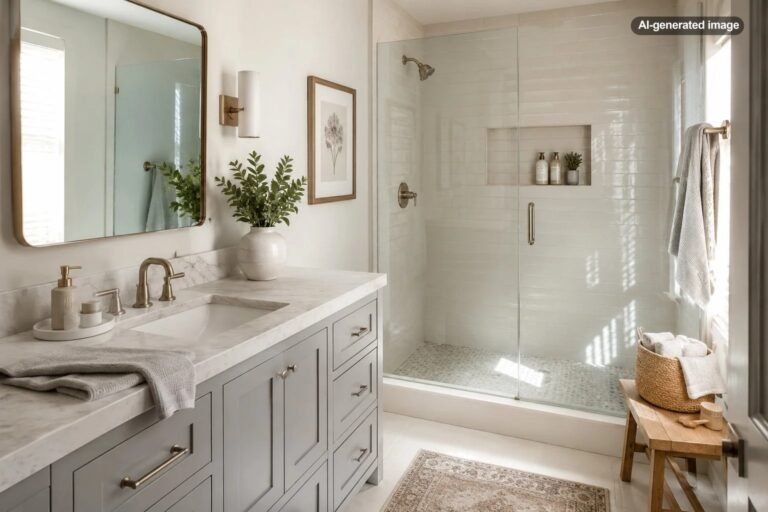
Yes, an air purifier can help with some bathroom odors, but it is usually a supporting player rather than the main solution. Bathroom smells can come from airborne particles, volatile compounds, excess moisture, drains, plumbing problems, damp towels, trash, cleaning products, or simply inadequate ventilation. An air purifier may reduce certain airborne contaminants and, when equipped with an appropriate gas or odor-removing filter, some odor-producing compounds. It cannot repair a dry drain trap, stop a leak, remove hidden moisture, or replace an exhaust fan that vents outdoors.
Why an air purifier may help with some bathroom smells
Air purifiers work by moving room air through one or more cleaning stages. Particle filters can capture airborne material such as dust and some fine particles. Odor control is different because many smells involve gases or volatile compounds rather than particles. The U.S. Environmental Protection Agency notes that portable air cleaners can supplement source control and ventilation, but they cannot remove every indoor pollutant and many air cleaners are not designed to remove gaseous pollutants.
That distinction explains why a purifier can make one bathroom seem noticeably fresher while doing very little in another. A stale room with airborne dust, hair, or lingering aerosol particles presents a different problem from a bathroom with sewer gas, a wet wall cavity, or a chronically damp bath mat.
An air purifier can clean some of what is floating through the bathroom air, but it cannot fix what keeps putting the odor there.
Start with the source before trying to filter the smell
If an odor returns soon after the room is cleaned or ventilated, treat that as a clue. Look for the simplest explanations first. Empty the trash, launder damp towels and bath mats, clean the toilet and surrounding floor, rinse residue from sinks and tubs, and make sure wet items are drying properly.
Then check the less obvious sources. A sink, shower, or floor drain that is rarely used may deserve attention. Odors that seem concentrated near plumbing fixtures can indicate a plumbing or drainage issue rather than an air-quality problem. Persistent mustiness may point toward moisture that needs to be located and corrected instead of masked.
What to do
- Clean obvious odor sources and remove damp fabrics or trash.
- Run the bathroom exhaust fan and confirm that it actually exhausts outdoors.
- Check whether the room stays humid or surfaces remain damp for long periods.
- Narrow down whether the smell is strongest near a drain, toilet, cabinet, wall, ceiling, or HVAC register.
- Use supplemental air cleaning only after the basic source and ventilation checks are covered.
Ventilation usually matters more in a bathroom
Bathrooms create a large amount of moisture in a small space. The EPA recommends bathroom exhaust fans that vent to the outdoors because they remove moisture and contaminants directly from the room. That is fundamentally different from a portable air purifier, which recirculates indoor air through filters.
If the mirror stays fogged, towels remain damp, or the room feels muggy well after a shower, improving moisture removal is likely to be more useful than relying on filtration alone. When outdoor conditions and the home’s design allow, ventilation can also dilute indoor pollutants. A properly functioning exhaust fan is especially valuable because it removes humid air at the point where it is produced.
What type of purifier makes the most sense?
If the bathroom itself is already reasonably dry, clean, and ventilated but the surrounding area still has lingering airborne odors, look beyond the words ‘HEPA’ alone. HEPA filtration is primarily about particles. Odor reduction generally benefits from a purifier that also includes a dedicated deodorization or gas-adsorbing filter stage. Even then, results depend on the specific contaminant, the amount of filter media, airflow, operating time, and how quickly new odor is being produced.
Do not assume that a purifier’s particle rating proves that it will remove every smell. A model can be excellent at catching particles while having limited ability to capture gases. Likewise, an undersized machine running briefly may accomplish little even if its filtration system is appropriate.
Affiliate disclosure: CraneManor.com may earn a commission when you purchase through links on this page. This does not affect the price you pay. Learn more.
For readers considering supplemental room filtration, the Coway Airmega AP-1512HH is a room air purifier that combines particle filtration with a deodorization filter stage. It also offers automatic operation and air-quality monitoring. That makes it an example of the kind of multi-stage unit to consider, rather than a substitute for repairing an odor source or improving bathroom ventilation.
Where should a purifier go?
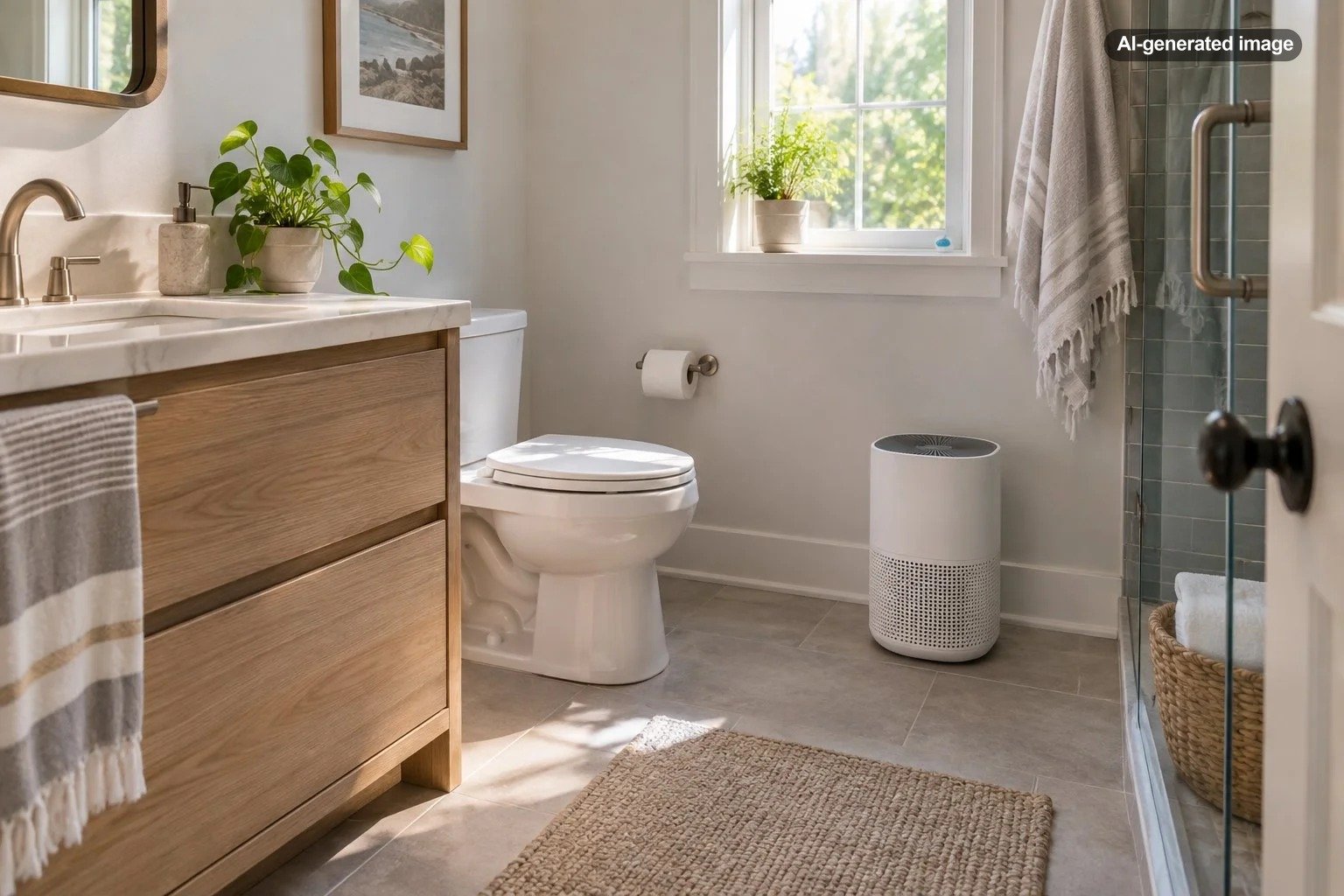
A bathroom is a wet environment, so appliance placement deserves more thought than simply finding an open corner. Follow the purifier manufacturer’s instructions about moisture, clearances, electrical use, airflow, and permitted operating locations. Do not place an electrical appliance where it can be splashed, exposed to standing water, or used contrary to its instructions.
In many homes, an adjacent bedroom, dressing area, hallway, or other dry space may be a more practical location for supplemental air cleaning, particularly if bathroom air naturally moves into that area. Keep the intake and outlet unobstructed. Tucking a purifier tightly behind towels, cabinetry, hampers, or furniture can interfere with airflow.
When an air purifier is unlikely to solve the problem
Some odors are symptoms rather than air-cleaning problems. A purifier should not be expected to correct sewage-like smells, recurring drain odors, visible water damage, an active plumbing leak, or persistent dampness. It also will not prevent mold growth if the underlying moisture problem remains.
Strong chemical smells deserve similar caution. Do not assume that operating an air purifier makes heavy use of cleaners, solvents, fragrances, or other products harmless. Follow product directions and ventilate appropriately. The EPA also advises against using ozone generators in occupied spaces as a routine air-cleaning strategy.
A sensible bathroom odor strategy
The most effective approach is layered. First remove or correct the source. Next, control moisture and use ventilation to carry humid or contaminated air outdoors. Then consider filtration for pollutants that remain airborne. This source-control, ventilation, and filtration hierarchy is also the basic framework the EPA uses for improving indoor air quality.
For an occasional ordinary bathroom smell, that may mean little more than cleaning the room and running the exhaust fan. For persistent mustiness, the priority shifts toward moisture. For a stale adjacent hallway or bedroom, a suitable portable purifier may be useful as an additional measure. The key is matching the tool to the problem instead of expecting one appliance to solve every kind of odor.
Frequently asked questions
Will a HEPA filter remove bathroom odors?
A HEPA filter is designed primarily to capture particles. Some purifiers pair HEPA filtration with a separate deodorization or gas-removal stage that may help with certain odors. HEPA filtration by itself should not be treated as universal odor removal.
Can an air purifier replace a bathroom exhaust fan?
No. A purifier recirculates air through filters, while a properly installed bathroom exhaust fan removes humid air and contaminants from the room and sends them outdoors. Bathrooms generally benefit from controlling moisture at its source.
Will an air purifier help with a musty bathroom?
It may reduce some airborne material, but a musty smell should prompt a moisture check. Look for damp fabrics, condensation, leaks, slow-drying surfaces, and other sources of persistent moisture. Correcting the moisture source is more important than masking the smell.
Should I put fragrance products next to the purifier?
Adding fragrance changes the smell of the room rather than identifying why an unwanted odor exists. If the goal is better indoor air, first remove the source, ventilate, and use filtration as needed rather than layering one odor over another.